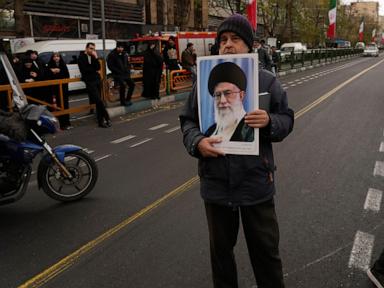
In a fiery speech broadcast on state television, Iran’s Supreme Leader, Ayatollah Ali Khamenei, condemned U.S. President Donald Trump, labeling him a “criminal” for his support of ongoing protests in Iran. Khamenei accused the demonstrators of causing “several thousand” deaths since the protests erupted on December 28, 2023, reflecting the Iranian government’s first acknowledgment of the significant toll from the unrest.
Khamenei’s remarks emphasized his belief that the protests were fueled by external influences, particularly from the United States. He stated, “In this revolt, the U.S. president made remarks in person, encouraged seditious people to go ahead and said: ‘We do support you, we do support you militarily.’” He reiterated longstanding accusations that the U.S. seeks to dominate Iran’s political and economic resources. “We do consider the U.S. president a criminal, because of casualties and damages, because of accusations against the Iranian nation,” Khamenei added, asserting that protesters acted as “foot soldiers” for foreign interests.
In a response that underscored the escalating tensions, Trump took to media outlets to criticize Khamenei’s leadership. He described the Iranian leader as “a sick man who should run his country properly and stop killing people,” further stating that Iran is “the worst place to live anywhere in the world because of poor leadership.” Trump called for new leadership in Iran, amplifying the growing rhetoric between the two leaders.
The exchange came shortly after Trump acknowledged a recent cancellation of executions in Iran, stating, “Iran canceled the hanging of over 800 people,” although he did not specify his source for this information. His comments appeared to signal a potential shift in tone, possibly backing away from military action following the ongoing unrest.
Tehran Prosecutor General Ali Salehi dismissed Trump’s comments as “futile and irrelevant,” reinforcing the Iranian government’s firm stance against the protests. He stated, “Our attitude is severe, preventive and fast,” although he did not elaborate on specific actions being taken.
Khamenei claimed that rioters were armed with live ammunition imported from abroad but did not identify the countries involved. He asserted that Iran would not escalate towards war but would not tolerate domestic or international offenders, urging officials to pursue accountability for those involved in the protests.
The protests, which began in late December in response to Iran’s struggling economy, have resulted in significant casualties. According to the Human Rights Activists News Agency, at least 3,095 people have died during the crackdown, marking one of the deadliest periods of unrest in the country’s recent history. This figure surpasses previous demonstrations and recalls the turmoil surrounding the 1979 revolution.
Iranian officials have consistently accused the U.S. and its allies, including Israel, of instigating unrest. On January 12, Iranian President Masoud Pezeshkian raised similar allegations during a conversation with Russian President Vladimir Putin, suggesting external forces are meddling in Iran’s internal affairs.
As the situation stabilizes in Tehran, normal life appears to be returning, with shopping and street activities resuming. Following a significant internet blackout on January 8, limited internet services and text messaging resumed briefly over the weekend. Observers noted that some users were able to access international services through virtual private networks (VPNs), hinting at a cautious reopening of communications.
Despite calls from exiled Crown Prince Reza Pahlavi for renewed protests from January 13 to January 15, there was little sign of public unrest by Saturday afternoon. Pahlavi, whose father was overthrown during the 1979 revolution, continues to position himself as a potential transitional leader for Iran should the current government collapse, although his appeal within the country remains limited.
As Iran navigates the aftermath of these protests, the international community continues to monitor the situation closely, particularly regarding human rights and political stability in the region.