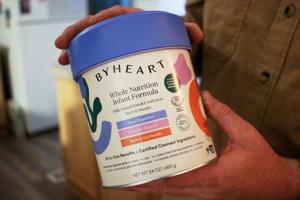
A significant health alert has emerged as two companies supplied dried milk powder potentially linked to a botulism outbreak affecting ByHeart infant formula. The contamination has reportedly sickened at least 51 babies across 19 states, prompting urgent investigations by health authorities.
The milk powder, identified as organic whole milk powder, was processed at a facility owned by Dairy Farmers of America in Fallon, Nevada, using raw milk sourced from Organic West Milk Inc., a California-based company. According to company representatives, a sample of the milk powder tested positive for Clostridium botulinum, the bacterium responsible for botulism. However, the specific source of the contamination remains undetermined.
In a statement, Bill Van Ryn, owner of Organic West Milk, emphasized that while the FDA’s findings are concerning, his company’s product has not been definitively linked to the outbreak. “Nothing has been proven about our milk yet,” he stated, suggesting that contamination may have occurred during the conversion process from milk to powder and subsequently to formula.
The production of dried milk involves pasteurizing liquid milk, concentrating it through evaporation, and spraying it into a hot chamber to create fine particles. The Dairy Farmers of America processes approximately 1.5 million pounds of raw milk daily, yielding about 250,000 pounds of whole milk powder. Their recent statement indicated that Organic West’s milk was the source of the sample that tested positive, although it met all required safety tests prior to being sold to ByHeart.
On January 23, 2024, the FDA announced that the positive test results for botulism were linked to a supplier, which was later confirmed to be Organic West. Genetic tests showed a match between the sample from the powdered milk and that taken from a can of ByHeart formula, as well as from an unopened can that was linked to a sick infant.
In light of these developments, ByHeart has initiated a recall of all its products. The company has not disclosed the specific source of the milk powder samples that were tested, but the implications of this outbreak are significant.
Botulism spores, while commonly found in the environment, can pose severe health risks, particularly to infants whose digestive systems are still developing. Kristin Schill, a botulism expert at the University of Wisconsin-Madison, explained that while healthy adults regularly consume these spores without issue, infants may not be able to prevent the spores from growing in their immature guts. Once germinated, the spores can produce a potent toxin leading to paralysis and potentially death.
Historically, botulism spores have been detected in infant formula, but this outbreak marks the first substantial incident linked to the product. Although the risk of contamination has been considered low, the FDA does not mandate routine testing for botulism in infant formula, although some manufacturers voluntarily conduct screenings for microbiological indicators of contamination.
As the investigation continues, both Organic West and Dairy Farmers of America are cooperating with the FDA to determine the precise cause of the outbreak. The situation highlights the critical importance of safety protocols in food processing, especially for products intended for vulnerable populations like infants.
The FDA and involved companies are committed to ensuring the safety of their products, with ongoing efforts to identify and rectify any lapses in processing that may have contributed to this alarming outbreak.