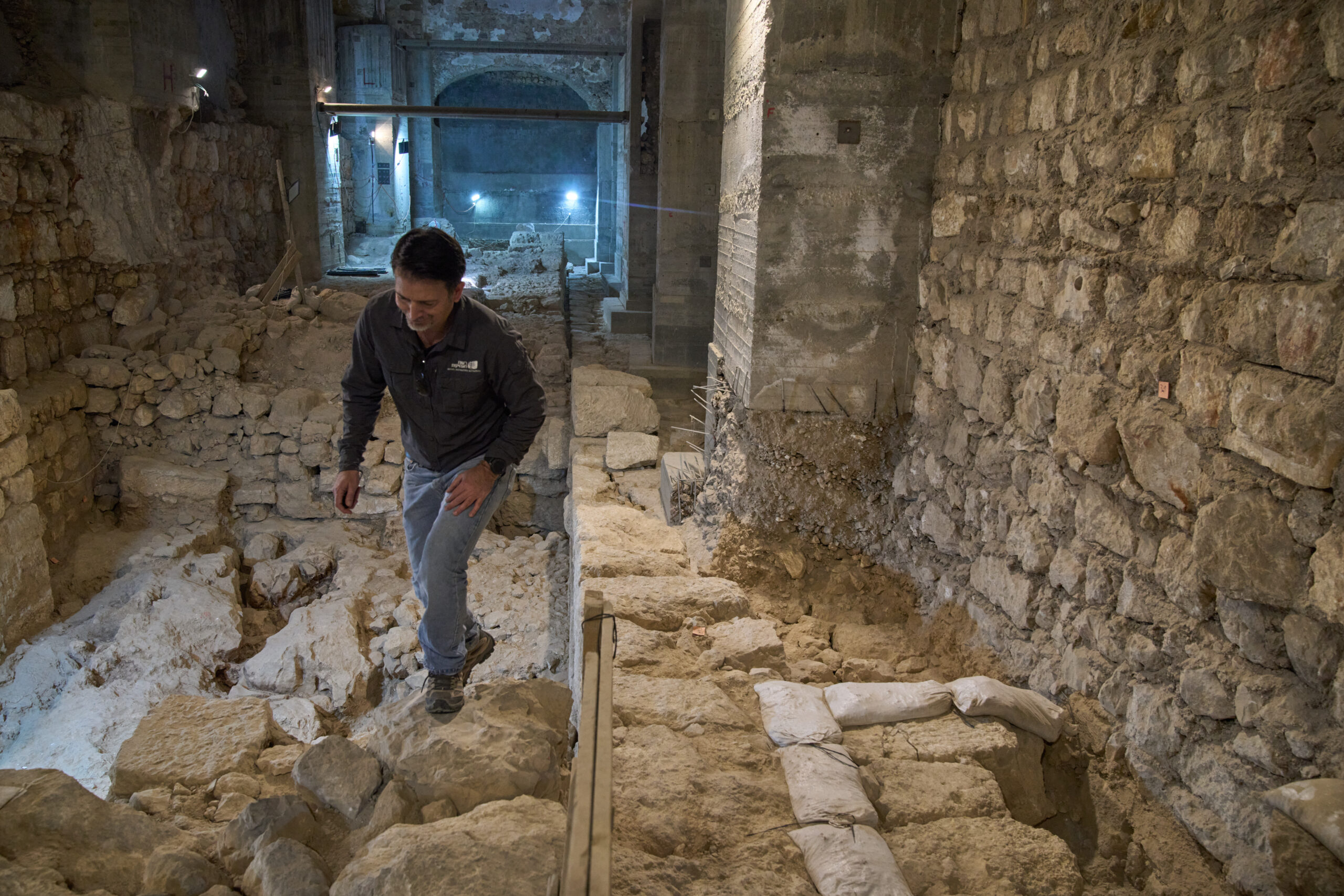
Archaeologists in Jerusalem have uncovered a significant section of an ancient wall, believed to date back to the Hasmonean Kingdom, which ruled approximately 2,100 years ago. This discovery includes potential evidence of a historical ceasefire between the Judean and Hellenistic kingdoms. The excavation recently concluded, revealing the longest intact portion of the city’s ancient fortifications.
The wall, nearly 50 meters (164 feet) long and around 5 meters (16 feet) wide, is thought to have been constructed shortly after the events commemorated by the Jewish holiday of Hanukkah. This festival, which begins on December 14, 2023, celebrates the rededication of the Second Temple in Jerusalem following its liberation by Jewish fighters from foreign oppression. The Hasmonean Kingdom emerged from this period, establishing a dynasty that played a crucial role in Jewish history.
Historical Significance of the Discovery
The newly uncovered section of the wall is remarkable not only for its size but also for the condition of its foundation. It is believed to have been intentionally dismantled to a uniform height, raising questions about the motivations behind such an action. Dr. Amit Re’em, a leading archaeologist from the Israel Antiquities Authority, noted that the uniform dismantling suggests it was not simply a result of time or conflict.
In the early second century B.C., during a siege of Jerusalem by King Antiochus VII, a unique deal was struck. According to the ancient historian Flavius Josephus, King John Hyrcanus I negotiated a ceasefire by offering substantial tributes, including 3,000 talents of silver and hostages, in exchange for the dismantling of the Hasmonean fortifications. Dr. Re’em stated, “We just think that we found the archaeological proof for it, so it’s pretty amazing, the archaeology and the ancient stories combining together.”
Future of the Excavated Site
The excavation site is located beneath an abandoned wing of the Kishleh building, constructed in 1830 as a military base, which was also used as a prison. Graffiti from prisoners remains etched into the walls, capturing a glimpse of the site’s more recent history. Since 1999, archaeologists have gradually unearthed the site, but progress was halted during the Second Intifada. In the last two years, teams worked diligently, removing debris equivalent to the volume of two Olympic swimming pools.
The Tower of David Museum plans to incorporate the uncovered remnants into its new gallery, featuring a floating glass floor over the ruins. These renovations are expected to take at least two years following the completion of the archaeological work.
As researchers continue to analyze the site’s findings, the implications of this discovery extend beyond mere bricks and mortar. They provide a tangible connection to a pivotal era in Jerusalem’s history, revealing layers of human experience intertwined with the city’s narrative. The ongoing exploration of these ancient walls highlights the enduring significance of Jerusalem as a focal point of cultural and historical identity.