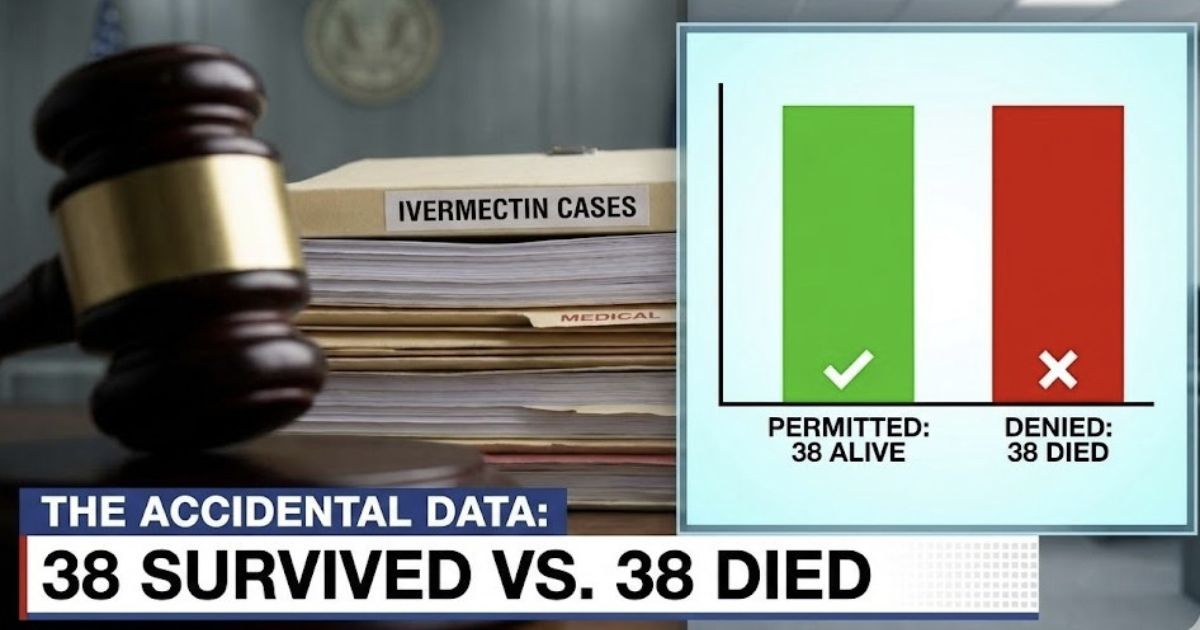
BREAKING: An urgent new analysis by Bret Weinstein has revealed alarming statistics regarding the use of Ivermectin in COVID-19 treatment. In a review of 80 court cases, Weinstein found that in the 40 cases where Ivermectin was allowed, a staggering 38 patients survived. In stark contrast, of the 40 cases where the drug was denied, 38 patients died.
This urgent revelation has reignited debates over the accessibility of Ivermectin as a treatment option amid ongoing public health discussions. As families fight to have the drug approved for their loved ones, the data presents a compelling argument for reconsideration.
Weinstein’s findings, based on a standard statistical formula, are drawing significant attention as the world grapples with the ongoing pandemic. The implications of these statistics are profound, raising critical questions about patient rights and the role of pharmaceutical interventions in COVID-19 care.
Why This Matters NOW: With COVID-19 cases continuing to surge globally, the urgency for effective treatments remains at an all-time high. Families are actively seeking ways to ensure access to medications that could potentially save lives, and this data could influence future court rulings and public health policies.
Families advocating for Ivermectin are encouraged to stockpile the medication while they still can, as legal battles unfold across various jurisdictions. The situation is developing rapidly, with new cases being reported daily and public sentiment shifting towards a greater demand for alternative treatments.
As this story unfolds, it is crucial for readers to stay updated on potential changes in legislation and court decisions regarding Ivermectin. The ongoing discourse highlights not only the medical implications but also the emotional weight on families desperate for effective treatment options.
Stay tuned for further updates as this story develops. The fight for patient rights and treatment accessibility is more important than ever, and the data presented by Weinstein could play a pivotal role in shaping the future of COVID-19 treatment protocols.