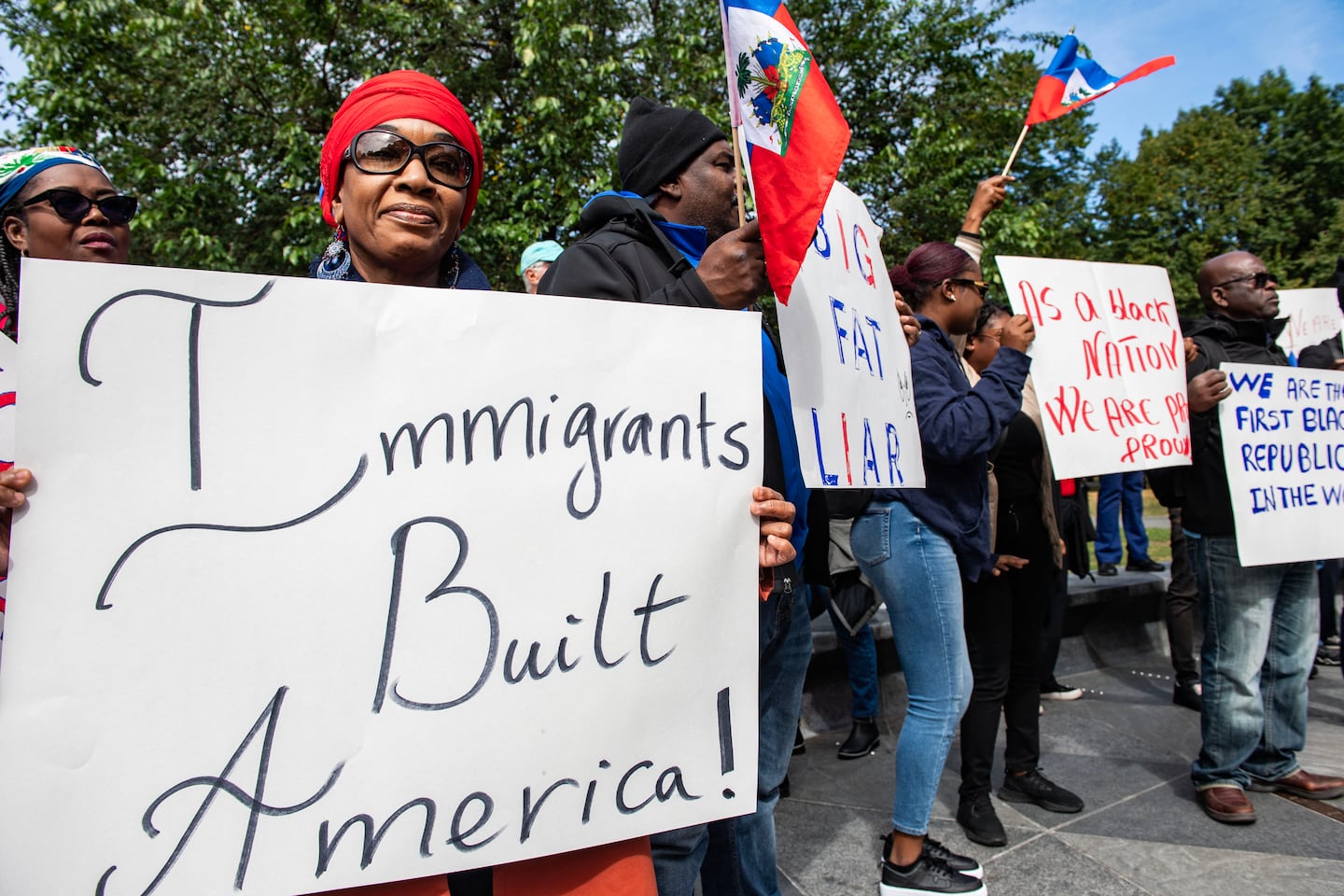
BREAKING: A federal judge in Washington has temporarily blocked the Trump administration’s attempt to revoke Temporary Protected Status (TPS) for nearly 45,000 Haitians in Massachusetts, creating a wave of relief amid widespread anxiety. The ruling comes just before the scheduled end of TPS on February 3, 2025, which was set to leave thousands vulnerable to deportation.
The decision, announced late Monday, allows Haitians to maintain their legal status, which protects them from deportation and grants them work permits due to the ongoing turmoil in Haiti. The Department of Homeland Security immediately indicated they would appeal to the U.S. Supreme Court, but for now, many in Greater Boston are breathing a sigh of relief.
In the wake of the judge’s ruling, employers like Amego, Inc. in Worcester faced a whirlwind of confusion. CEO John Randall described the chaotic situation where his team had to inform 24 Haitian employees they would be fired due to the impending TPS expiration, only to reverse the decision hours later. “Everyone is in a holding pattern but they’re still employable and legal today,” Randall emphasized. The uncertainty, however, lingers as many fear future disruptions.
Public officials and advocates have long warned that ending TPS could devastate local economies. Randall highlighted that many of these workers have been with Amego for over a decade, contributing significantly to the workforce. “This is just a write-off of an entire section of our workforce,” he said, pointing out that some workers had already left in anticipation of TPS cancellation.
Nicole Albert, director of the Gilbert Albert Community Center in Dorchester, reported a drastic decline in English classes for immigrants. Normally hosting 200 students weekly, attendance fell to just 40 as fear of deportation kept many at home. “People were starting to hide, thinking, ‘I don’t want to get deported and then my kids stay behind,’” she shared.
Legal experts confirm that Haitian TPS holders remain authorized to work, negating the need for immediate re-verification of documents. However, the atmosphere of fear has forced some employers to terminate contracts preemptively. More than 100 Haitian TPS holders have already lost jobs at Logan Airport, with reports of workers resorting to alternative jobs like Uber for survival.
Christopher White, CEO of Road to Responsibility, faced a similar crisis, losing 100 Haitian workers since last summer. After sending termination notices to the remaining employees with TPS, he quickly had to retract those letters upon the judge’s decision. “People were so ecstatic that they still had a job, people crying on the phone,” White recounted. “We just don’t know how this is going to go.”
The implications extend beyond job loss. Dr. Karen Scanlan expressed deep concern for a caregiver who supports her nonverbal autistic daughter, illustrating the personal stakes involved. “It’s just heartbreaking to me that she can’t work because of this,” Scanlan said. “It’s hard enough to find these dedicated, kind people.”
With over half of nursing assistants and personal care attendants in Greater Boston being immigrants, many from Haiti, the potential loss of TPS could lead to staffing shortages in critical sectors. The UMass Donahue Institute highlighted that the rate of immigrants arriving in Massachusetts has dropped by half compared to previous years, compounding the challenges for an already strained labor market.
As the situation develops, many Haitian families remain in a state of anxiety, fearing for their future in the U.S. One 51-year-old resident from Dorchester, who fled Haiti after witnessing the murder of her partner, reflected on her fears. “I don’t have anywhere to go,” she said, underscoring the dire circumstances many face.
The legal battle over TPS is far from over, and the community remains on edge as they await further updates from the Supreme Court. For now, the temporary reprieve offers a glimmer of hope, but the uncertainty looms large over the Haitian community in Greater Boston.