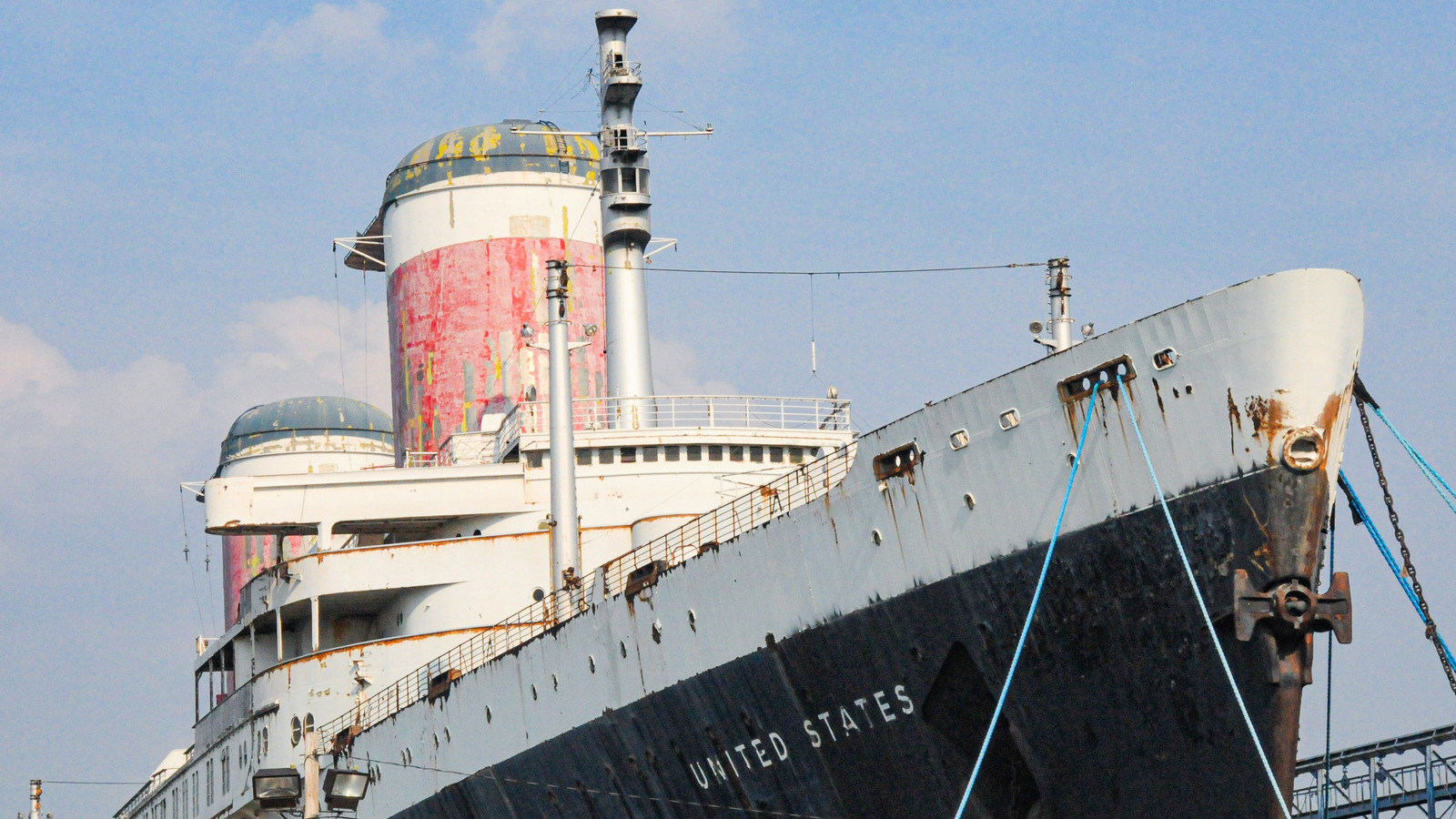
BREAKING: The iconic **SS United States**, the fastest ocean liner in history, is poised for a dramatic transformation as plans are underway to sink the vessel off the **Gulf Coast of Florida** as an artificial reef. This decision, confirmed by officials earlier today, represents both a farewell and a new beginning for a national treasure that has been left to decay for over **30 years**.
This monumental ocean liner, which completed its maiden voyage in **1951**, famously set a record for the fastest transatlantic crossing. Powered by an astonishing **240,000 horsepower** from its four **Westinghouse** steam turbines, the **SS United States** achieved speeds of up to **44 knots** during its prime. Now, it faces an uncertain future as its engines and legacy are set to be submerged.
The vessel’s immense size—over **53,000 tons**—was bolstered by innovative construction techniques, including the extensive use of aluminum, making it lighter and faster than any other ship of its time. This engineering marvel was not just about speed; it was designed for reliability, with half of its eight boilers kept offline during operations to ensure service continuity.
While the ship has remained dormant and deteriorating, plans to scuttle it as the world’s largest artificial reef aim to breathe new life into its legacy. Supporters of the initiative believe this could serve as a vital marine habitat, while critics argue the ship should be preserved and restored, highlighting its cultural significance as a symbol of American ingenuity and maritime history.
Prior to the sinking, the ship’s iconic funnels will be salvaged and transformed into centerpieces at the upcoming **SS United States Museum and Visitor Experience** in **Mobile, Alabama**. This museum aims to honor the ship’s remarkable history and educate future generations about its engineering feats and cultural impact.
The decision to repurpose the **SS United States** comes at a time when maritime heritage is often overlooked. Advocates for the project argue that turning the ship into an artificial reef will not only preserve its legacy under the sea but also contribute to marine conservation efforts.
WHAT’S NEXT? As plans are finalized, stakeholders will monitor the timeline for the sinking, expected to occur within the next year. This development opens a conversation about how we honor and preserve our maritime history while also addressing environmental concerns.
Stay tuned as we follow this urgent story and its implications for marine life and historical preservation. The **SS United States**, once a proud ocean liner, is set to make waves again—this time as a unique underwater habitat.