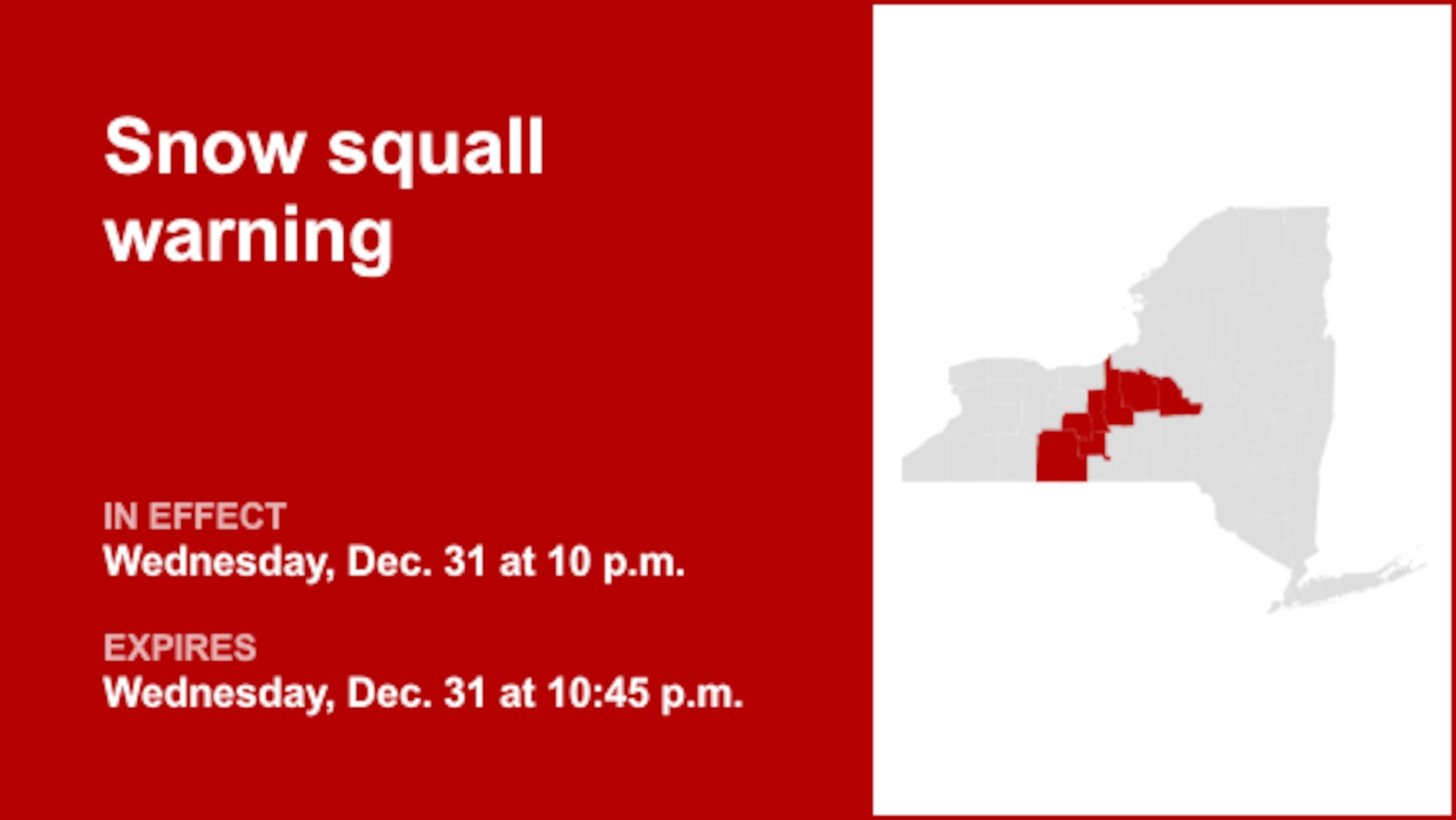
UPDATE: A snow squall warning has been issued for several counties in central New York, effective immediately until 10:45 PM tonight. The National Weather Service warns that dangerous conditions are developing, with wind gusts reaching up to 35 mph and visibility dropping to near zero.
At 10:00 PM, a hazardous snow squall was detected along a line extending from Brewerton to Liverpool, affecting counties including Cayuga, Madison, Onondaga, Schuyler, Seneca, Steuben, and Yates. The weather service emphasizes that travel will become difficult and potentially dangerous within minutes.
Locations impacted by the warning include Syracuse, Clay, Cicero, Auburn, and Baldwinsville. Authorities stress that individuals should reduce speed and turn on headlights immediately. Visibility can plummet to less than a quarter-mile due to intense bursts of heavy snow.
“Consider avoiding or delaying travel until the snow squall passes your location,” urges the National Weather Service. “If you must travel, use extra caution and allow extra time.”
Snow squalls are brief but intense winter weather events associated with strong cold fronts. They can cause sudden white-out conditions and icy roads, posing significant risks to drivers. While these squalls usually last less than an hour, the conditions they create can lead to deadly traffic accidents.
The key difference between a snow squall and a snowstorm is duration: snow squalls occur over a short period (30-60 minutes) and are extremely intense, whereas snowstorms can last for hours or days.
Officials are rapidly issuing snow squall warnings similar to tornado alerts, offering crucial, localized information aimed at saving lives. Residents are advised to postpone travel plans and follow safety guidelines to mitigate risks.
Here are critical safety tips from the National Weather Service:
– **Avoid or delay travel:** If you’re in the affected area, it’s best to wait until the squall passes.
– **Reduce speed and increase visibility:** If already on the road, slow down, and turn on your headlights and hazard lights.
– **Maintain a safe distance:** Keep a significant gap between your vehicle and others to avoid collisions.
– **Avoid abrupt braking:** Sudden stops can lead to loss of control; slowing down gradually is safer.
For those needing to travel, ensuring your vehicle is winter-ready is essential. Check tires, brakes, and lights, and ensure fluid levels are adequate. An emergency kit should include blankets, non-perishable food, water, a flashlight, and more.
In conclusion, prioritizing personal safety during this snow squall warning is vital. By understanding the risks and adhering to guidelines from the National Weather Service, residents can navigate these winter hazards more safely. Stay tuned for further updates as conditions develop.