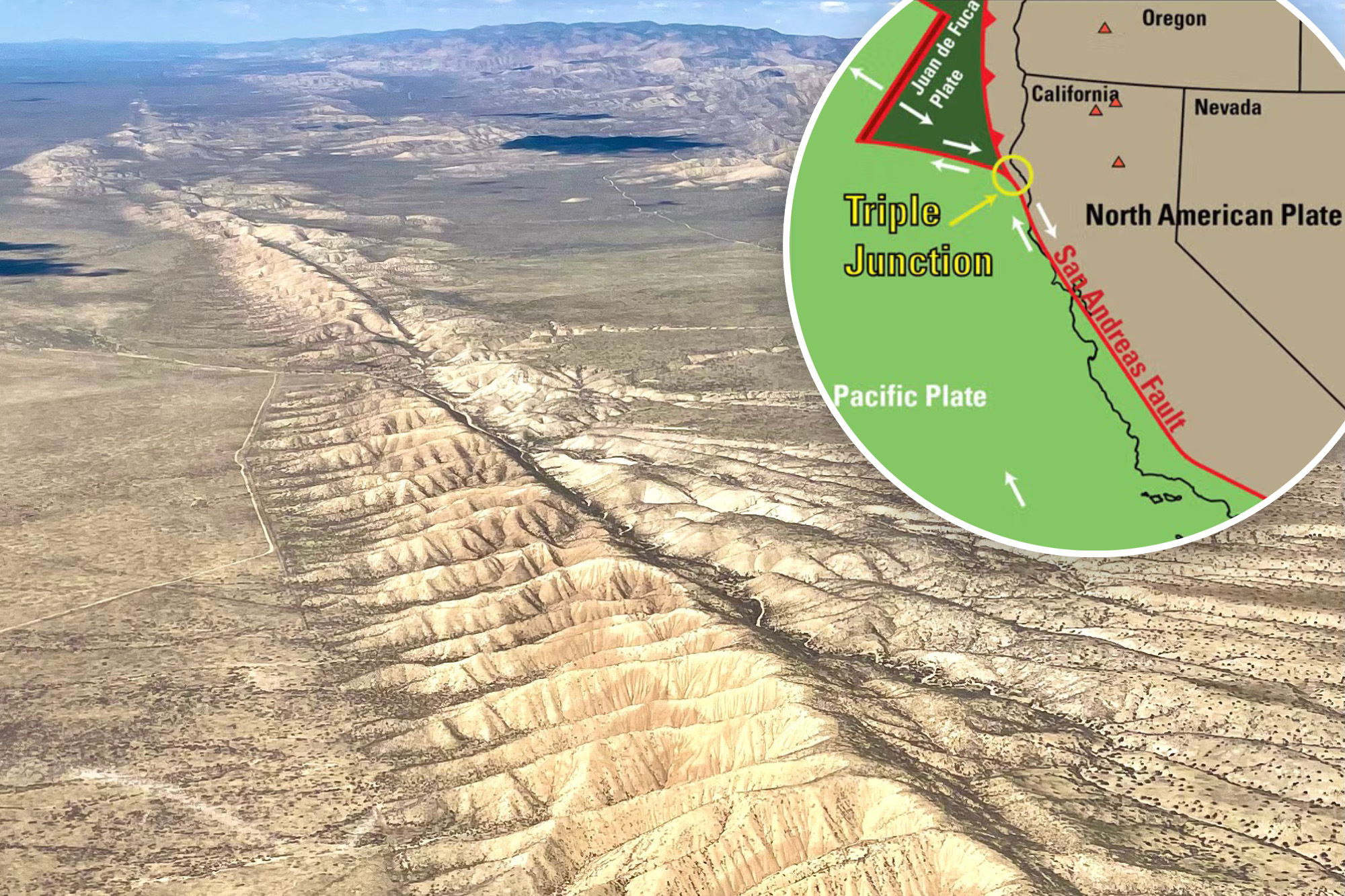
BREAKING: Scientists have made a shocking discovery that could dramatically change our understanding of earthquake risks in California. New research published in the journal Science reveals previously hidden fault lines at the Mendocino Triple Junction, raising the alarming possibility of devastating magnitude 8 earthquakes in the region.
The study, led by David Shelly from the USGS Geologic Hazards Center in Golden, Colorado, indicates that the area is not just a convergence of three tectonic plates, but a complex network of five moving plates, with two of them concealed beneath the surface. This newly revealed seismic threat has serious implications for the millions of residents along California’s coast.
“Understanding the underlying tectonic processes is crucial for predicting seismic hazards,” stated co-author Amanda Thomas, a professor at UC Davis. The Mendocino Triple Junction is a well-known seismic hotspot where the San Andreas Fault, the Cascadia Subduction Zone, and the Mendocino Fault come together, resulting in some of the highest levels of seismic activity in the United States.
The research team employed a network of seismometers across the Pacific Northwest to detect “low-frequency” earthquakes occurring deep underground, where tectonic plates grind against each other. These tremors are often too small to register at the surface, but their implications are enormous.
The study uncovered a fragment of the North American plate that has detached and is now being pulled downward along with the Gorda plate, located at the southern end of the Cascadia subduction zone. This finding also confirmed the theorized existence of the Pioneer fragment, a remnant of the ancient Farrallon plate that once ran along the California coastline, now being dragged beneath the North American plate in a process known as subduction.
Researchers discovered that the subducting surface is not as deep as previously believed, which explains the shallow origin point of the magnitude 7.2 earthquake that rattled Humboldt County in 1992. “It had been assumed that faults follow the leading edge of the subducting slab, but this example deviates from that,” explained geodesist Kathryn Materna from the University of Colorado Boulder.
As experts analyze these findings, the potential for increased seismic activity in California cannot be ignored. Residents are urged to stay informed and prepared as researchers continue to unravel the complexities of this tectonic puzzle.
For those living in the region, this urgent update serves as a reminder of the unpredictable nature of earthquakes and the importance of understanding the forces at play beneath the surface. Researchers are now focused on additional studies to provide a clearer picture of the seismic hazards posed by these newly identified fault lines.
Stay tuned for more updates as this story develops, and share this information to raise awareness among your community.