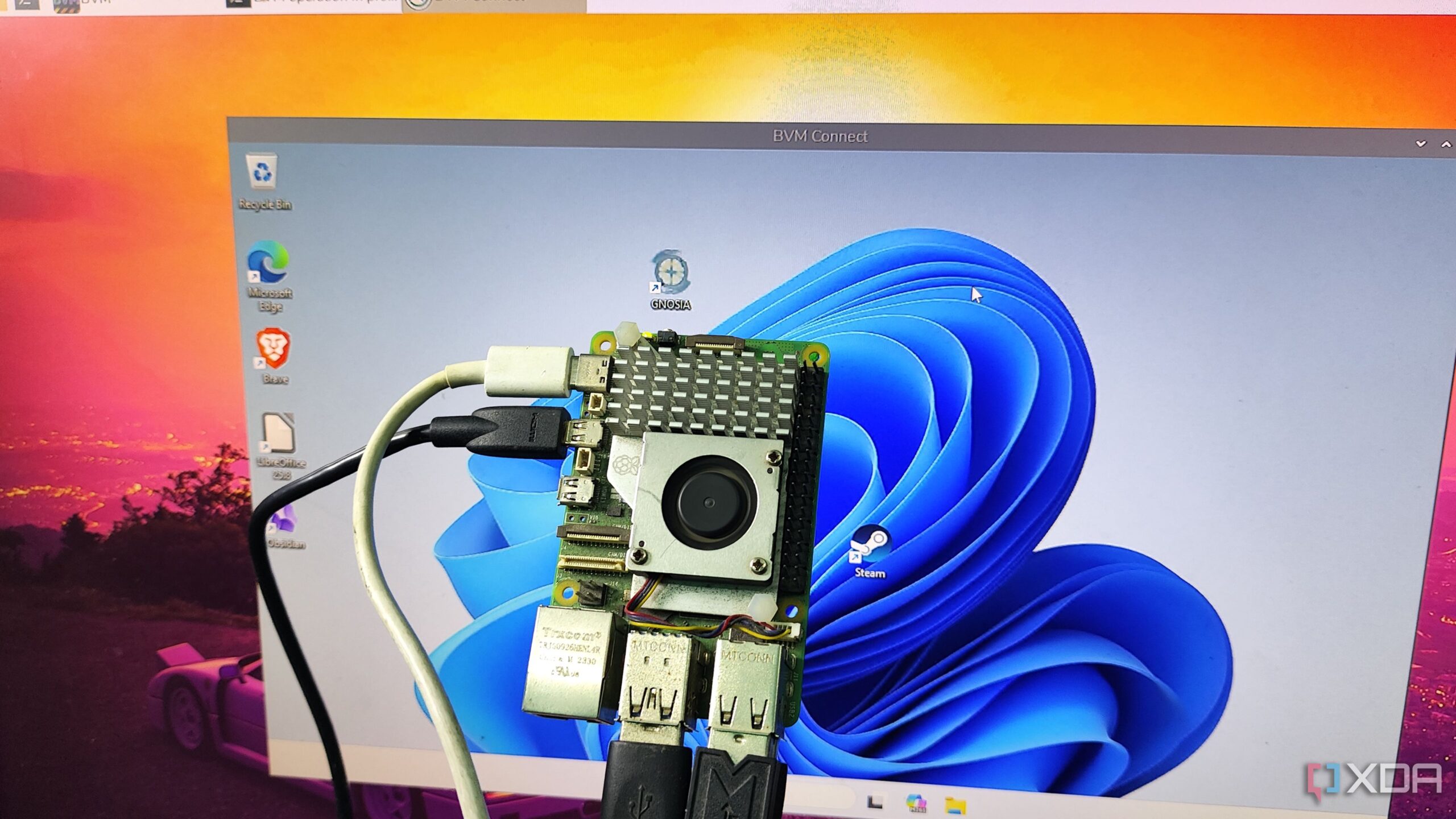
BREAKING: In a surprising breakthrough, tech enthusiasts have successfully deployed virtual machines (VMs) on a Raspberry Pi, defying expectations that this compact hardware lacks the power for such tasks. This development, shared in a recent hands-on experiment, demonstrates that with the right setup, users can run Linux and even Windows 11 on their Raspberry Pi devices, highlighting a new frontier for DIY tech projects.
Just announced, the test utilized a Raspberry Pi 5 with 8GB of RAM, showcasing the innovative capabilities of this popular single-board computer (SBC). The experiment revealed that while running multiple VMs can strain the system, deploying a couple of lightweight instances is entirely feasible, radically changing how hobbyists view Raspberry Pi’s potential for virtualization.
The primary tool used was Canonical’s MicroCloud, which supports Arm architecture, along with the versatile Botspot VM for Windows 11. Users found that installing Ubuntu Server on the Raspberry Pi was straightforward, allowing seamless operation of two VMs alongside containers without performance issues.
“With the efficient nature of LXD, deploying VMs on a Raspberry Pi is no longer a dream,” stated one developer involved in the project. The Raspberry Pi powered MicroCloud instance closely resembles its x86 counterpart, providing a compelling option for virtual machine enthusiasts.
Moreover, the ability to run Windows 11 in a VM on the Raspberry Pi is particularly noteworthy. Despite potential performance hiccups when using a 4K display, switching to 1080p significantly enhanced responsiveness, making it a viable platform for running Windows applications. This innovation opens doors for users looking to engage with Windows-based tools and scripts right from their Raspberry Pi.
While the experiment yielded promising results, experts still emphasize that for serious VM tasks, traditional x86 machines remain superior. However, for those interested in simple scripting or minor development projects, the Raspberry Pi now stands as a surprisingly effective alternative.
The excitement surrounding this development comes at a time when the tech community is constantly searching for ways to maximize the capabilities of low-cost devices. The versatility of the Raspberry Pi, combined with the advancements in virtualization technologies, has sparked renewed interest in DIY computing projects.
In the coming weeks, enthusiasts are encouraged to explore these new capabilities and share their experiences, potentially leading to a burgeoning community focused on Raspberry Pi virtualization. As these technologies continue to evolve, the implications for education, software development, and hobbyist tinkering could be profound.
Stay tuned for more updates as this story develops and as users around the globe experiment with virtual machines on their Raspberry Pi devices!