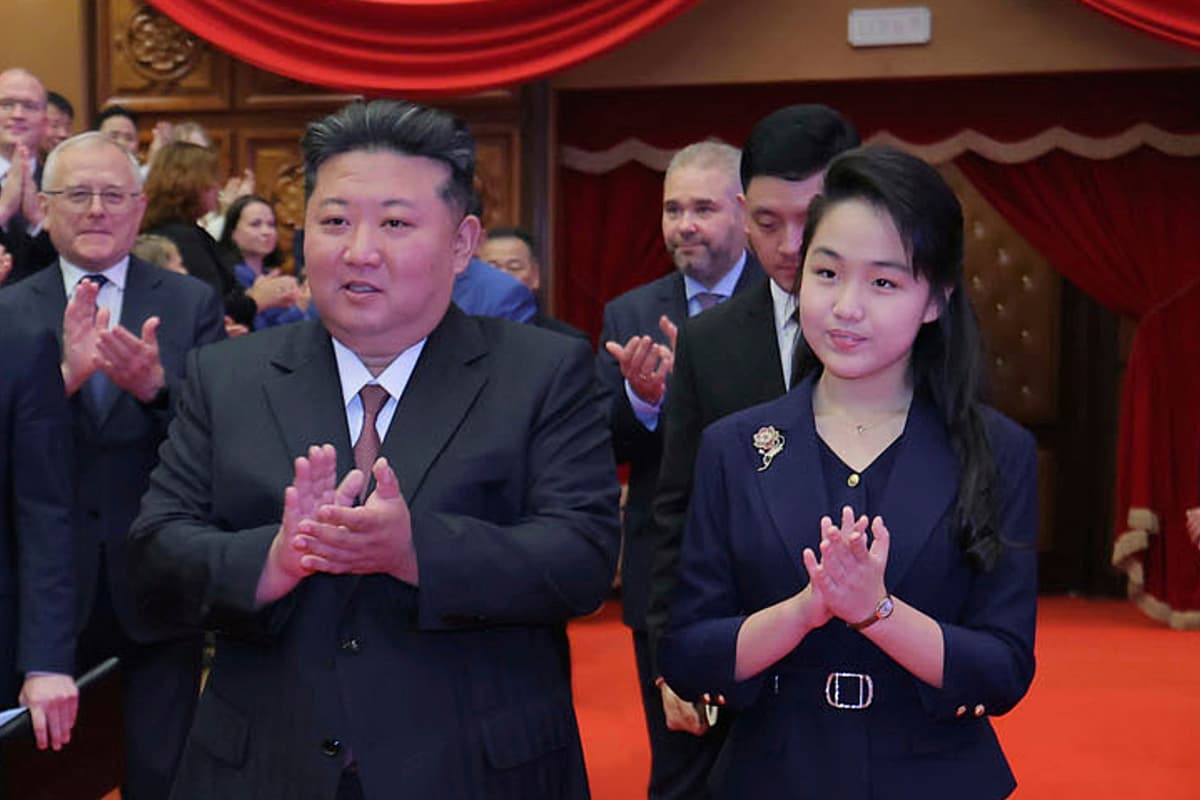
The South Korean Intelligence Service has suggested that Kim Jong-Un is preparing his daughter, Kim Ju-ae, as a potential successor to lead North Korea. This development comes as the regime faces mounting challenges both domestically and internationally. The implications of this move could significantly shape the future of North Korea, particularly in how it engages with the global community.
Analysts are divided on this prospect. While some view the grooming of Kim Ju-ae as a strategic maneuver, others remain doubtful about her capability to lead at such a young age. A veteran North Korea analyst expressed skepticism, noting that Kim Ju-ae is “not of an age where she can rule on her own.” This sentiment reflects a broader concern regarding the stability of leadership in a nation known for its strict hierarchy and centralized power.
Context of Leadership Transition
The potential succession plan comes as North Korea grapples with various issues, including economic difficulties exacerbated by international sanctions and the ongoing effects of the COVID-19 pandemic. Observers note that Kim Jong-Un has been increasingly visible with his daughter in recent public appearances, which may indicate a deliberate effort to prepare her for future leadership.
Historically, leadership transitions in North Korea have been fraught with uncertainty. Following the death of Kim Jong-Il in December 2011, Kim Jong-Un assumed power at a young age, and many analysts feared instability. The current situation raises questions about whether a similar transition would be viable with a leader as young as Kim Ju-ae, who is believed to be in her teenage years.
International Reactions
The international community is closely monitoring these developments. Officials from the United States and South Korea have expressed concern, emphasizing the need for vigilance regarding North Korea’s military ambitions and its ongoing nuclear program. The South Korean Intelligence Service has indicated that it will continue to gather information on the dynamics within the North Korean leadership.
As the world watches, the prospect of a young leader could alter North Korea’s approach to diplomacy and military strategy. Analysts suggest that the involvement of Kim Ju-ae might lead to a continuation of her father’s policies, given the tightly controlled nature of the regime. This could have significant repercussions for regional stability, particularly in relations with South Korea and the United States.
In conclusion, while the idea of Kim Ju-ae as a successor raises intriguing possibilities, the realities of her age and the complexities of North Korean politics cannot be overlooked. The coming months will be crucial as observers seek to understand the implications of this potential shift in leadership.