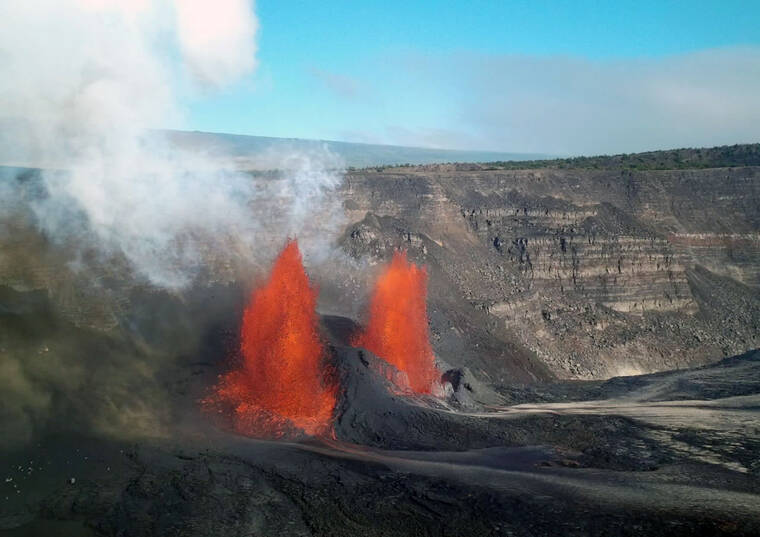
UPDATE: The Kilauea volcano in Hawaii has just erupted in a spectacular display, with lava fountains reaching maximum heights of approximately 1,400 feet (425 m) during its latest episode on December 23-24, 2024. This event marks the 39th lava fountaining episode since the current eruption series began on December 23, 2024.
Kilauea’s activity has captivated observers with its frequent and dramatic lava displays, and the urgency of these eruptions is heightened as they unfold within the Hawaii Volcanoes National Park. The U.S. Geological Survey (USGS) has categorized the volcano’s alert level as WATCH, indicating ongoing volcanic activity that could change rapidly.
The volcano has experienced significant changes throughout the year, with lava fountain heights gradually increasing. Initial eruptions featured modest heights below 650 feet (198 m) but surged dramatically, peaking at a record height of 1,574 feet (480 m) during episode 35 on October 17, 2024.
This year alone, Kilauea has erupted nearly 200 million cubic meters (300 million cubic yards) of lava—a staggering volume more than twice what erupted from Puʻuʻōʻo in an average year from 1983 to 2018. As a result, the crater floor has risen by an average of 225 feet (69 m), contributing to increasingly taller lava fountains.
The excitement surrounding Kilauea’s eruptions is palpable, as the USGS Hawaiian Volcano Observatory continues to monitor the situation closely. Although current patterns show no signs of imminent change, the nature of volcanic activity means new developments could arise swiftly. Observers are eagerly anticipating potential fountaining episodes between January 8 and 14, 2025.
Ingrid Johanson, a research geophysicist at the USGS, emphasizes the importance of being aware of changing conditions. She states, “The episodic nature of the fountaining events allows for some forecasting, but vigilance is essential as the eruption dynamics can shift.”
As the new year approaches, Kilauea continues to provide breathtaking natural spectacles, drawing visitors and scientists alike. The ongoing activity not only shapes the landscape but also poses unique hazards, particularly with ash and tephra potentially affecting broader areas of the island.
For those in the vicinity, the excitement is tempered with caution. The Hawaii Volcanoes National Park remains an area of interest, as larger lava pieces tend to fall within its confines, while smaller ash particles can be blown across the island.
Stay tuned for more updates as Kilauea continues its astonishing display of nature’s power. For real-time information, visit the USGS Hawaiian Volcano Observatory website, where detailed monitoring and updates are regularly provided.
With Kilauea’s eruptions captivating global attention, it is a reminder of the dynamic and ever-changing nature of our planet. As we celebrate the new year, the spectacle of Kilauea serves as a thrilling highlight for residents and visitors alike.