UPDATE: Kilauea’s dramatic eruption continues to captivate and concern as officials from the U.S. Geological Survey (USGS) confirm that the volcano is poised for another round of high lava fountaining between December 22 and 27, 2025. This dynamic activity, which began on December 23, 2024, has already reshaped the landscape and heightened safety hazards in the region.
The ongoing eruption, characterized by unprecedented high fountaining, has lasted nearly one year, marking a significant geological event not seen for nearly four decades. Kilauea has reached heights of up to 460 meters (1,500 feet), making it a once-in-a-lifetime spectacle for visitors at Hawaii Volcanoes National Park. However, the beauty of this natural phenomenon comes with risks, as the park remains closed to ensure visitor safety during hazardous episodes.
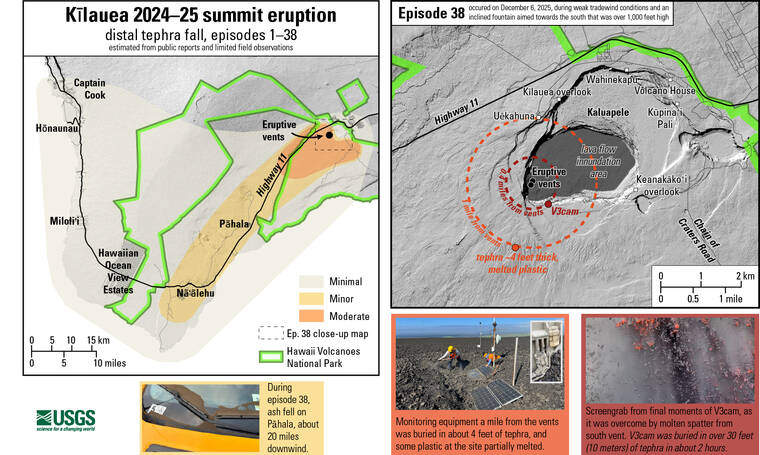
The latest episode, known as Episode 38, occurred on December 6, 2025, and lasted for 12 hours. It began with fountaining from both vents, quickly escalating to a powerful display from the south vent, where lava was projected over 300 meters (1,000 feet) into the air. This sudden intensification serves as a stark reminder of the unpredictable nature of volcanic activity.
Officials are closely monitoring the situation, with HVO staff actively assessing the landscape. The eruption has created a new 42-meter (140-foot) tall hill on the crater’s northwest rim and has raised the caldera floor by 223 feet (68 meters). As the eruption paused on December 15, 2025, a glow has been intermittently visible at both vents, indicating that magma remains active beneath the surface.
Authorities emphasize that during high fountaining episodes, life-threatening hazards can extend well beyond the immediate vicinity of the volcano. The changing geometry of the fountains and fluctuating winds can propel hot tephra across considerable distances, potentially affecting areas up to a mile away. In fact, during previous episodes, tephra has reached Uekahuna Bluff and even impacted monitoring stations, melting plastic components in the process.
As the volcanic activity continues, it’s critical for the public to heed safety warnings. Affected areas within Hawaii Volcanoes National Park remain closed, with officials reiterating that these measures are in place for everyone’s protection. The rapidly changing nature of the eruption means that hazards can escalate within minutes, and visitors are urged to stay informed through official channels.
The USGS Volcano Alert level for Kilauea is currently set at WATCH. While there has been no unusual activity reported in Kilauea’s East Rift Zone or Southwest Rift Zone, the potential for another fountaining episode looms large. The public is encouraged to follow updates from the Hawaiian Volcano Observatory (HVO), which provides real-time monitoring and forecasts.
As this extraordinary eruption unfolds, it showcases the power and unpredictability of nature, offering both breathtaking views and essential safety lessons. For those interested in the ongoing developments, visit the HVO website for comprehensive updates, volcano photos, and safety information.
Stay safe, stay informed, and witness the awe of Kilauea—this dynamic eruption is a rare opportunity that brings both excitement and caution.