UPDATE: Minnesota Governor Tim Walz and the state’s Department of Human Services (DHS) have just announced that they lack evidence to support claims that Medicaid fraud could reach an alarming $9 billion. This revelation comes amidst ongoing investigations by the U.S. Attorney’s Office, which recently announced six new defendants related to Medicaid fraud in the state.
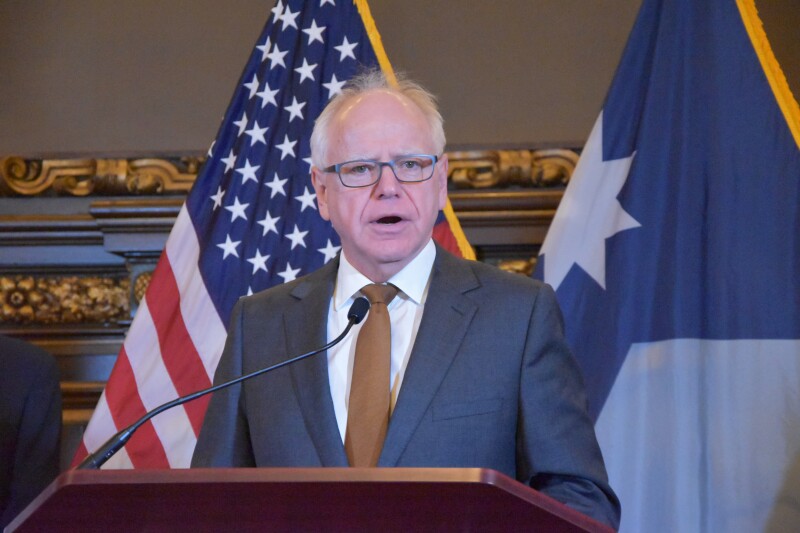
During a press conference on December 19, 2023, Walz criticized the inflated estimates of fraud as “speculation,” emphasizing the urgent need for concrete evidence. “I just need their help to prosecute this,” he stated. The governor expressed his concern that sensational figures do not assist in resolving the issue.
Earlier, First Assistant U.S. Attorney Joseph Thompson revealed that an audit from the federal Center for Medicaid and Medicare Services estimated that claims from 14 high-risk state Medicaid programs reached approximately $18 billion since 2018, with expectations that “about half or more” could be fraudulent. However, Walz and DHS officials insist they have not seen any data to substantiate the $9 billion figure.
“I haven’t seen any evidence or information to suggest that there’s $9 billion worth of Medicaid fraud,” said DHS Inspector General James Clark.
Despite these claims, DHS officials estimate that Medicaid fraud might amount to “tens of millions of dollars,” a fraction of the troubling figure cited by federal prosecutors. John Connolly, deputy commissioner and Medicaid director at DHS, stated, “If there is evidence, we need it so that we can stop payment. That’s a very alarming number.”
The state has taken proactive measures, halting payments to suspected fraudulent programs and placing freezes on new provider enrollments. Walz noted that the administration began stopping payments in July for specific grants flagged for fraud, a move not highlighted by the U.S. Attorney’s Office in their recent communications.
Amid increasing tensions in the state Capitol, the fight against Medicaid fraud has become a divisive issue. While both parties previously found common ground on fraud prevention proposals, recent exchanges have turned contentious, with accusations of distrust and inaction on both sides.
As Minnesota grapples with these serious allegations, the DHS remains committed to transparency and collaboration. “We’re partners in this,” Walz reiterated, urging the U.S. Attorney’s Office to share any credible evidence that could assist state efforts in addressing Medicaid fraud effectively.
With a significant portion of Medicaid funding under scrutiny, state officials are now focused on ensuring that legitimate providers are not unfairly impacted by fraud allegations. “The vast majority that provided incredible services are now being put at a disadvantage,” Walz remarked, highlighting the urgency of the situation.
As investigations continue and the public awaits further updates, the call for clarity and accountability grows louder. Minnesotans are left questioning the integrity of their Medicaid system and the potential impact of these fraud claims on essential services.
Stay tuned for more updates as this story develops. The urgency of addressing these allegations cannot be overstated, and the ramifications for Minnesota’s healthcare programs are significant.