URGENT UPDATE: Afrikaners are experiencing an unprecedented shift in their relationship with U.S. officials, as recent meetings signal a newfound interest from the Biden administration. Just announced today, prominent Afrikaner leaders, including Theo de Jager, have gained significant access to U.S. diplomatic circles in South Africa and Washington, D.C.
This dramatic change follows Donald Trump’s controversial policies, including a halt to U.S. aid to South Africa and the imposition of 30% tariffs on South African imports. The U.S. has also announced that South Africa will not be welcome at the Group of 20 summit next year, citing the alleged persecution of Afrikaners.
During a recent visit to Washington, de Jager expressed surprise at the warm reception he and two other Afrikaner leaders received, including meetings with staff from Vice President JD Vance’s office. This reflects a stark contrast to the previous administration’s attitude, where Afrikaner concerns were largely ignored.
The Trump’s administration has taken bold steps, with immigration policies that favor Afrikaners seeking refugee status—making it nearly impossible for others. This has led to heightened visibility for Afrikaners in U.S. diplomatic engagements, where they are now not only included but actively invited to discussions that shape U.S. foreign policy.
Jaco Kleynhans, an official with the Solidarity Movement, reported that access to U.S. officials has increased tremendously over the past ten months, with weekly conversations taking place directly in Washington. This is a significant development for a group that was once considered peripheral in U.S. diplomatic circles.
“The extent of our access and engagement has increased tremendously in the past 10 months,” said Kleynhans.
The annual Independence Day celebration at the U.S. Embassy in Pretoria saw a larger-than-usual turnout of Afrikaners, signaling their growing influence. Gerhard Papenfus, an Afrikaner business leader, attended the event for the first time this year and remarked, “Here’s an administration that reaches out and says, ‘We hear you.’”
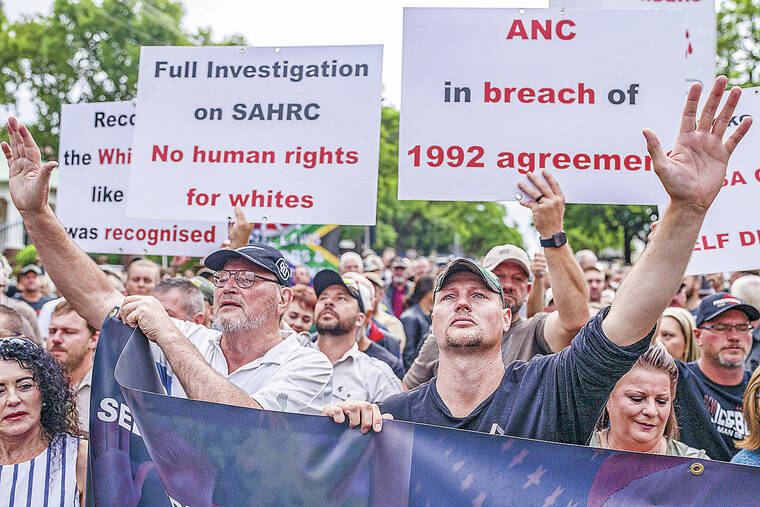
This surge in attention has not come without controversy. Some South African lawmakers are calling for investigations into Afrikaner organizations, accusing them of treason for allegedly spreading misinformation that could damage U.S.-South African relations. This tension underscores the complex dynamics of the current political climate in South Africa.
Critics argue that the U.S. administration’s embrace of Afrikaners is driven by its broader geopolitical strategy, particularly as South Africa has engaged with nations such as Iran, which the U.S. considers adversarial. Kallie Kriel, CEO of AfriForum, stated, “The U.S. at the moment, it’s in their interest not to have a good relationship with South Africa.”
Despite the historical engagement of Afrikaners at U.S. missions, the current level of interest and dialogue has surprised many within the community itself. De Jager noted that U.S. diplomats are now familiar with his work, highlighting a significant shift in diplomatic priorities.
As the situation develops, many are watching closely to see how this newfound access will influence U.S. policy towards South Africa. With Afrikaners now at the forefront of U.S. diplomatic conversations, their impact on both domestic and international levels is poised to grow.
Stay tuned for further updates on this evolving story and its implications for South African politics and U.S. foreign policy.