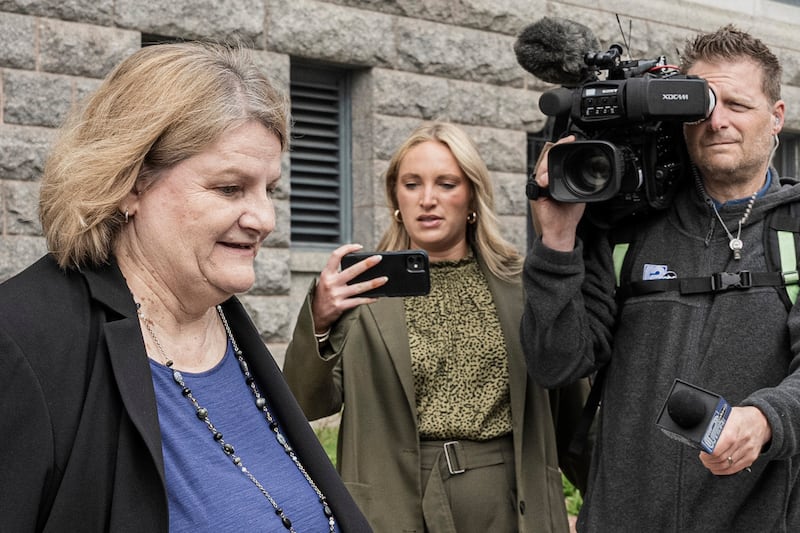
A Milwaukee County Circuit judge, Hannah Dugan, has been found guilty of felony obstruction for interfering with the arrest of Eduardo Flores-Ruiz, a Mexican man charged with multiple counts of battery in March. The jury delivered its verdict on October 12, 2023, after six hours of deliberation. While they convicted Dugan of the felony, they acquitted her of a misdemeanor charge related to concealing a wanted person.
The case has garnered significant national attention, reflecting the ongoing tensions between the judiciary and immigration enforcement under the previous administration. Dugan was arrested in April and faced accusations of obstructing an immigration arrest. Prosecutors alleged that she actively impeded federal agents attempting to apprehend Flores-Ruiz during a court hearing on April 18, 2023.
According to reports from the Milwaukee Journal Sentinel, the U.S. Immigration and Customs Enforcement (ICE) agents arrived at the courthouse equipped with an arrest warrant. They informed a shift sergeant of their intentions, who requested that the arrest be made after Dugan had concluded her court proceedings. Eyewitnesses later described Dugan as visibly upset upon learning of the planned arrest, referring to the situation as “absurd.” Witnesses also claimed to have seen her escorting Flores-Ruiz and his counsel through a private exit to avoid the public courtroom.
Following the verdict, Brad Schimel, the Interim U.S. Attorney for the Eastern District of Wisconsin, emphasized that the decision was not intended to serve as a precedent. He stated, “Dugan is certainly not evil nor is she a martyr for some greater cause. It was a criminal case, like many that make their way through this courthouse every day, and we all must accept the verdict peacefully.”
In a contrasting tone, Todd Blanche, the U.S. Deputy Attorney General, expressed strong condemnation of Dugan’s actions. He stated via social media platform X, “Former Wisconsin state judge Hannah Dugan betrayed her oath and the people she served when she obstructed federal law enforcement during an immigration enforcement operation.” He continued, “Today, a federal jury of her peers found her guilty and sent a clear message: the American people respect law and order. Nobody is above the law.”
Dugan’s legal counsel, Steve Biskupic, indicated that the case is not concluded. He announced plans to file a motion seeking to overturn the conviction, citing the jury’s split decision as a basis for the request. As of now, a sentencing date for Dugan has yet to be scheduled.
This case highlights the ongoing debate surrounding immigration enforcement and judicial independence in the United States, underscoring the complexities faced by individuals in positions of authority within the legal system. The outcome of Dugan’s trial raises critical questions about the responsibilities of judges and their obligations to uphold federal law while balancing their roles in the community.