Bad Bunny delivered a powerful message during his halftime performance at Super Bowl 60 on February 8, 2026, in Santa Clara, California. The Puerto Rican artist concluded the show with the words “God Bless America,” marking a significant moment that resonated with both his fans and critics. His performance celebrated not just the United States but all countries within the Americas, showcasing a diverse representation of Latino culture.
The artist, known for his influence in the music industry, used his platform to address issues of identity and belonging. As he listed various nations in the Americas, a screen behind him displayed the phrase, “The only thing more powerful than hate is love.” This statement served as a reminder of the unity that exists among countries in the Western Hemisphere, pushing back against those who labeled his performance as un-American.
The backlash surrounding Bad Bunny’s Super Bowl appearance was noted by many commentators, particularly given that Puerto Ricans are U.S. citizens. Petra Rivera-Rideau, an associate professor of American Studies at Wellesley College, observed, “This is a really profound statement of Latino belonging in the United States and immigrant belonging in the United States.” She emphasized that despite the criticism, Bad Bunny’s performance aimed to include and invite audiences into his world, asserting that immigrants and Latinos are integral to the fabric of American society.
Emphasizing Unity Through Music
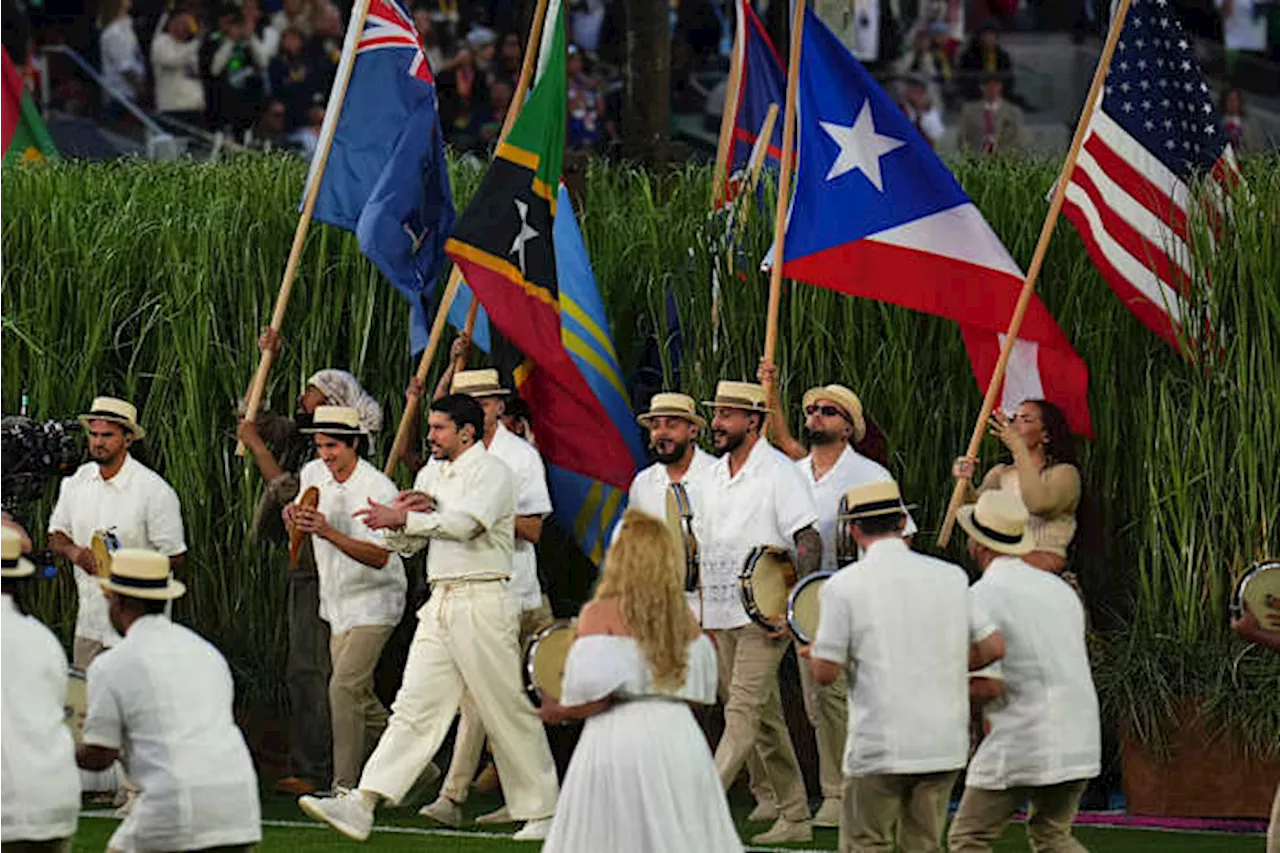
In the final moments of his act, Bad Bunny was joined by a crowd of performers waving flags from various countries, including those from Latin America and the Caribbean. Reanna Cruz, a music critic with Vox Media, highlighted that the performance emphasized community and joy. She noted, “If we have nothing else in times of hardship, we have community and we have joy.” This sentiment illustrated the importance of inclusivity, showcasing that the definition of America can extend beyond national borders.
Furthermore, Christopher Campo-Bowen, a musicology professor at Virginia Tech, pointed out that Bad Bunny’s presentation also touched on Puerto Rican sovereignty and identity. The artist celebrated the unique culture of Puerto Rico, which has been shaped by its history as a U.S. territory. He waved the Puerto Rican flag, adorned with a light blue triangle—symbolic of Puerto Rican independence—while promoting a message of unity among all Americans.
The performance also served as a counter-narrative to prevailing conservative views of American identity. Vanessa Díaz, an associate professor of Chicano and Latino studies at Loyola Marymount University, remarked that Bad Bunny’s declaration of “God bless America” included all Latin American nations, asserting their significance in the broader American context. “It was about unity, but it was also about staking Latinos’ claim in this country,” Díaz explained.
Historical and Cultural Significance
The themes of belonging and identity in Bad Bunny’s performance are particularly resonant in today’s socio-political climate. Puerto Ricans, although U.S. citizens since 1917, face unique challenges, including limited representation in Congress and the inability to vote for President. Rivera-Rideau elaborated on this complexity, noting that the halftime show simultaneously commented on Puerto Rico’s colonial relationship with the mainland while demanding recognition for Latinos in the United States.
Critics have noted that the performance was not only entertaining but also deeply educational. The fusion of music and political statement allowed Bad Bunny to engage with audiences on multiple levels, making a case for inclusion and celebration of cultural diversity. As Cruz aptly stated, “Joy is resistance and dancing is resistance,” encapsulating the spirit of the performance as one of both celebration and advocacy.
In a time when cultural identity is often contested, Bad Bunny’s Super Bowl halftime show stood out as a landmark event, redefining what it means to be American in today’s world. The artist’s ability to weave together threads of joy, unity, and cultural pride resonated with millions, leaving an indelible mark on the history of the Super Bowl and American entertainment.