Physicists at the University of Toledo are tackling the challenges of solar cell technology for outer space applications. Supported by the Air Force Research Laboratory, their work aims to enhance the efficiency and durability of solar cells exposed to the harsh conditions found beyond Earth’s atmosphere. A recent study published in the journal Solar RRL highlights the potential of antimony chalcogenide as a material for developing more resilient solar cells.
Space environments present unique obstacles for solar technology, including extreme temperatures and intense radiation, which significantly reduce the longevity and functionality of traditional solar cells. The research team at the Wright Center for Photovoltaics Innovation and Commercialization is focused on addressing these issues by exploring antimony compounds, which show promise as effective light-absorbing semiconductors.
Innovative Research Highlights Potential of Antimony Compounds
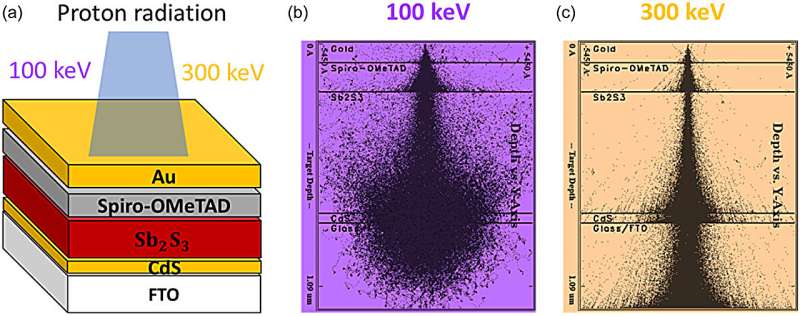
The recent publication, co-led by doctoral student Alisha Adhikari, evaluates the radiation tolerance of antimony chalcogenide solar cells. The study, which has garnered attention with its front cover feature in Solar RRL, indicates that these solar cells offer greater resistance to radiation compared to conventional technologies currently used in space missions.
“Antimony chalcogenide solar cells exhibit superior radiation robustness compared to the conventional technologies we’re deploying in space,” Adhikari stated. She emphasized the need for these solar cells to achieve higher efficiency levels before they can be considered viable alternatives for future space exploration initiatives.
The research team, under the leadership of Dr. Randall Ellingson, a professor in the Department of Physics and Astronomy, includes postdoctoral researcher Dr. Vijay Karade and doctoral student Scott Lambright. Together, they plan to investigate innovative methods to harness solar energy in the extreme conditions of space, aiming to overcome the challenges posed by high particle radiation and fluctuating temperatures.
Future Implications for Space Missions
The exploration of antimony chalcogenide solar cells reflects a growing interest in alternative materials that could revolutionize solar technology for space applications. The success of this research could lead to significant improvements in the efficiency and durability of solar cells, ultimately benefiting future missions beyond Earth.
As the demand for sustainable energy sources in space continues to rise, the work being done at the Wright Center for Photovoltaics Innovation and Commercialization positions the University of Toledo at the forefront of solar technology advancements. The implications of this research extend beyond academic interest, potentially influencing the future of energy solutions for long-term space exploration.
The findings presented in this study, titled “Assessing Proton Radiation Hardness of Antimony Chalcogenide Solar Cells,” mark a critical step toward enhancing solar cell technology for use in outer space, paving the way for more efficient energy solutions in the years to come.