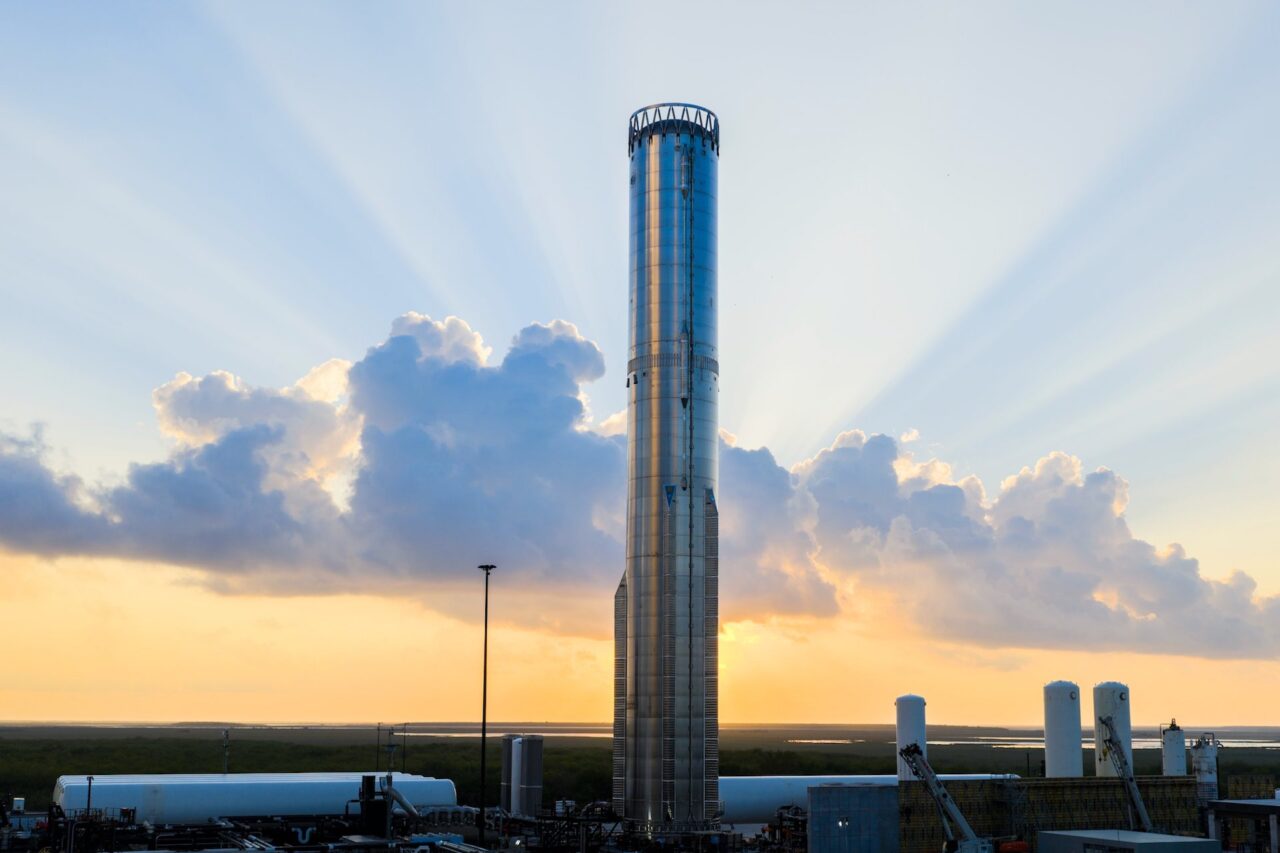
SpaceX’s latest efforts to prepare for its next-generation Starship were met with a setback when the company’s upgraded booster, known as Booster 18, exploded during pre-launch testing at its Massey test site in Texas. This incident occurred as SpaceX was assessing the rocket’s capabilities ahead of the anticipated first orbital flight in early 2024.
The explosion, captured in footage shared on social media platform X, revealed significant damage to the lower portion of Booster 18, where the liquid oxygen propellant is stored. SpaceX has not provided a specific comment regarding the extent of the damage or whether the explosion was intentional. In a post on X, the company noted that initial operations would focus on testing the booster’s redesigned propellant systems and structural integrity.
Focus Shifts to Next-Generation Starship
SpaceX’s latest rocket is part of the evolution from the previous Starship version, which recently completed its last successful test flight. The second iteration of Starship, known as version 2, concluded its two-year testing phase with a successful suborbital launch. Now, attention has turned to the third, larger version of Starship, set to debut in 2026.
This next-generation Starship features enhancements that allow for greater propellant capacity and a more powerful version of its engines, the third-generation Raptor engines. These upgrades are crucial as SpaceX aims to perfect the design and performance of the rocket, particularly after encountering challenges in earlier test flights.
Despite the recent successes, SpaceX’s journey has been marked by a series of failed launches earlier this year. The pressure to deliver a reliable Starship prototype is immense, especially considering that the new design aims to rectify issues faced by version 2, which experienced multiple explosive failures.
Future Missions Depend on Successful Testing
Elon Musk, the founder and CEO of SpaceX, acknowledged the complexity of transitioning to version 3. He noted that “pretty much everything changes on the rocket with version 3” and warned that the new prototype might face “initial teething pains” due to its radical redesign. The apparent explosion of Booster 18 raises questions about the testing process, as SpaceX could have been deliberately pushing the rocket to its limits to gather data on its performance under extreme conditions.
The stakes are high for SpaceX, particularly as it strives to meet deadlines set by NASA. The agency aims to have astronauts land on the Moon as part of the Artemis 3 mission by 2027. Recently, NASA’s acting head, Sean Duffy, indicated that delays in the development of the Starship could lead the agency to reconsider its contract with SpaceX in favor of other competitors.
In addition to lunar ambitions, Musk has expressed a desire to send an uncrewed Starship to Mars during a launch window in 2024. Achieving this goal hinges on the next-generation Starship’s ability to complete an orbital flight successfully and the company’s capacity to adapt to the challenges posed by a larger, redesigned rocket.
As SpaceX navigates these developments, the outcome of the current testing phase will be critical in determining the future of space exploration initiatives and the reliability of its Starship program.