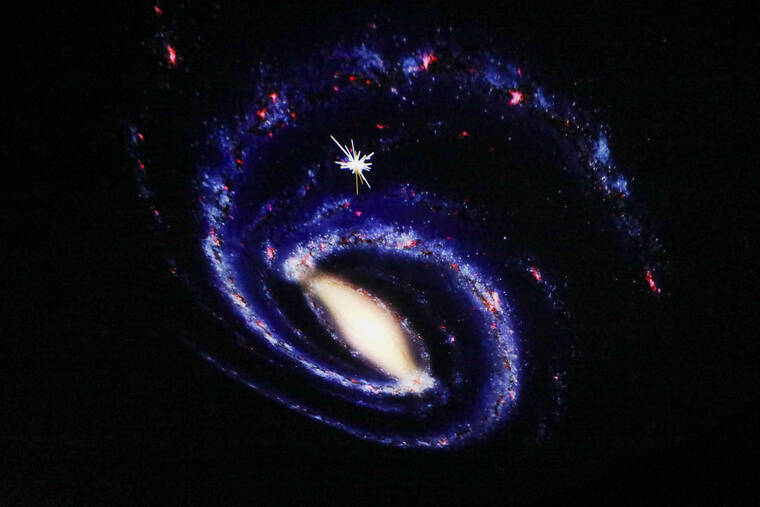
Recent reflections on scientific advancements highlight the dramatic evolution of our understanding over the past century. Notably, cosmologists have transitioned from believing the Milky Way Galaxy encompassed the entire universe to recognizing that there are hundreds of billions of galaxies within the observable universe. This profound shift underscores how far our knowledge has come and the importance of staying informed about scientific developments.
Geological insights have similarly transformed. A century ago, the concept of tectonic plates was unknown. Today, geologists confirm that the Earth’s land masses are in constant motion due to these plates. Such foundational knowledge shapes our comprehension of natural phenomena and informs decisions about land use and infrastructure.
In the realm of biology, the understanding of life’s origins has advanced significantly. While many scientists were skeptical about the evolution of life from non-living matter a hundred years ago, contemporary genetics and biology firmly establish that life evolved from simpler forms, ultimately leading to the diverse array of species we observe today.
Climate science has undergone a revolution as well. A century ago, climatologists lacked the technology to measure global warming accurately. Today, they possess extensive data that unequivocally shows the Earth is warming, primarily due to human activity. The implications of these findings are significant, impacting everything from environmental policy to public health.
In light of these advancements, the call for leaders to engage more proactively with scientific knowledge has grown louder. As expressed by resident Robert Griffon from Makiki, it is crucial for political leaders, including the President, to develop a deeper understanding of science. This engagement is vital not only for informed policy-making but also for fostering public trust in scientific institutions.
Reflecting on these scientific revelations, it is clear that our understanding of the world is continually evolving. It is essential for society to encourage leaders to embrace this knowledge, ensuring that decisions made at the highest levels are informed by the best available evidence.
The dialogue surrounding these issues continues to be relevant and urgent, emphasizing the need for an informed electorate and responsible leadership. As scientific literacy becomes increasingly important, the responsibility lies with both individuals and leaders to prioritize education and understanding in the face of an ever-changing world.