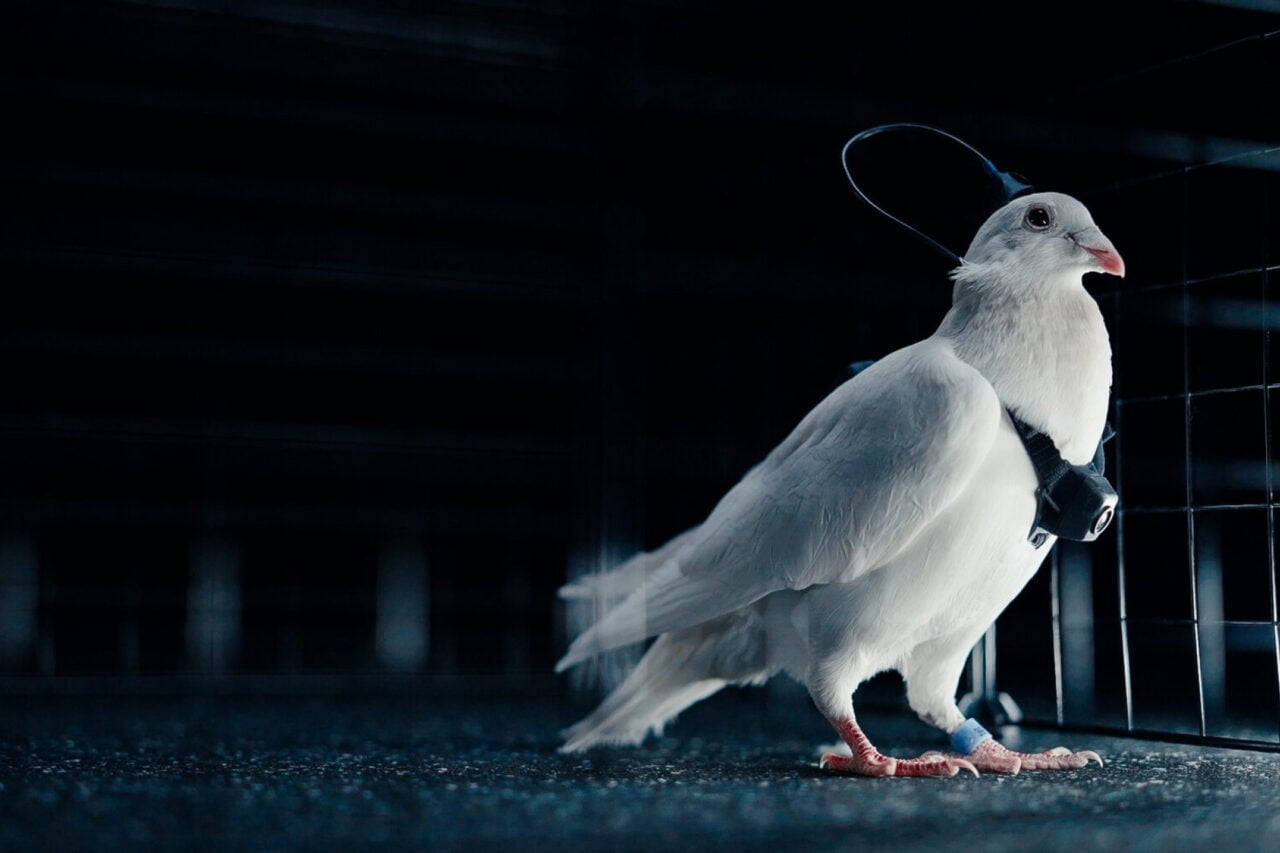
A Russian startup, Neiry, has announced a pioneering venture that transforms pigeons into biological drones. The company claims to have successfully completed test flights where pigeons were fitted with neural implants, effectively allowing them to be guided in flight. This groundbreaking development aims to utilize the natural abilities of pigeons for various applications, including surveillance and search-and-rescue missions.
According to Neiry, the implants deliver what they describe as “mild stimulation” to specific areas of the pigeons’ brains. This stimulation encourages the birds to follow predetermined flight paths, akin to how traditional drones operate. The pigeons, equipped with small controllers, solar panels, and cameras, have been tested to evaluate their effectiveness in data collection during these flights.
Turning Pigeons Into Living Drones
Neiry’s approach involves inserting tiny electrodes into the pigeons’ skulls, which connect to a stimulator positioned on their heads. Remarkably, the company claims that the pigeons can be deployed almost immediately after the procedure, with minimal risk to their health. Given their natural flying capabilities, these birds may outperform mechanical drones in challenging environments, navigating complex terrains and enduring harsh weather conditions. Neiry reports that these biological drones can fly up to 300 miles (approximately 483 kilometers) in a single day without needing a recharge, making them efficient for surveillance and inspection tasks.
Neiry’s CEO, Alexander Panov, emphasized the potential of these bio-drones in various fields, including infrastructure monitoring and emergency response. The company’s ambition is to expand this technology beyond pigeons and apply it to other species for specific operational tasks.
Ethical Concerns and Regulatory Scrutiny
While Neiry asserts that the pigeons continue their normal behavior and receive care when not in flight, the ethical implications of such experiments are under scrutiny. Experts have raised concerns about the use of neural implants to control animals. Nita Farahany, a bioethicist at Duke University, expressed her reservations, stating that manipulating animals for operational purposes poses significant ethical dilemmas. Farahany noted, “Any time we’re using neural implants to try to control and puppeteer any species, it feels icky,” highlighting the moral complexities involved.
Neiry maintains that their PJN-1 technology is strictly for civilian use. A company spokesperson stated to The Telegraph that they strive to ensure the bio-drones are employed exclusively for non-military purposes. The firm also mentioned that government support for such technological advancements is common practice in many countries, suggesting that their operations align with global norms.
As Neiry moves forward with its project, it aims to implement the technology in sectors such as utilities, logistics, and agriculture. Should the company consider international sales, it could face significant scrutiny from stakeholders regarding the ethical ramifications of its innovations. The future remains uncertain, especially as public sentiment evolves surrounding the treatment of animals in such technological contexts.