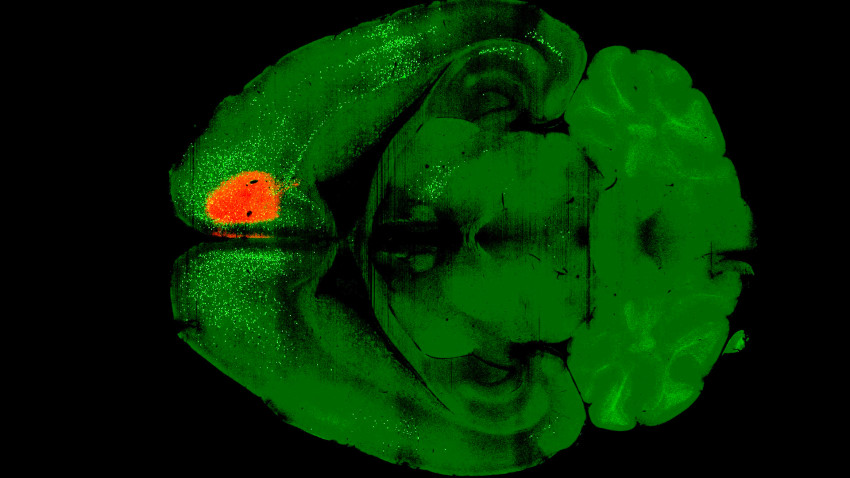
A recent study led by researchers at Cornell University has unveiled significant insights into how psilocybin, a psychedelic compound found in magic mushrooms, interacts with the brain’s neural networks. Published on December 5, 2023, in the journal Cell, the research combines the use of psilocybin with a modified version of the rabies virus to explore the rewiring of brain connections associated with depression.
The study focused on the effects of psilocybin on cortico-cortical feedback loops, which are believed to contribute to negative thought patterns in individuals suffering from depression. The findings indicate that psilocybin weakens these feedback loops, potentially alleviating the fixation on negative thoughts that often characterizes depressive states. The research also demonstrated that psilocybin enhances connections to subcortical regions responsible for converting sensory input into action, effectively improving sensory-motor responses.
Quan Jiang, the lead author and a postdoctoral researcher, emphasized the significance of understanding how psilocybin alters brain circuitry. The team sought to identify the specific areas of the brain that undergo rewiring following treatment, a question that remains largely unanswered in previous studies.
To achieve this, the researchers employed a novel approach by injecting psilocybin into the frontal cortical pyramidal neurons of mice. Following the injection, they introduced a variant of the rabies virus engineered to traverse synapses and label connected neurons with fluorescent proteins. This dual approach allowed the team to create a comprehensive map of the brain’s connectivity, akin to a detailed street map of a neighborhood.
Alex Kwan, professor of biomedical engineering and the study’s senior author, compared the process to constructing new roads in the brain without knowing where they lead. He stated, “With psilocybin, it’s like we’re adding all these roads to the brain, but we don’t know where the roads go.” The rabies virus, known for its ability to spread between neurons, provided the necessary tools to trace these connections.
The results revealed that psilocybin significantly weakened recurrent connections within the cortex, suggesting a potential mechanism for breaking the cycle of rumination that exacerbates depression. Kwan noted, “Rumination is one of the main points for depression, where people have this unhealthy focus and they keep dwelling on the same negative thoughts.” By disrupting these feedback loops, psilocybin may reconfigure brain activity in a way that fosters a healthier mental state.
The study’s comprehensive mapping also indicated that psilocybin’s effects are not limited to isolated regions of the brain. Instead, the rewiring appeared to involve widespread changes throughout the entire brain. Kwan expressed surprise at the extent of these alterations, highlighting that previous research often concentrated on more localized circuits.
Furthermore, the researchers found that the activity level of specific brain regions could influence how psilocybin rewires neural circuitry. By manipulating neural activity in one area, they observed changes in the way psilocybin affected connectivity, opening new avenues for therapeutic interventions. Kwan remarked, “That opens up many possibilities for therapeutics, how you maybe avoid some of the plasticity that’s negative and then enhance specifically those that are positive.”
The study’s co-authors include a diverse group of researchers from Yale University, the Allen Institute for Brain Science in Seattle, the University of California, Irvine, and the Chinese University of Hong Kong. The research received support from One Mind and the National Institutes of Health, underscoring the collaborative effort to unlock the potential of psychedelic compounds in treating mental health disorders.
As interest in the therapeutic applications of psychedelics continues to grow, this research contributes valuable knowledge to the understanding of how substances like psilocybin can alter brain function. The findings not only shed light on the mechanisms underlying depression but also pave the way for future developments in psychiatric treatment.