In late 2025, a team of researchers, led by Elisa Merz, a biogeochemist from the University of Konstanz, conducted groundbreaking studies on microbial life in Lake Fryxell, located in the McMurdo Dry Valley of Antarctica. The lake, covered year-round with four to five meters of ice, presents a unique ecological environment, devoid of larger organisms but rich in microorganisms that form intricate mats on the lakebed.
Unique Conditions of Lake Fryxell
Lake Fryxell’s anoxic conditions—where oxygen is absent at depths below ten meters—are typically found in deep oceanic environments or the depths of major inland lakes. In contrast, divers can easily manage the ten-meter depth, making it an ideal research site. Merz noted, “Lake Fryxell is special because it does not contain any macrozoobenthic organisms—no fish and no large algae—just a plethora of microorganisms.”
The stable ice cover ensures that the lake remains undisturbed by wind or currents, leading to well-preserved microbial mats, which Merz describes as layered structures resembling lasagne. “This lack of mixing allows us to observe these microbial colonies in detail,” she added.
Diving in Extreme Conditions
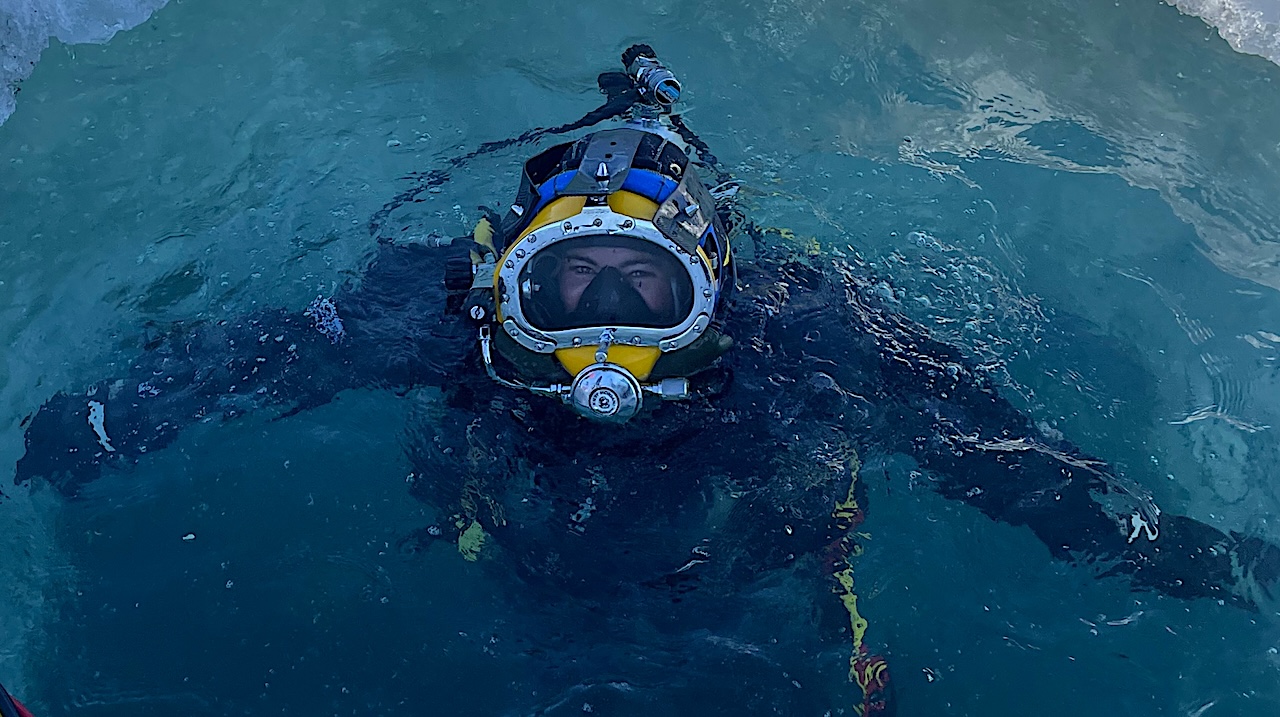
Conducting research in extreme conditions is no easy feat. With outside temperatures plummeting to minus 20 degrees Celsius, the team must adapt to the harsh environment. However, the water in Lake Fryxell remains a relatively comfortable four degrees Celsius. One of the most demanding roles involves managing the diving umbilical—an essential line connecting divers to the surface. This responsibility falls on team members who must remain exposed to the elements while ensuring the diver’s safety.
Merz explained the challenge of this role: “Although we take turns, standing outside for 45 minutes is really the absolute limit.” The combination of severe cold and the need for constant communication with divers adds an extra layer of difficulty to their research efforts.
While working from the McMurdo Station, the largest research base in Antarctica, the team benefits from logistics and support but faces unique challenges in the field camp at Lake Fryxell. The conditions push researchers to adapt both physically and mentally, emphasizing the resilience required for scientific exploration in such remote locations.
Merz’s research not only contributes to understanding microbial life in extreme environments but also holds potential implications for astrobiology. The findings from Lake Fryxell may provide insights into life in similar harsh conditions on other planets, making the study relevant beyond Earth.
For more in-depth coverage of this research and the experiences of the team at Lake Fryxell, the University of Konstanz presents a detailed report titled “In Her Element” on their online magazine.