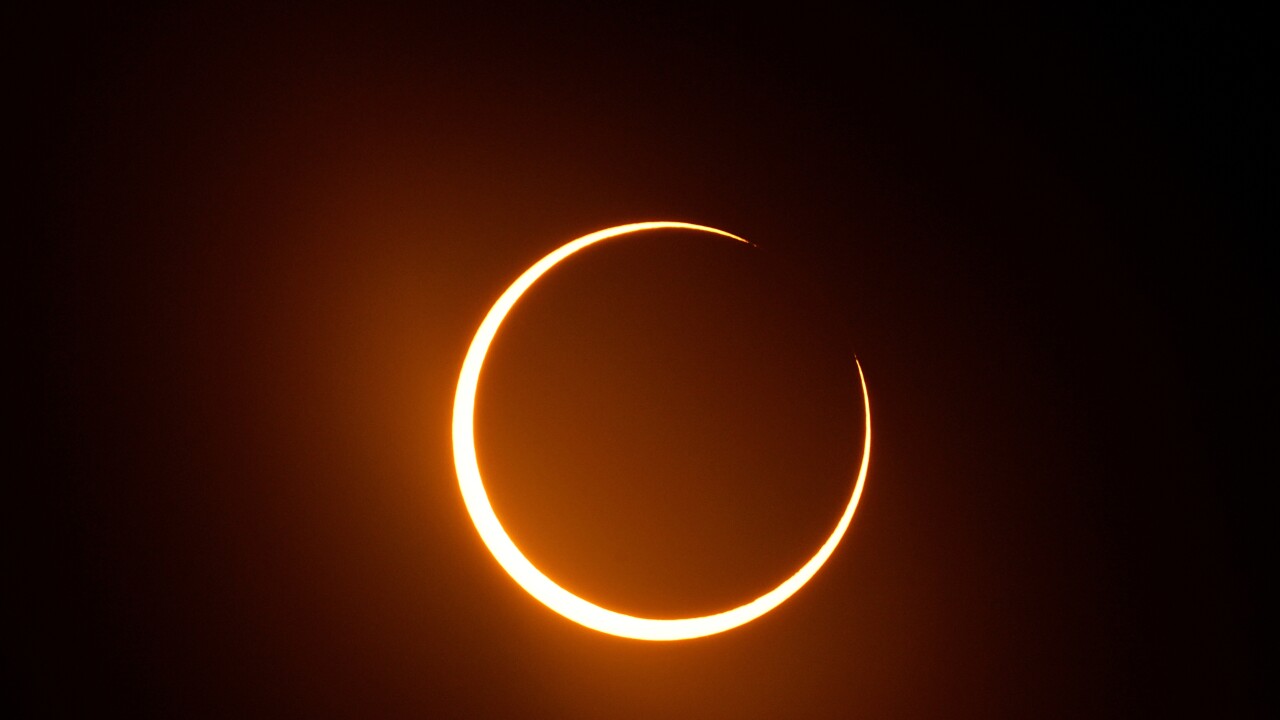
On October 14, 2023, Antarctica will become a prime location for witnessing a rare solar phenomenon known as the “ring of fire” eclipse. This annular solar eclipse, which occurs when the moon is positioned farther from the Earth, will result in a stunning visual display where only a thin ring of the sun remains visible. The event will be particularly notable for the various species of penguins inhabiting the continent, as they will have a unique opportunity to observe this extraordinary celestial occurrence.
Viewing Opportunities Beyond Antarctica
While the totality of the eclipse will be exclusive to Antarctica, regions in Chile and Argentina, along with parts of southeastern Africa, including Madagascar, Lesotho, and South Africa, will have the chance to witness a partial eclipse. Astronomer Joe Llama from the Lowell Observatory noted, “The penguins down there are going to have a great show,” highlighting the unique vantage point offered by the southernmost continent.
Solar eclipses occur when the sun, moon, and Earth align perfectly, allowing the moon to cast its shadow on the Earth. This specific annular eclipse is characterized by the moon’s distance from Earth, which prevents it from completely obscuring the sun. Instead, a bright ring remains visible around the moon, leading to its distinctive name.
Safety Measures and Future Eclipses
As exciting as these celestial events are, it is crucial to take safety precautions. Looking directly at the sun during an eclipse can cause significant eye damage, even if the sun is mostly obscured. Special eclipse glasses that comply with the ISO 12312-2 safety standard are essential for safe viewing. Regular sunglasses and binoculars do not provide adequate protection.
“The sun essentially gets its core taken out,” Llama explained, emphasizing the unique visual effect of the annular eclipse.
For those unable to secure proper eclipse glasses, alternative viewing methods include creating a pinhole projector using common household items or using objects like colanders to project images of the eclipse onto the ground.
Looking ahead, another significant solar eclipse is scheduled for August 12, 2026, which will be a total eclipse visible in regions including Greenland, Iceland, parts of Spain, Russia, and northern sections of Portugal. Meanwhile, many locations across Europe, Africa, and North America will experience a partial eclipse during this event.
As the excitement builds for the upcoming eclipse, astronomers and nature enthusiasts alike will be eager to observe the stunning interplay between the sun and moon, reminding us of the breathtaking spectacles our universe has to offer.