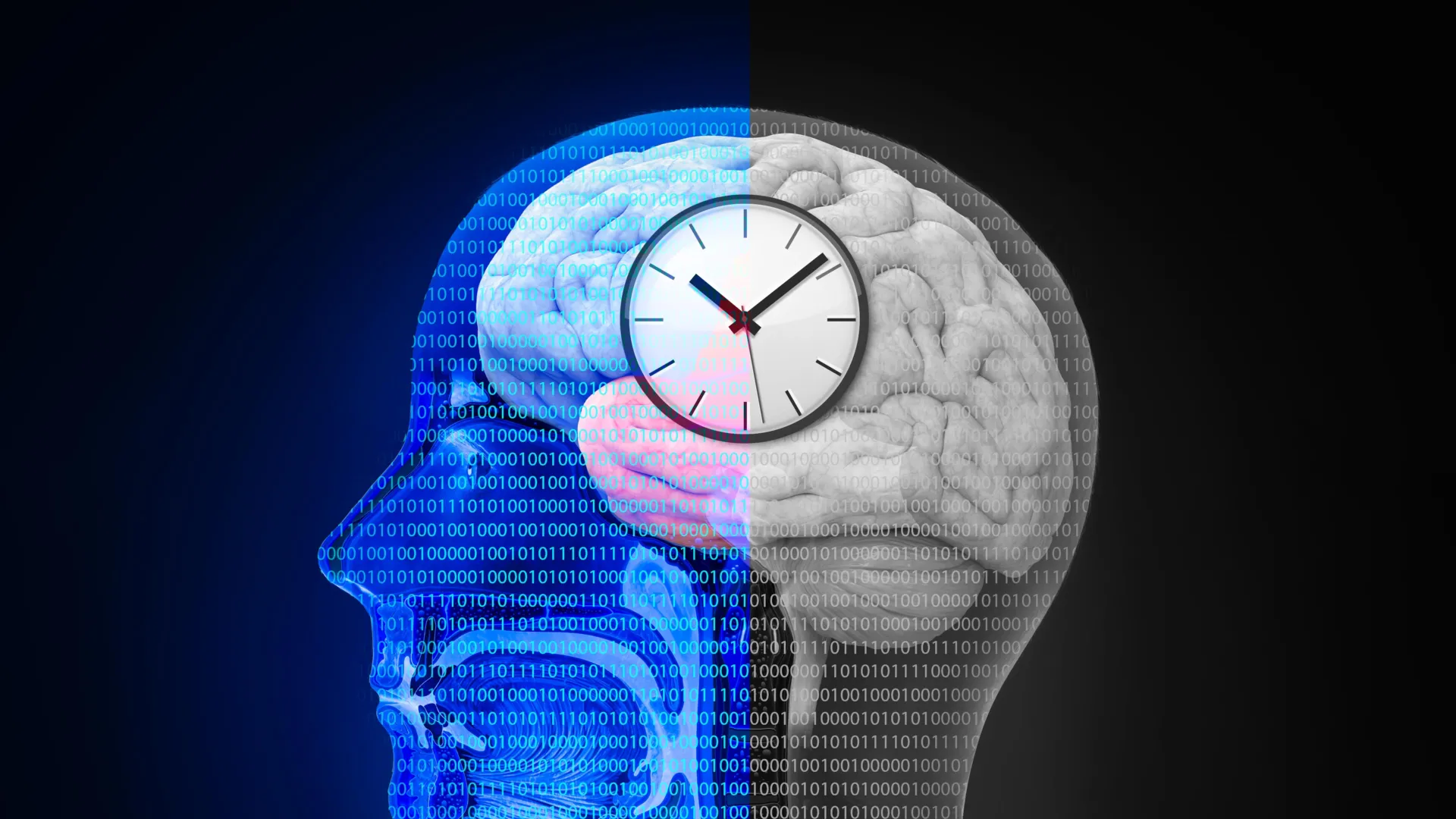
Research from Rutgers University has unveiled how the brain integrates rapid and slower cognitive processes, revealing a complex internal timing system that influences individual cognitive abilities. This study, published in Nature Communications, sheds light on the distinct operational speeds of different brain regions and how these regions communicate through white matter connections.
Understanding the Brain’s Internal Clocks
The human brain continuously processes a variety of signals, some requiring immediate responses while others demand thoughtful reflection. The research demonstrates that various brain regions operate on unique internal timelines, referred to as intrinsic neural timescales (INTs). These INTs determine how long a region retains information before responding to the next cue.
Linden Parkes, an assistant professor of psychiatry at Rutgers Health and the study’s senior author, emphasized the significance of this timing system: “To affect our environment through action, our brains must combine information processed over different timescales.” The study reveals that effective communication between brain regions is essential for coherent decision-making and behavior.
Mapping Connectivity Across Nearly 1,000 Individuals
To explore the brain’s timing mechanism, Parkes and his team analyzed brain imaging data from 960 individuals. They constructed detailed maps of individual brain connections, known as connectomes, and employed mathematical models to track the flow of information through these networks.
Parkes noted, “Our work probes the mechanisms underlying this process in humans by directly modeling regions’ INTs from their connectivity.” This analysis connects local information processing to broader behavioral outcomes, providing insights into how cognitive functions are influenced by brain structure.
The research indicates that the arrangement of neural timescales throughout the cerebral cortex is crucial for the brain’s ability to switch between different activity patterns associated with behavior. The study found notable variability in this timing organization among individuals, which may help clarify the differences in cognitive abilities observed in the population.
Connecting Timing Patterns to Genetic Factors
Moreover, the study highlighted that variations in how the brain manages fast and slow information processing relate to genetic, molecular, and cellular characteristics of brain tissue. Similar patterns were also identified in mouse brains, suggesting a shared mechanism across species.
“Our work highlights a fundamental link between the brain’s white matter connectivity and its local computational properties,” Parkes explained. He added that individuals whose brain wiring aligns more closely with how different regions handle information tend to exhibit enhanced cognitive capabilities.
Future Implications for Mental Health Research
Building on these findings, Parkes and his colleagues are now investigating the implications of their research for neuropsychiatric disorders, including schizophrenia, bipolar disorder, and depression. The aim is to understand how alterations in brain connectivity may disrupt the processing of information over time.
This investigation involved collaboration with Avram Holmes, an associate professor of psychiatry at Rutgers Health, alongside postdoctoral researchers Ahmad Beyh and Amber Howell, as well as Jason Z. Kim from Cornell University. The study emphasizes the importance of understanding the brain’s timing systems in addressing cognitive and mental health challenges.
This groundbreaking research marks a significant step towards comprehending the intricate mechanisms of the human brain and their implications for both cognitive function and mental health.