
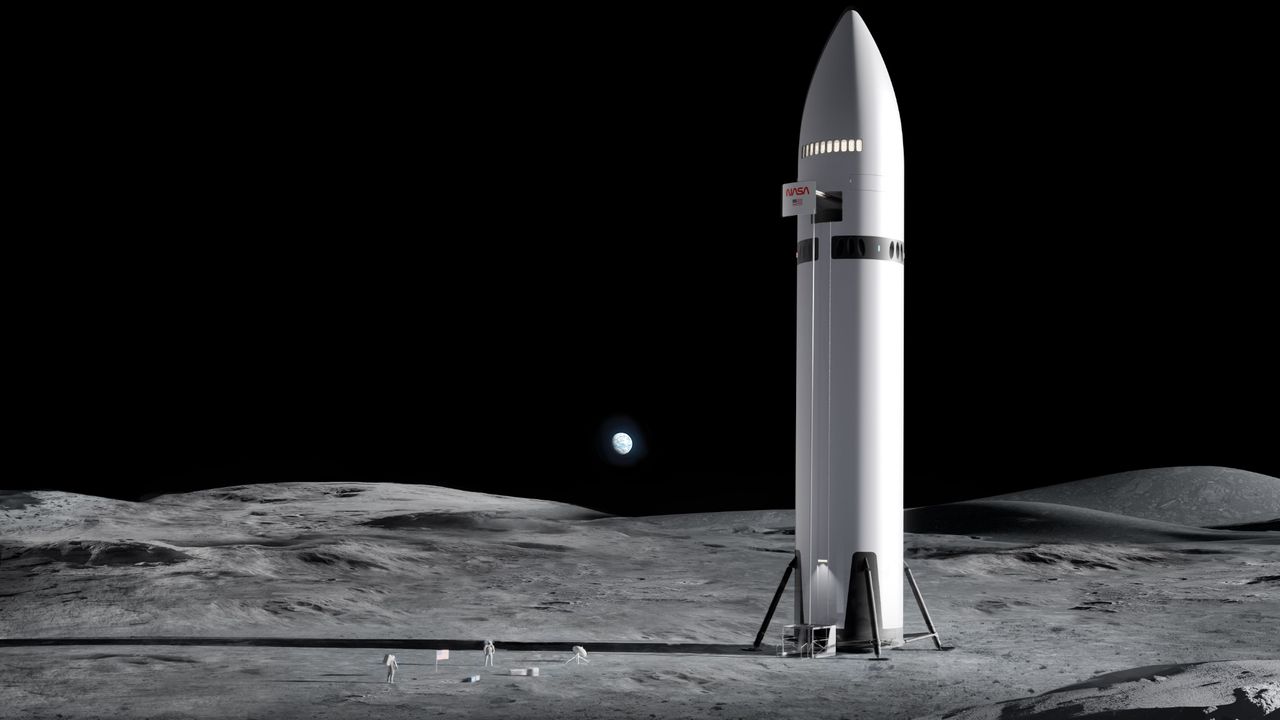
NASA has announced significant changes to its Artemis 3 mission, which will no longer involve a lunar landing or SpaceX’s Starship. On February 27, 2024, the agency revealed that Artemis 3, originally set to land astronauts on the moon, will instead remain in low Earth orbit through its planned launch in 2027. This revised approach aims to test several technologies, including a rendezvous and docking procedure involving the Orion crew capsule and potential commercial landers from both SpaceX and Blue Origin.
The decision comes amid concerns regarding the pace of development for SpaceX’s Starship, which has completed 11 test flights to date but has yet to reach Earth orbit. NASA’s former Acting Administrator, Sean Duffy, indicated last October that the Artemis 3 landing contract would be opened to competition due to dissatisfaction with Starship’s progress. As a result, Blue Origin, the space company founded by Jeff Bezos, has emerged as a key competitor for the mission.
NASA’s Strategy Shift
In its announcement, NASA officials emphasized the importance of not relying on a single contractor for lunar landings. Don Platt, head of the Department of Aerospace, Physics and Space Sciences at the Florida Institute of Technology, explained that the agency’s decision reflects a broader push for competition between SpaceX and Blue Origin. He noted that NASA’s wording in the announcement implies the possibility of utilizing Blue Origin’s Blue Moon lander for upcoming missions.
Blue Origin appears committed to increasing its lunar capabilities. In late January 2024, the company announced it would pause suborbital space tourism flights for at least two years to focus on developing its human lunar lander. The company stated that this decision aligns with the goal of returning to the moon and establishing a sustained presence there.
The revised Artemis architecture now anticipates the first crewed lunar landing since the Apollo missions with Artemis 4 in 2028, with a potential second landing occurring later that same year with Artemis 5. This strategy prioritizes a methodical approach and an increased launch cadence, addressing previous delays in the program.
Future Goals and Competition
NASA’s long-term objective is to establish a permanent human presence on and around the moon within the next five to ten years. The agency also aims to land astronauts before China, which is pursuing lunar missions and intends to have boots on the moon by 2030. In a statement, NASA Administrator Jared Isaacman highlighted the urgency of this goal, citing increasing competition from China as a motivating factor.
“With credible competition from our greatest geopolitical adversary increasing by the day, we need to move faster, eliminate delays, and achieve our objectives,” Isaacman stated. He underscored the necessity of standardizing vehicle configurations and increasing flight rates to achieve the ambitious goals set forth by the Artemis program.
As the Artemis missions evolve, the focus on competition between contractors may shape the future of lunar exploration. The changes to Artemis 3 signal a strategic pivot for NASA as it navigates the complexities of space exploration and seeks to maintain leadership in the new space race.


