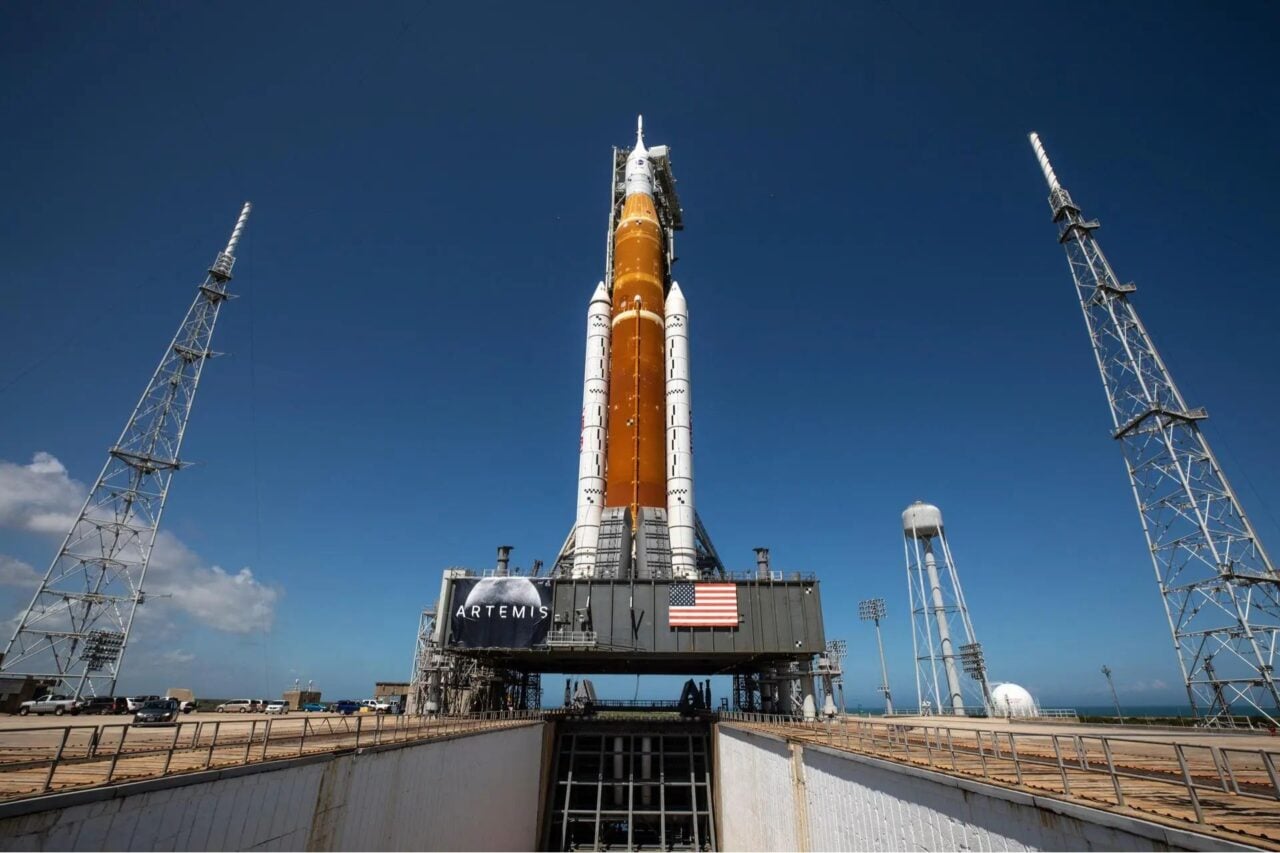
NASA is set to roll out its Artemis 2 Moon mission rocket on January 17, 2024, marking a significant milestone in the agency’s lunar exploration efforts. The rollout of the Space Launch System (SLS) rocket, along with the Orion spacecraft, is scheduled to begin at 07:00 ET from the Vehicle Assembly Building (VAB) to Launch Pad 39B at Kennedy Space Center. This event will be live-streamed, allowing the public to witness the historic journey, which is expected to take between 8 and 10 hours.
During a briefing on January 12, NASA officials expressed their enthusiasm for the upcoming launch. Launch Director Charlie Blackwell-Thompson stated, “About an hour after we get that first motion, you’ll begin to see this beautiful vehicle cross over the threshold of the VAB and come outside for the world to have a look.” The rollout will be followed by a media event at 09:00 ET, featuring NASA Administrator Jared Isaacman and the Artemis 2 astronaut crew, who will discuss their mission preparations.
Final Preparations for Launch
As the SLS rolls out, engineers will pause to retract the mobile launcher’s crew access arm, a process that will take approximately 45 minutes. The vehicle will then move towards the launch pad at a slow pace of just under 1 mile per hour (1.6 km/h). Once secured on the pad, teams will connect ground support equipment, conduct checks, and power up all integrated systems for the first time. This step is crucial to ensure that all components, including flight hardware and the mobile launcher, function correctly.
The Artemis 2 crew includes NASA astronauts Reid Wiseman, Victor Glover, Christina Koch, and Canadian Space Agency astronaut Jeremy Hansen. They will perform a final walkdown of the emergency egress system at the pad. If all goes according to schedule, NASA aims to conduct a wet dress rehearsal on February 2, 2024. This final test will involve powering on both the SLS and Orion, as well as loading the rocket with propellant. Engineers will simulate a launch countdown, focusing on safely draining the propellant without firing the rocket’s boosters.
Launch Timeline and Challenges
The targeted launch date for Artemis 2 is set for February 6, 2024. However, with only a four-day gap between the wet dress rehearsal and the earliest potential launch date, there is uncertainty regarding the timeline. Blackwell-Thompson emphasized the need to complete the wet dress rehearsal successfully before committing to a launch. If Artemis 2 cannot launch by February 6, additional opportunities are available on February 7, 8, 10, and 11, with further dates in March and April.
Safety remains NASA’s top priority, with officials reiterating that they are not rushing the mission. As the first crewed mission in the Artemis program, Artemis 2 is critical for future lunar exploration, particularly for the planned Artemis 3 Moon landing. The mission is also set against the backdrop of international competition, primarily with China, to achieve significant milestones in space exploration.
The Artemis 2 astronauts will venture farther into space than any humans have previously traveled, observing regions of the Moon that remain unexplored. This mission will not only serve as a test flight but also as a demonstration of humanity’s readiness to return to deep space, making it a pivotal moment in the history of space exploration.