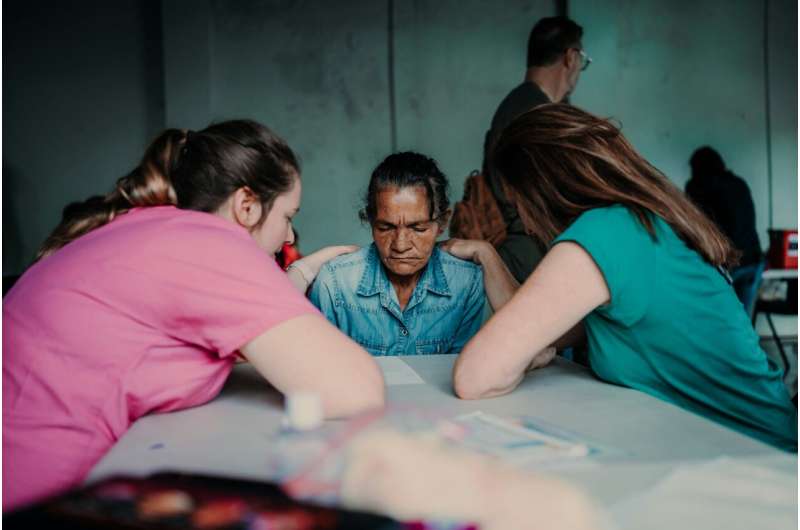
A recent study conducted by researchers from the University of Connecticut and the University of Oklahoma reveals that nearly 2 million Christian missionaries worldwide employ similar communication strategies to articulate their experiences abroad and the complexities of returning home. The findings highlight how these missionaries utilize metaphors, biblical vernacular, and personal narratives to express their feelings and navigate the transition back to their original environments.
According to R. Amanda Cooper, an assistant professor in UConn’s Department of Communication, the study sheds light on how individuals derive meaning from challenging experiences. “Life is full of challenging transitions, and our study provides insight into the ways people draw upon language to make sense of those changes,” Cooper stated. The research emphasizes a universal process that extends beyond the missionary experience, enabling a deeper understanding of how people cope with significant life alterations.
The study involved interviews with 26 missionaries who spent as long as three and a half years serving in various regions, including Africa, the Philippines, Russia, and Brazil. Participants were primarily affiliated with the Church of Jesus Christ of Latter-day Saints, while others identified as nondenominational Christians or Catholics. Most of the missionaries were single, white females in their twenties. Their research, titled “Extending communicated sense-making theorizing to social groups: missionaries’ use of metaphor, personification, and in-group vernacular,” was published in the journal Human Communication Research.
Understanding the Transition Experience
Cooper and her colleague, Alice Fanari, noted that many missionaries face a difficult adjustment upon returning home. Having adopted new identities abroad, they must reconcile their experiences with their previous selves. “The missionaries we spoke to described a wrestling match between the ‘old self’ and the ‘new self’,” Cooper explained. This struggle is similar to that experienced by military veterans, Peace Corps volunteers, and other service members returning from extended assignments.
The study revealed that missionaries often refer to biblical stories and language when discussing their experiences. For instance, one missionary likened her uncertainty about returning home to the darkness following the crucifixion of Jesus, expressing hope for a future “resurrection.” “This natural integration of biblical metaphor into their narratives reflects how deeply their faith influences their communication,” Cooper observed.
Community and Communication Challenges
Cooper emphasized the importance of sharing these experiences with those around them. “The degree to which the people around us can share intercultural experiences depends on how effectively the returnees can communicate their stories,” she stated. Many returnees, however, feel silenced, facing pressure to quickly readjust to life back home.
The researchers suggest that creating spaces for missionaries to share their stories would ease the transition. They highlight the need for support systems that remind returnees their experiences remain integral to their identities, even as they take on new roles as students or employees. “Our study pulls back the curtain on what it looks like for people to come home and provides guidance on where some of the pain points might be,” Cooper concluded.
As the number of missionaries continues to grow, understanding the communication strategies they employ upon their return can help communities better support them in their reintegration journeys.