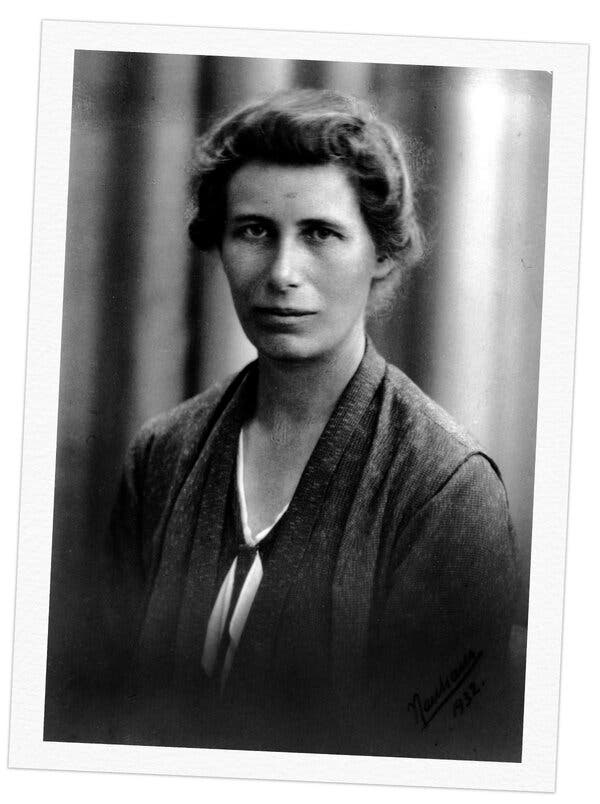
Inge Lehmann, a pioneering Danish seismologist, fundamentally changed our understanding of the Earth’s structure in September 1936 when she published a groundbreaking article titled “P’” in a French scientific journal. Her work revealed the existence of a dense inner core within the Earth, a theory that contradicted the prevailing belief that the planet’s interior was entirely molten and liquid. This revelation not only advanced the field of seismology but also highlighted the significant contributions of women in a predominantly male-dominated scientific community.
Lehmann’s journey into the depths of the Earth began with her analysis of seismic readings from a 1929 earthquake in New Zealand. While examining these readings, she observed anomalies in the behavior of seismic waves. Earthquakes produce various types of waves, including primary (P) waves, which are pressure waves that can travel through solids, liquids, and gases, and secondary (S) waves, which can only move through solids. Lehmann’s meticulous calculations and hand-drawn graphs illustrated a striking finding: a solid inner core positioned at the center of the Earth, made of a distinct and dense material.
The significance of Lehmann’s research lay not just in her findings, but also in the way she conducted her work. Operating largely in isolation in Copenhagen, she chose to focus on her scientific career over traditional societal expectations, such as marriage. Her commitment to her research and her ability to challenge established norms made her a trailblazer in the field of seismology.
Lehmann’s 30-page article meticulously detailed her findings, complete with calculations and extensive graphs that conveyed the complexity of her theories. The title “P’” may have seemed cryptic, but the implications of her work were monumental. She argued that the Earth’s interior was composed of multiple layers, with a solid inner core surrounded by a fluid outer core, which was a significant departure from the accepted model of a completely molten interior.
This revolutionary concept laid the groundwork for future research in geophysics and seismology. Following her publication, subsequent studies confirmed the existence of the inner core, affirming Lehmann’s pioneering work. Her theories not only enhanced our understanding of Earth’s composition but also provided critical insights into seismic activity and its implications for understanding earthquakes.
Lehmann’s contributions to science were not widely recognized during her lifetime, and her passing went largely unreported in mainstream media. Nevertheless, her legacy endures, inspiring generations of scientists and researchers. In recent years, efforts to honor her contributions have grown, shedding light on the vital role she played in advancing our knowledge of the Earth’s structure.
Inge Lehmann’s story serves as a reminder of the importance of diversity in science and the need to acknowledge the unsung heroes who have shaped our understanding of the world. Her groundbreaking discovery of the Earth’s inner core stands as a testament to her remarkable intellect and unwavering dedication to her work.