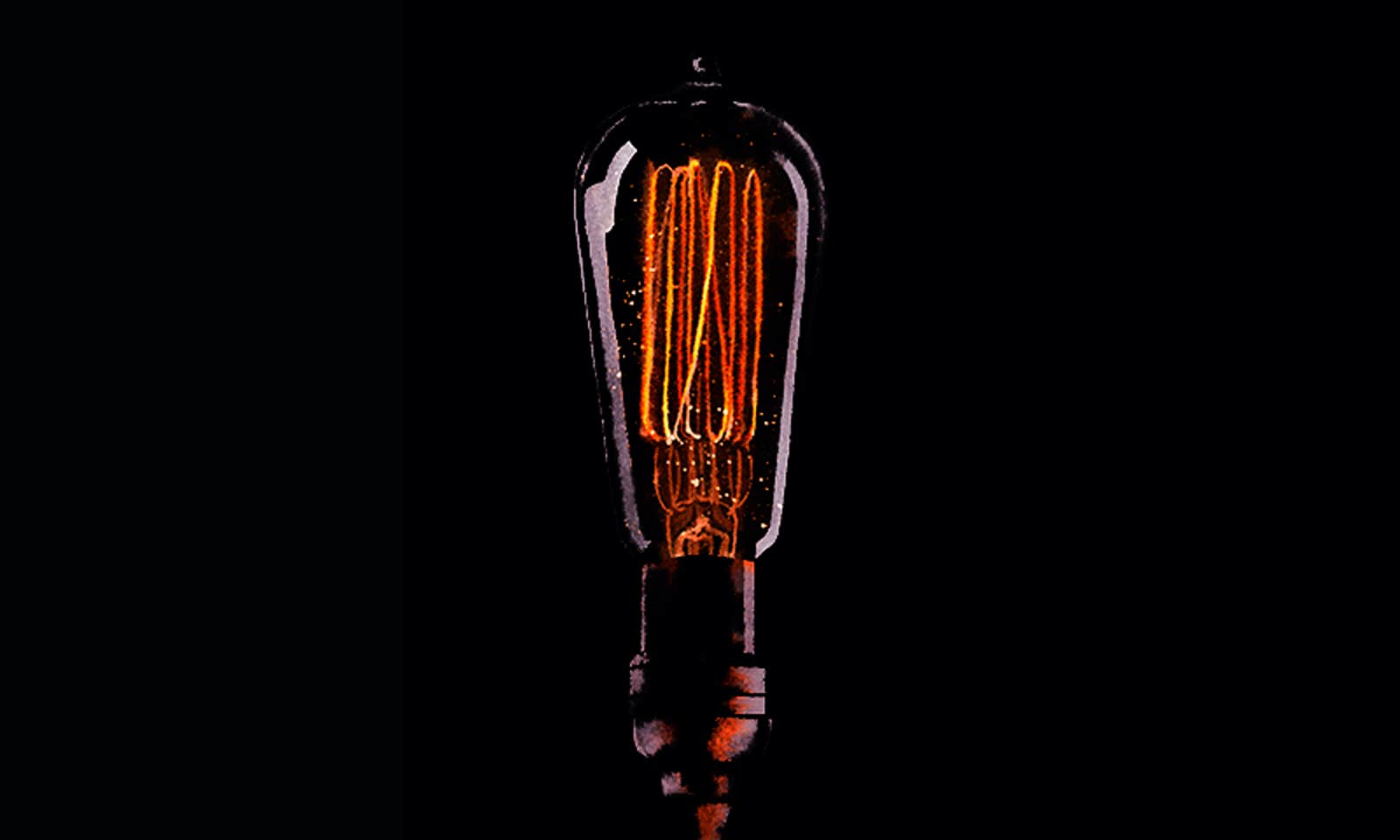
Recent research suggests that Thomas Edison may have inadvertently created a substance crucial to modern technology during his development of the light bulb in 1879. This accidental innovation could be linked to the production of graphene, a powerful semiconductor material that plays a vital role in various advanced technologies today.
Edison is best remembered for inventing the world’s first practical electric incandescent lamp, which revolutionized home illumination. In his quest for the ideal filament, Edison experimented with numerous materials, ultimately discovering that a filament made from Japanese bamboo could glow for over 1,200 hours.
Rediscovering Edison’s Legacy
While Edison’s light bulb was a monumental achievement, modern researchers are now examining its potential byproducts. Lucas Eddy, a nanomaterials researcher at Rice University, sought to determine whether Edison’s carbon-based filaments could serve as a viable source of graphene. This material, only one atom thick, offers exceptional strength and flexibility, making it significant for applications ranging from MRI machines to computer chips.
To create graphene, researchers typically heat carbon-based materials to temperatures exceeding 3,600 degrees Fahrenheit. Eddy realized that the early light bulbs produced by Edison reached the necessary temperatures for this process. After extensive searching, he found light bulbs with carbon filaments at a small art store in New York City, closely resembling those used by Edison.
In a modern twist, Eddy replicated Edison’s setup by connecting the bulb to a 110-volt direct current electricity source. He allowed the current to flow for just 20 seconds—longer exposure could lead to the formation of graphite instead of graphene. Through laser analysis, Eddy and his team confirmed the creation of graphene, a finding documented in the journal ACS Nano.
The Significance of Graphene
The revelation that Edison’s experiments may have produced graphene invites further exploration into historical scientific work. While Edison demonstrated his light bulb for over 13 hours, it remains unclear whether he recognized the potential for creating graphene during his tests.
Graphene has only been theorized since 1947, and it was not until 2004 that scientists successfully isolated layers of graphene from graphite using adhesive tape. This groundbreaking work earned Andre Geim and Konstantin Novoselov the Nobel Prize in Physics in 2010.
The implications of this recent research raise intriguing questions about the hidden potential in past scientific endeavors. As James Tour, co-author and synthetic chemist at Rice University, noted, revisiting historic experiments with contemporary tools opens exciting possibilities for discovery. “What questions would our scientific forefathers ask if they could join us in the lab today?” Tour pondered, highlighting the importance of understanding and re-evaluating the legacies of innovators like Edison.
As the world seeks sustainable and efficient materials, the accidental discoveries of the past could pave the way for future technological advancements. Edison’s early experiments, once confined to the realm of lighting, might now illuminate the path toward a new era of semiconductor technology.