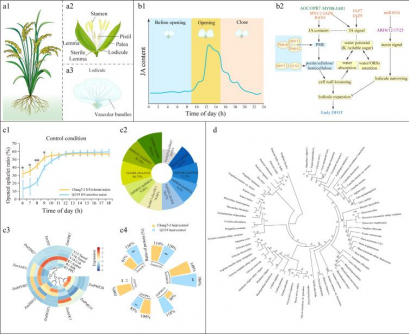
Research from the team at China Agricultural University reveals that adjusting flowering times can help crops withstand rising temperatures. Their study, published on August 28, 2025, in the journal Seed Biology, identifies “early-morning flowering” (EMF) as an effective strategy for plants such as sorghum and pearl millet to avoid heat stress during critical reproductive phases.
As climate change intensifies, heat stress on staple crops has increased significantly over the past decades. Crops like maize, rice, and soybean typically flower during peak summer heat, risking their reproductive success due to high temperatures that impair pollination and grain development. The research highlights that traditional practices, including altering sowing dates or developing biochemical tolerance, have proven inadequate in rapidly warming regions.
The team conducted a comprehensive investigation that combined global climate records, field data, and molecular analyses to understand how rising temperatures affect crop reproduction and how specific flowering habits can mitigate these challenges. Their findings indicate that between 2004 and 2023, daily maximum temperatures during hot seasons rose by 1.25°C, with the duration of midday heat episodes extending by approximately 1.08 hours. Notably, Africa recorded a mean maximum temperature of 34.0°C in 2023, while North America exhibited the fastest rate of warming.
To assess how crops can adapt biologically, the researchers analyzed diurnal floret opening times (DFOT) from 102 flowering species. They categorized these species into morning-, midday-, and night-flowering groups. The team observed that flowering temperature optima varied significantly among cereal crops: morning-flowering species thrived at 26.1°C, while midday and night-flowering species had optima of 22.3°C and 29.3°C, respectively.
Among cereals, maize and indica rice, which flower in the early morning, showed higher temperature thresholds for seed set, achieving 37.5°C and 37.4°C respectively. In contrast, japonica rice peaked at 36.7°C. Sorghum and pearl millet, with night-flowering characteristics, displayed even greater resilience, recording thresholds of 38°C and 42.4°C.
The research team performed controlled experiments that confirmed that EMF wheat and rice varieties consistently achieved higher seed set under heat stress conditions. Early morning pollination also benefited maize, ensuring better reproductive success.
At the molecular level, the study identified key genes such as OsMYB8 and EARLY MORNING FLOWERING 1 that regulate DFOT by modifying the structures of lodicule cell walls. These genes have homologs found in more than 60 plant species, underscoring the potential for broad application in crop breeding.
The findings suggest that aligning flowering times with cooler hours helps avoid issues such as pollen sterility and fertilization failure, which are exacerbated by heat stress. This adaptation strategy not only aids in breeding climate-resilient varieties but could also enhance crop management practices. For instance, integrating EMF traits with precision sowing techniques or even drone-assisted morning pollination could significantly improve yields.
Unlike biochemical tolerance breeding, which struggles to keep pace with the rapid changes brought on by climate change, manipulating DFOT offers a more immediate and natural adaptation strategy. The implications of these findings could extend beyond laboratory settings, providing farmers with tools to enhance food security in an era of unpredictable climate conditions.
This research was funded by the National Key Research & Development Program of China, the National Science Foundation of China, and several other institutions, showcasing a concerted effort to develop resilient agricultural practices in the face of climate challenges. As global temperatures continue to rise, understanding and leveraging the natural rhythms of flowering plants may prove crucial for safeguarding future food supplies.