NASA’s Chandra X-ray Observatory has significantly expanded its catalog, now boasting over 1.3 million individual X-ray detections across the cosmos. This impressive collection is compiled within the latest version of the Chandra Source Catalog (CSC), which offers a comprehensive overview of cosmic phenomena observed up to the end of 2020.
The CSC is considered the ultimate resource for researchers, containing more than 400,000 unique sources, both compact and extended. The data allows scientists to extract vital information, including precise celestial positions and the various X-ray energies detected. This wealth of data not only enhances our understanding of the universe but also aids scientists working with other telescopes, such as NASA’s James Webb and Hubble Space Telescopes, to integrate X-ray observations with information from different wavelengths of light.
Insights from the Galactic Center
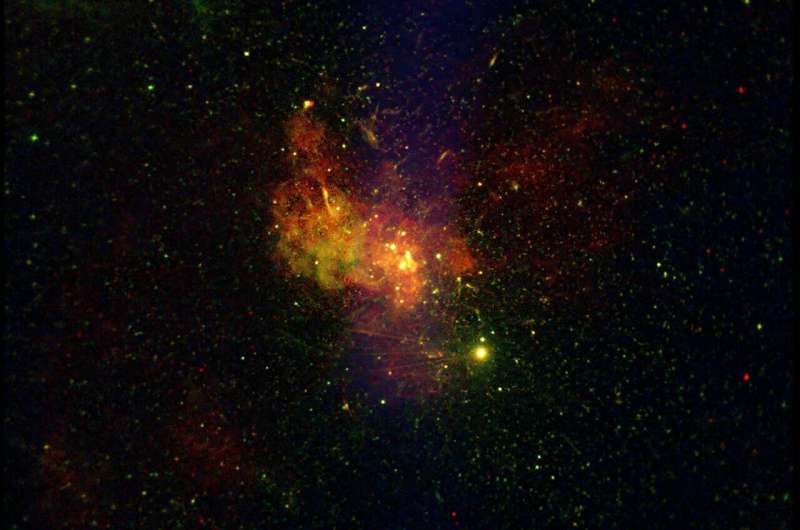
A striking illustration of the catalog’s richness is evident in a new image of the Galactic Center, the area surrounding the supermassive black hole known as Sagittarius A*. This image reveals over 3,300 individual X-ray sources detected by Chandra within a region spanning just 60 light-years, a mere pinprick on the cosmic scale. Compiled from 86 separate observations, the image represents an astounding total of over three million seconds of observation time.
Additionally, a recently released sonification transforms Chandra’s astronomical data into sound, offering a novel way to experience the catalog’s extensive scope. This audio representation maps 22 years of Chandra’s observations, from its launch through findings in 2021. The sonification captures multiple observations of many X-ray sources throughout the mission’s duration, with varying notes representing different sightings over time.
The visual representation of the sky resembles traditional world maps, placing the Milky Way’s core at the center and showcasing the Galactic plane horizontally. Each detection is represented by a circle, with size indicating the frequency of detections at that location. A year counter at the top of the frame dynamically updates, displaying “… and beyond” as Chandra remains operational and continues to gather data.
Accessing the Chandra Source Catalog
The latest version of the Chandra Source Catalog is accessible to researchers and the public at https://cxc.cfa.harvard.edu/csc/. This resource not only highlights Chandra’s enduring legacy as one of NASA’s “Great Observatories” but also serves as a crucial tool for advancing our understanding of the universe. With its continued observations, the Chandra X-ray Observatory remains a cornerstone of astronomical research, unlocking the mysteries of X-ray emissions and their significance in the broader cosmic landscape.