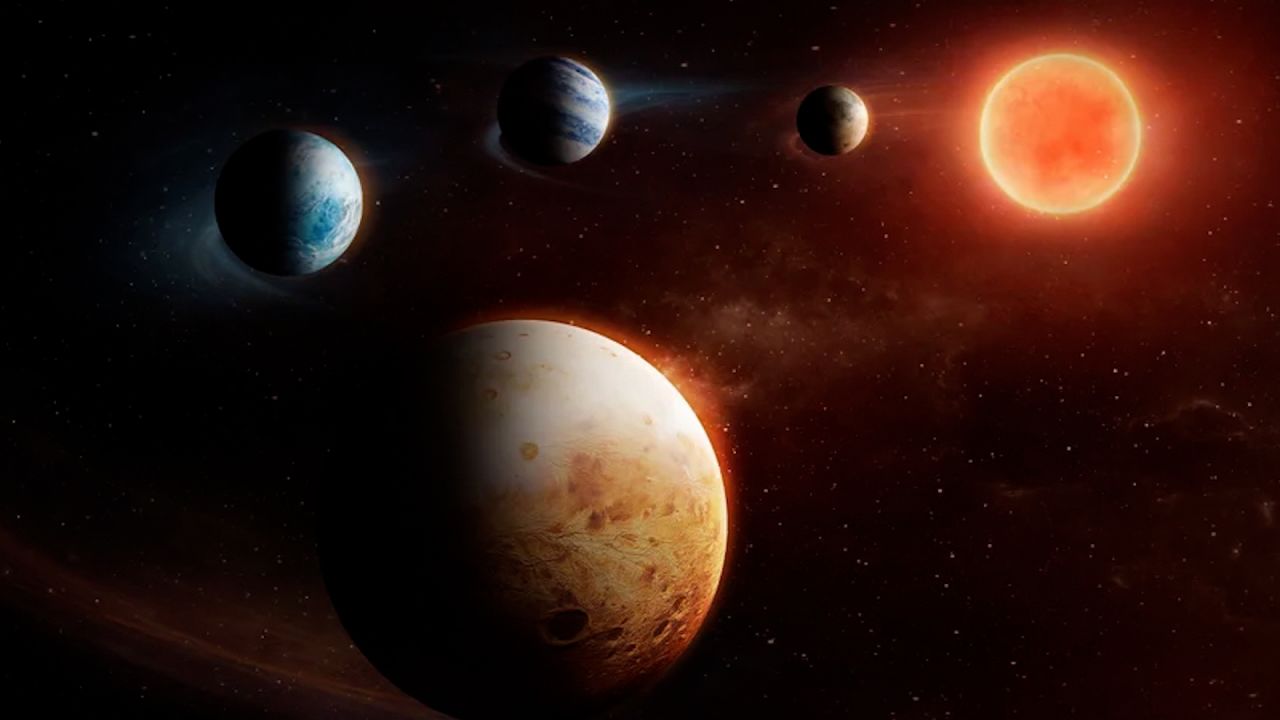
A team of astronomers has identified a newly discovered planetary system that challenges existing scientific understanding, described as an “inside-out” solar system. This peculiar arrangement of planets has raised questions about the traditional models of planetary formation and migration.
The discovery was documented in a recent study published in the Astronomical Journal. The system, located approximately 1,100 light-years from Earth, features a configuration where smaller, rocky planets orbit closer to their star, while gas giants reside in the outer regions—contradicting established theories that typically place larger planets near their star.
Details of the Discovery
Utilizing data from the Kepler Space Telescope, researchers from the University of California, Berkeley, and other institutions conducted an extensive analysis of this unusual planetary arrangement. The lead researcher, Dr. Emily Johnson, noted that the findings are perplexing, stating, “This system defies our current understanding of how planets form and migrate. It’s a real puzzle for astronomers.”
Typically, models suggest that gas giants form in colder, outer regions of a solar system, where conditions are conducive to gathering large amounts of gas. In this case, the presence of several rocky exoplanets close to the star complicates the narrative, suggesting an entirely different evolutionary path than previously thought.
Implications for Planetary Science
The implications of this discovery extend far beyond mere curiosity. Understanding the dynamics of this system may provide critical insights into the processes governing planetary systems across the universe. According to Dr. Johnson, unraveling the complexities of this “inside-out” system could lead to a reevaluation of the theories surrounding planetary formation.
The research team plans to continue observing this peculiar system, looking for additional data that could clarify its origins. The findings have sparked excitement in the astronomical community, with many researchers eager to explore the implications for future studies.
As technology advances, tools like the James Webb Space Telescope will enable astronomers to gather more detailed information about distant exoplanets. Such technology could ultimately help scientists determine how common, or rare, these unusual configurations might be in the cosmos.
This discovery serves as a reminder of the ever-evolving nature of our understanding of the universe. As new findings emerge, they challenge and reshape the frameworks through which we analyze cosmic phenomena, ultimately expanding our knowledge of planetary systems and their formation.