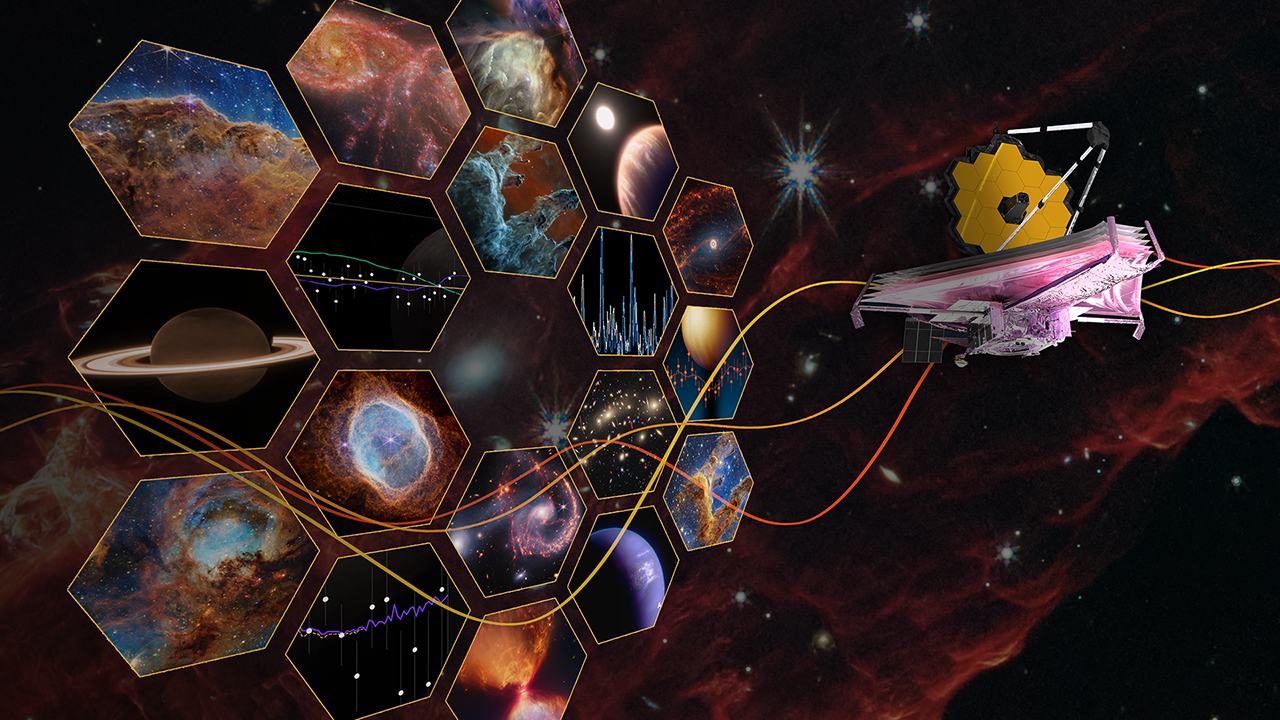
The demand for observational time on the James Webb Space Telescope (JWST) continues to soar, with the Space Telescope Science Institute (STScI) reporting a record-breaking 2,900 proposals submitted for its fifth observing year. This marks a significant increase from the 2,377 proposals received last year and highlights the growing interest in the telescope’s capabilities since it began operations nearly four years ago.
As the JWST approaches its fifth year, the surge in proposals reflects astronomers’ expanding creativity and ambition in utilizing the telescope’s advanced technology. Each year has seen a steady rise in submissions, with the first cycle only attracting 1,173 proposals. The increase in participation is also evident, as unique scientists leading proposals grew by 17% this year, indicating a broader engagement in the JWST’s exploration program.
Innovative Features and Long-Term Studies
A notable development in this cycle is the introduction of the Long-Term Monitoring Initiative. This initiative allows researchers to propose longer observational studies spanning multiple cycles, enabling them to request time across several upcoming rounds, including into the JWST’s anticipated extended operational life. Although this observing cycle marks the end of the telescope’s designed minimum life, engineers currently anticipate that it could potentially operate for 20 years or more due to its unexpectedly low fuel consumption.
Despite the promising longevity, the sheer volume of proposals presents a challenge. The JWST allocates approximately 8,000 hours annually for scientific observations, with the remaining time reserved for maintenance. Given that each of the 2,900 proposals likely requires multiple hours of observational time, it is projected that only around 8% of the submissions will be accepted.
Complex Coordination with Other Observatories
The situation is further complicated by several proposals that necessitate collaboration with other observatories, such as the Hubble Space Telescope, ALMA, and the forthcoming Nancy Grace Roman Telescope. Since the scientific value of these proposals can be contingent on receiving time from other telescopes, STScI’s reviewers must coordinate with mission planners from these institutions, including Hubble, which is also operated by STScI.
The selection process involves a dedicated group of 550 volunteer reviewers known as the Telescope Allocation Committee. They evaluate proposals using a “double-blind” method, ensuring that both reviewers and submitters remain anonymous to each other. This approach is designed to minimize bias, although seasoned reviewers may still recognize proposals based on their familiarity with specific research topics.
The results of the proposal reviews for Cycle 5 are expected to be announced in March 2024, with the observation campaign scheduled to commence in July 2024. As the JWST continues its mission, the telescope’s future appears promising, with an increasing number of researchers eager to explore the cosmos through its lens.