The dynamics of class consciousness among workers have long been a focal point in discussions on social change. Karl Marx first articulated the distinction between a class “in itself”—essentially the working class defined by their economic necessity—and a class “for itself,” which embodies collective organization and shared interests. The challenge arises when workers do not identify with their role or the concept of being part of the working class.
Marx observed that individuals may sell their labor out of necessity, qualifying them as part of the working class regardless of their self-identification. However, this does not inherently lead to a unified class consciousness. A class becomes “for itself” when it organizes collectively around common goals. In many workplaces, individuals express dissatisfaction with their leadership but may simultaneously hold contradictory beliefs, reflecting the complex nature of their experiences and societal influences.
As Chris Harman noted, these varied ideas “flow from the interaction between people’s experiences and the prejudices of the society they live in.”
Society bombards individuals with notions that promote competition and individualism, often at the expense of solidarity among workers. Marx suggested that the prevailing ideas of the ruling class shape societal norms, which complicates the path to a unified working class perspective.
In the late 1920s, Antonio Gramsci further explored the nuances of class consciousness, introducing the concepts of common sense and good sense. Common sense comprises a mix of fragmented beliefs prevalent among workers, while good sense reflects a more coherent and critical understanding of their social reality. Transforming common sense into good sense requires more than educational efforts; it necessitates an upheaval of prevailing ideas during moments of collective struggle.
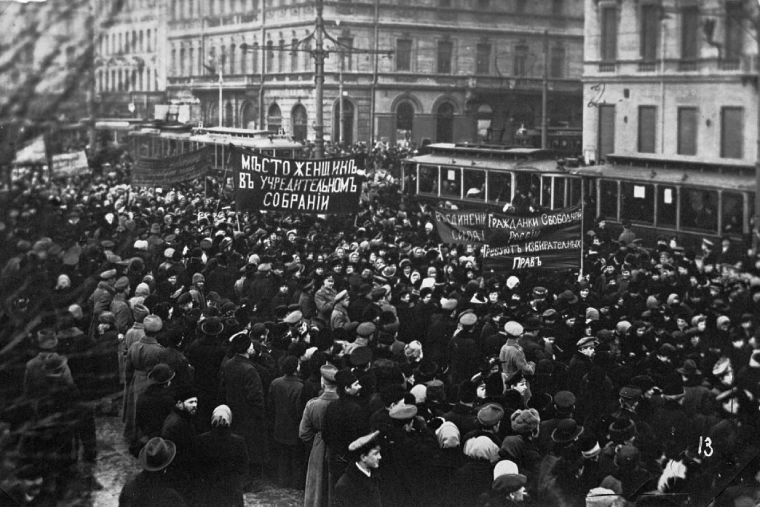
History illustrates this transformation vividly. In 1917, the Russian Revolution marked a pivotal shift in class consciousness. Following a series of protests against bread shortages, workers, led by women in the textile industry, mobilized in St. Petersburg. This movement, initially sparked by economic desperation, escalated to demand an end to the war and the autocratic rule of Tsar Nicholas II. The revolution culminated in the establishment of workers’ councils, or soviets, which empowered the working class to organize democratically.
The upheaval of 1917 not only dismantled the existing order but also fostered significant changes in social norms. For instance, the revolution greatly advanced women’s rights, providing access to education, voting rights, and equality in employment and inheritance. The works of revolutionary figures like Alexandra Kollontai captured the rapidly evolving expectations of women, illustrating a societal shift towards greater autonomy and liberation.
Recent movements echo this historical context. While the current situation in places like Minnesota does not equate to a full revolutionary scenario, it reflects significant shifts in class consciousness. Many individuals are beginning to reject divisive narratives about immigrants, choosing instead to unite against misinformation. Workers who previously felt powerless are now participating in collective actions, such as walkouts and community organizing, fostering a sense of agency and solidarity.
It is crucial for revolutionary movements to harness these moments of awakening. Organizing efforts must focus on facilitating discussions that challenge deeply ingrained beliefs, creating opportunities for workers to articulate their collective interests. The transformative potential of mass movements lies in their ability to reshape the ideological landscape, moving individuals from a state of fragmented common sense towards a cohesive understanding of their shared struggles.
As history demonstrates, the journey from a class “in itself” to a class “for itself” is a complex process influenced by socio-economic conditions, lived experiences, and collective action. Engaging with workers through dialogue and organization can empower them to transcend the contradictions of their beliefs, ultimately paving the way for meaningful social change. The interplay of experience and ideology continues to shape the landscape of class consciousness, and as recent events show, the potential for transformation remains vibrant and relevant.