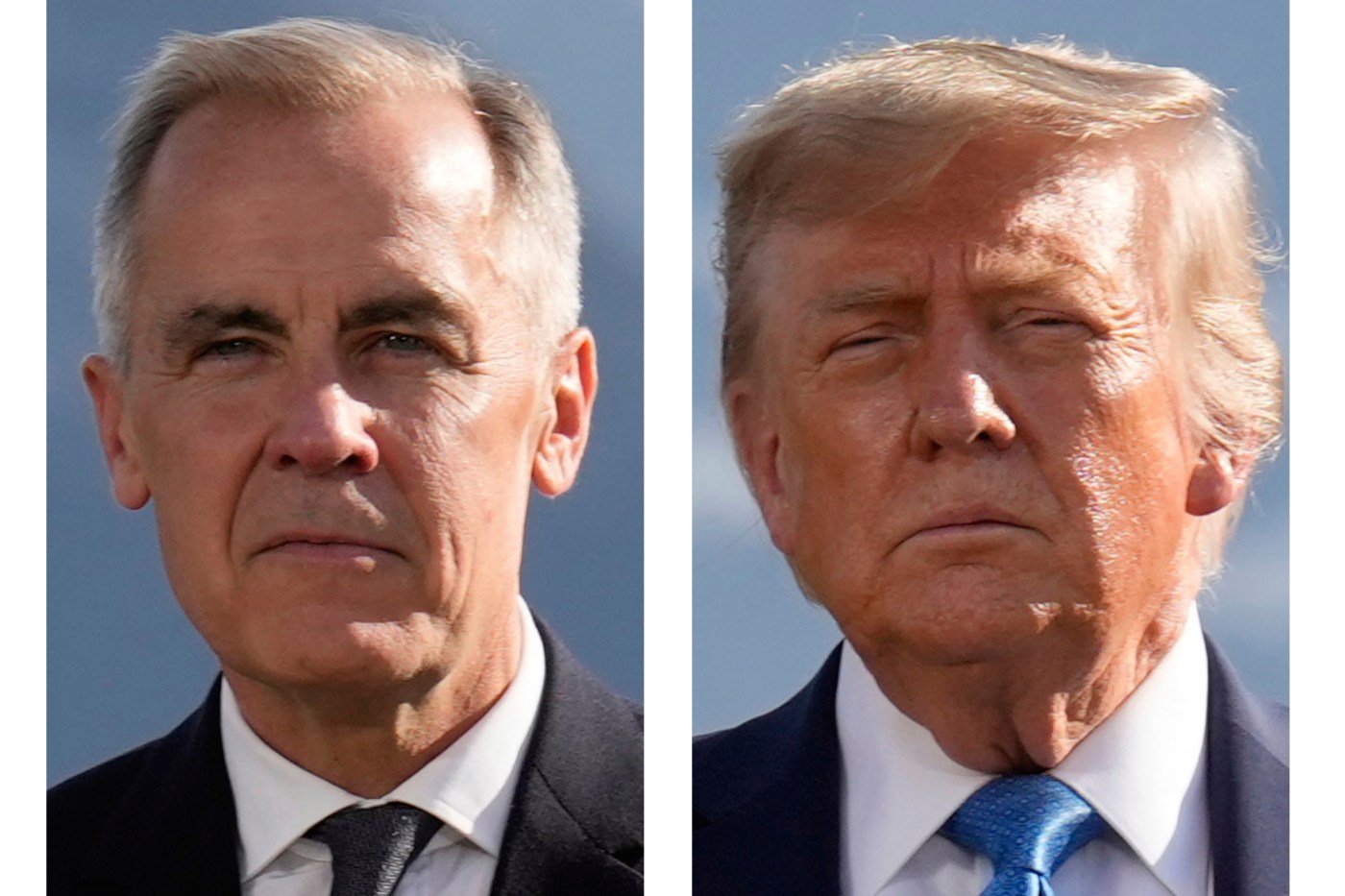
President Donald Trump has escalated tensions with Canada, threatening a 100% tariff on Canadian imports if the country proceeds with its trade agreement with China. This warning came on March 2, 2024, as Trump took to social media to express his discontent with Prime Minister Mark Carney, a prominent figure advocating for a united front against Trump’s policies.
In his post, Trump stated that if Carney “thinks he is going to make Canada a ‘Drop Off Port’ for China to send goods into the United States, he is sorely mistaken.” This remark underscores the ongoing trade war that has characterized U.S.-Canada relations over the past year. Earlier this month, Canada negotiated a deal with China to lower tariffs on Chinese electric vehicles, which was contingent upon reduced import taxes on Canadian agricultural products.
Despite previously indicating support for Carney’s trade negotiations, Trump’s stance shifted dramatically as tensions grew. Dominic LeBlanc, Canada’s Minister of Intergovernmental Affairs, clarified that while Canada and China resolved several trade issues, there were no intentions to pursue a free-trade agreement.
Escalating Diplomatic Tensions
Trump’s threats coincide with a broader diplomatic rift between the U.S. and Canada. During a recent appearance at the World Economic Forum in Davos, Switzerland, Carney emphasized the necessity for middle powers to unite against coercion from larger nations. He remarked, “Middle powers must act together because if you are not at the table, you are on the menu,” a comment that drew significant attention and overshadowed Trump’s address at the same forum.
In response to Carney’s remarks, Trump dismissed the Canadian leader by referring to him as “Governor Carney,” a derogatory term he had previously used for Carney’s predecessor, Justin Trudeau. Political analysts, such as Daniel Béland from McGill University, noted that Trump initially showed more respect for Carney but has since taken a combative stance following Carney’s recent engagements with China and his impactful speech in Davos.
The complexities of U.S.-Canada relations further deepen as Trump continues to express interest in acquiring Greenland and has made comments suggesting Canada could become the 51st state of the United States. An altered image posted by Trump on social media illustrated the U.S. encompassing Canada, Greenland, Venezuela, and Cuba, further provoking Canadian officials.
Impact on Trade Relations
As Trump’s threats loom, the Canadian government remains cautious. Carney has not yet found common ground with Trump regarding the tariffs imposed on key sectors of the Canadian economy. Notably, the Canada-U.S.-Mexico Agreement has served as a protective measure against the most severe impacts of U.S. tariffs.
Despite Trump’s vow to increase tariffs on Canadian goods, analysts note that he has not followed through on this promise. Canada has historically mirrored U.S. tariffs, initially imposing a 100% tariff on Chinese electric vehicles and a 25% tariff on steel and aluminum imports. China’s retaliatory measures included imposing similar tariff rates on Canadian agricultural products, such as canola oil and pork.
As Canada navigates its trade relationship with the U.S., Carney’s recent announcement in Beijing highlights an evolving stance towards China. He has acknowledged that while Canada and China hold differing views on human rights, the relationship remains essential. LeBlanc reiterated that Canada aims to ensure the future of its trade relationship with the U.S. benefits both countries, emphasizing the strong economic ties that exist.
Canada is the top export destination for 36 U.S. states, with nearly $2.7 billion worth of goods and services exchanged daily. Approximately 60% of U.S. crude oil imports come from Canada, alongside 85% of U.S. electricity imports. Furthermore, Canada supplies the U.S. with critical resources, including steel, aluminum, and uranium, vital for national security.
The ongoing trade tensions and Trump’s aggressive rhetoric could reshape the landscape of North American trade and diplomatic relations, as both countries grapple with their respective positions in a changing global economy.