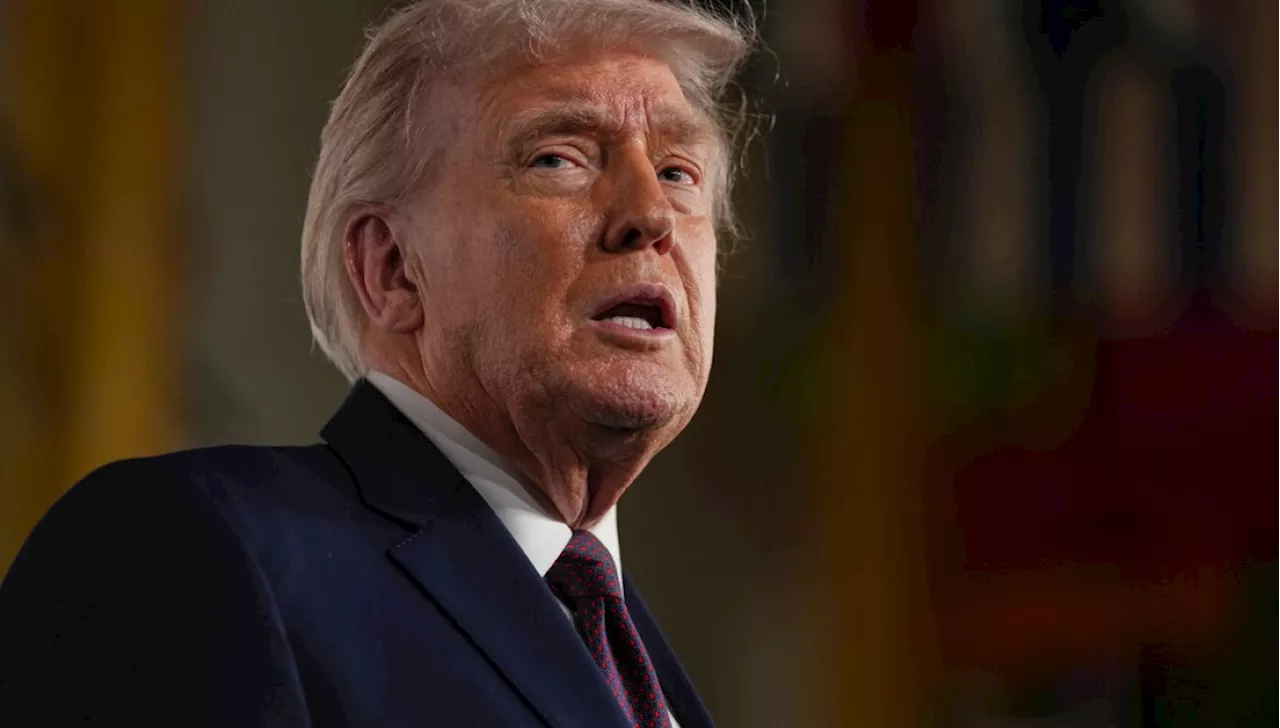
Former President Donald Trump proposed the idea of nationalizing voting in the United States during his appearance on Dan Bongino’s podcast, marking Bongino’s debut as a host. As the midterm elections draw closer, Trump expressed concerns regarding the integrity of elections managed by certain states, suggesting that a more centralized approach might be necessary.
During the episode, which aired on March 18, 2024, Trump emphasized that the Republican Party should take a more assertive stance regarding election administration. He stated, “Amazing that the Republicans aren’t tougher on it. The Republicans should say, ‘We want to take over. We should take over the voting in at least … five places.’ The Republicans ought to nationalize the voting. We have states that are so crooked.”
While Trump did not specify which states he believes should be targeted for a federal takeover, he articulated his frustration with what he perceives as lax election rules and improper voting practices in various jurisdictions. This call for action comes as Trump continues to assert his belief that he won the 2020 presidential election, despite extensive legal challenges that upheld the election results.
The White House responded to Trump’s remarks through spokeswoman Abigail Jackson, who stated that Trump “cares deeply about the safety and security of our election.” She pointed to his support for the SAVE Act, legislation aimed at enforcing stricter voting requirements, including no-excuse mail-in voting and photo ID mandates. Many states currently do not require photo identification for voting, contributing to ongoing debates over election integrity.
Any serious attempt to federalize elections would likely encounter significant obstacles. The U.S. Constitution grants states the authority to determine the “time, place, and manner” of elections, with Congress holding limited power to amend those rules. Legal experts suggest that any unilateral effort by the executive branch to nationalize election administration would face immediate constitutional challenges.
Trump’s remarks also come in the context of ongoing tensions between federal and state authorities regarding voter data access. The former president has initiated legal action against over 20 states for access to unredacted voter rolls, a move that has alarmed many Democrats and local officials. They warn that such actions could escalate federal-state conflicts over election oversight.
In addition to discussing voting, Trump and Bongino engaged in light-hearted exchanges, with Trump expressing disappointment over Bongino’s departure from the FBI, while also commending his successful media career. Trump remarked, “I was very unhappy when you left the FBI. But I was very happy that your show was so, so good. So I’m OK with this — net neutral. I call it a net neutral.”
As the midterm elections approach, the debate over election integrity and administration continues to intensify, intersecting with broader legislative challenges on Capitol Hill. A group of conservative House members is advocating for stricter election measures to be included in discussions about a potential government shutdown affecting various federal departments.
Trump’s comments have sparked discussions about the future direction of the Republican Party as it navigates these complex issues. With nearly 200,000 live viewers tuning in to Bongino’s debut, the conversation underscores the significant interest in the ongoing electoral discourse and the implications for the upcoming elections.