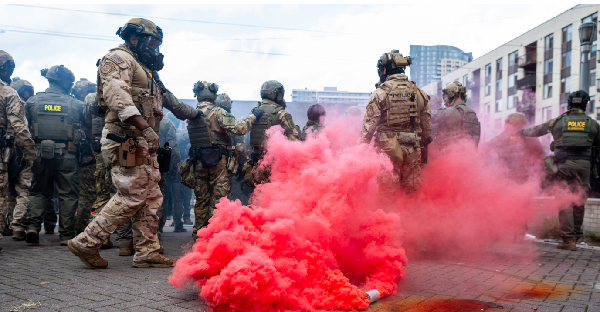
Public demonstrations against the U.S. Immigration and Customs Enforcement (ICE) in Minneapolis have been referred to as an “insurgency” by officials from the Trump administration, alongside various Republican politicians and right-wing media commentators. This term, traditionally associated with armed rebellion, raises significant implications regarding the characterization of the protesters and the potential justification for military intervention under the Insurrection Act.
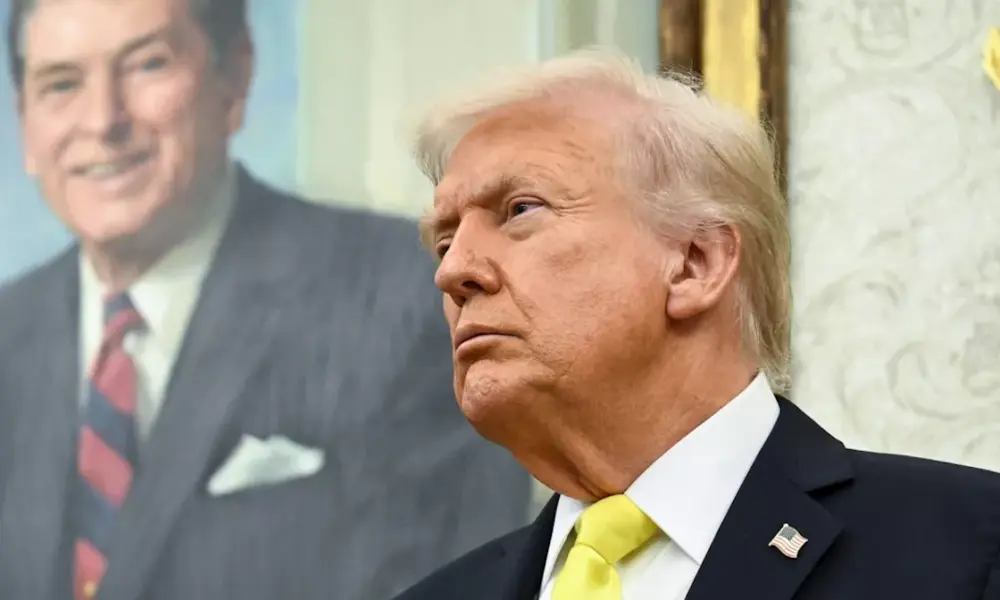
The use of the term “insurgency” to describe these protests appears to align with Donald Trump’s narrative following the death of Renée Good at the hands of an ICE agent on January 15, 2023. In a post on Truth Social, Trump labeled the demonstrators as “professional agitators and insurrectionists,” threatening to invoke the Insurrection Act, which permits the President to deploy military forces domestically to suppress civil disorder. This framing not only casts the demonstrators as adversaries but also legitimizes the use of force against them by federal agents.
Analyzing the “Insurgency” Frame
The term “insurgency” has been amplified by various right-wing media outlets, including Fox News, which prominently featured this narrative in their coverage. For instance, Fox News host Laura Ingraham referred to the protests as “An Insurgency, Not a Protest,” suggesting that the demonstrators were engaged in organized, militant activities. This framing aims to establish a narrative of civil unrest that necessitates a strong governmental response.
On January 30, 2023, Fox News aired a segment featuring a retired CIA officer who described the tactics used by demonstrators as “textbook violent revolution.” Such descriptions, lacking in substantial evidence, serve to reinforce the insurgency frame, creating a perception of a coordinated and dangerous movement against the state. This narrative has been further propagated by politicians, including Stephen Miller, who characterized Minnesota lawmakers as leading “an insurgency against the federal government.”
The implications of such framing cannot be understated. By labeling peaceful demonstrators as insurgents, the narrative shifts to portray them as military adversaries, thus justifying potential violence against them. Seth G. Jones from the Center for Strategic and International Studies articulated that using the language of warfare legitimizes violence against those with opposing views.
The Impact of Media Framing on Public Perception
The framing of these protests as “insurgency” not only distorts public understanding of the events in Minneapolis but also affects the actions of law enforcement. By focusing on the perceived threats posed by demonstrators, media coverage often overlooks the substantial armed presence of law enforcement agencies, which have been equipped with military-grade weaponry.
Critics argue that this framing simplifies complex social issues into a narrative of chaos and disorder. For instance, the coverage often emphasizes incidents of property damage or disruptions caused by protests while neglecting the broader context of civil rights issues, including deportations and family separations. This selective reporting can nudge the audience to align more closely with governmental authority rather than the rights of those protesting.
To counteract this narrative, it is essential to amplify the voices of those involved in civil resistance. Reporting that highlights community members and local organizers can provide a more nuanced understanding of the motivations behind the protests. By framing these individuals as “activists” rather than “insurgents,” the media can better reflect their aims, which often include advocating for human rights and social justice.
Incorporating perspectives from those directly affected by ICE actions can enrich media narratives and offer a more comprehensive view of the issues at stake. Engaging with historical contexts of civil disobedience and social movements can also remind the public of the long-standing traditions of protest in the United States, challenging the simplistic framing of dissent as inherently violent or anti-American.
The framing of protests in Minneapolis as an “insurgency” serves to polarize public opinion and justify aggressive state responses. As media narratives shape perceptions of civil resistance, it is crucial to recognize the power of language and the implications of framing in public discourse. Counterframes that emphasize community protection and human rights can provide a necessary balance to the prevailing narratives, fostering a more informed and engaged public.