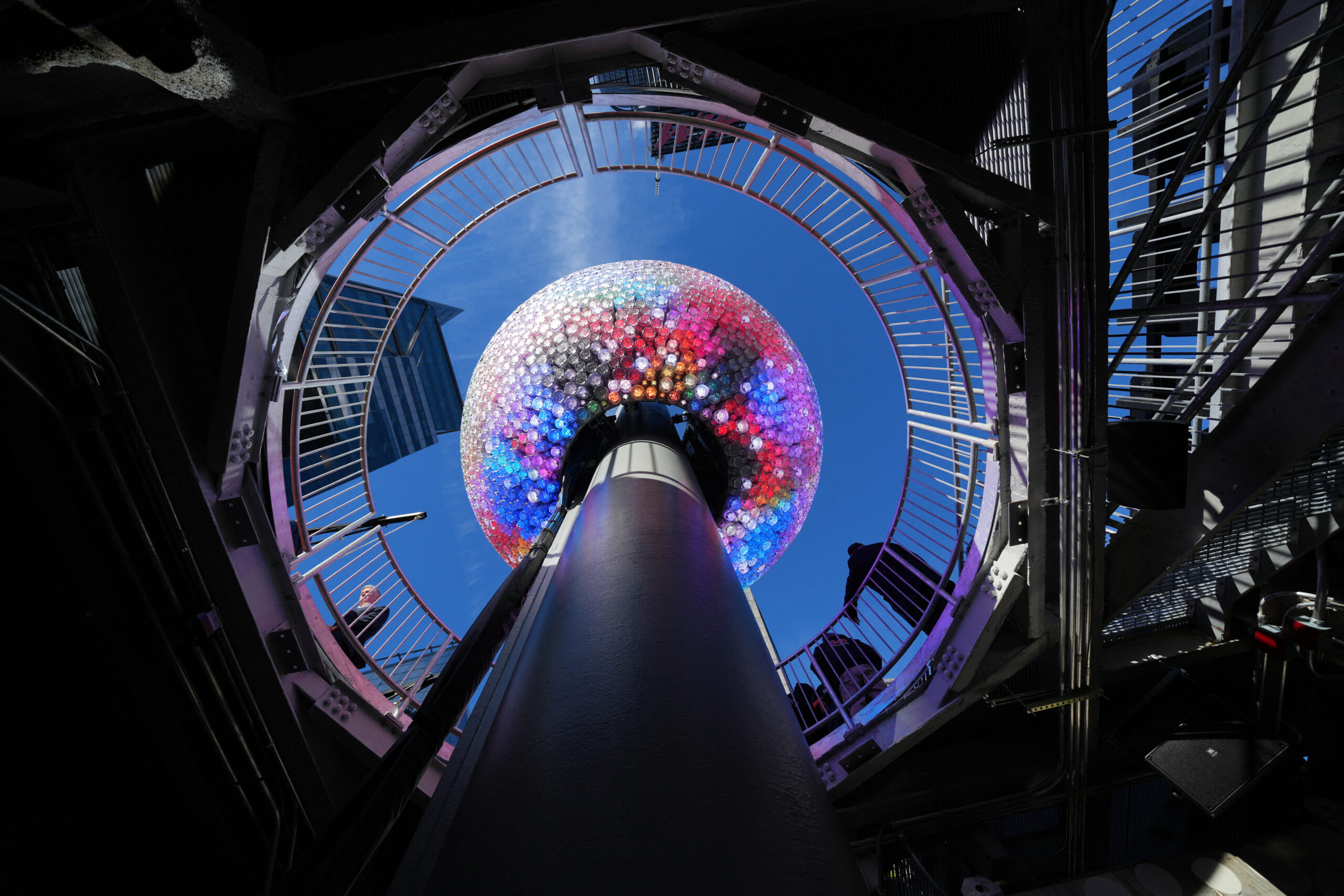
Public responses to recent events reflect a mix of criticism and concern over cultural representations, infrastructure issues, and political decisions. Among the most discussed topics is the design of the 2026 New Year’s Eve ball, which has drawn sharp criticism from residents.
In a letter to the editor, Fred Snyder of Brooklyn expressed his disapproval of the ball’s appearance, likening it to a “giant Lite Brite toy” or “multi-colored kickball.” He questioned the aesthetic choices, stating, “Not very classy. What a way to ring in the New Year.” This sentiment highlights a broader concern over the visual identity of such a significant event.
Another notable topic is Ken Burns’ new documentary, which has sparked debate regarding its portrayal of historical narratives. Dierdre Burgman from Manhattan expected a left-leaning commentary but was surprised by the focus on the experiences of Native Americans and the colonial ambitions of white settlers. She criticized the documentary for its repetitive emphasis on specific tribes, suggesting it detracted from presenting a more comprehensive view of history.
Transportation infrastructure remains a contentious issue, particularly in relation to the Metropolitan Transportation Authority (MTA). Niles Welikson from Williston Park expressed frustration over the MTA’s handling of safety incidents, suggesting that the agency prioritizes payout settlements over implementing protective measures. He pointed out that while the AirTrain at John F. Kennedy International Airport features safety barriers, similar precautions are lacking in subway stations.
The political landscape also drew criticism, particularly from Ray Arroyo of Westwood, New Jersey, who commented on a proposed housing scheme by New York City’s council. He argued that the plan serves to benefit nonprofit organizations at the expense of local residents, stating, “When robbing Peter to pay Paul, one can always count on the enthusiastic support of Paul.” This perspective reflects ongoing concerns about how political decisions impact everyday New Yorkers.
In law enforcement, Tris Tristram from Newton, New Jersey, raised questions regarding the New York Police Department (NYPD) and its staffing practices. He suggested that a shortage of officers may be a strategic move to increase overtime payouts, particularly for those nearing retirement. This assertion touches on broader conversations about policing and budget management in urban areas.
The ongoing conflict in the Middle East also elicited strong opinions, with Paul Bloustein of Cincinnati emphasizing the implications of Hamas’ actions. He described the group as a terrorist organization committed to the elimination of Israel, stating that any perceived failure would undermine their purpose.
Finally, corporate changes within Cracker Barrel have drawn scrutiny, particularly regarding leadership decisions made by Julie Felss Masino. Vincent Ruggiero from Scottsdale, Arizona, criticized the recent rebranding efforts, arguing that the company failed to understand its customer base and their expectations. He stated, “The logo wasn’t broken — it didn’t need ‘fixing.'”
These letters to the editor reflect a diverse range of opinions on significant cultural, political, and social issues. Readers are encouraged to share their thoughts on these topics by submitting letters to [email protected]. All submissions are subject to editing for clarity, length, accuracy, and style.