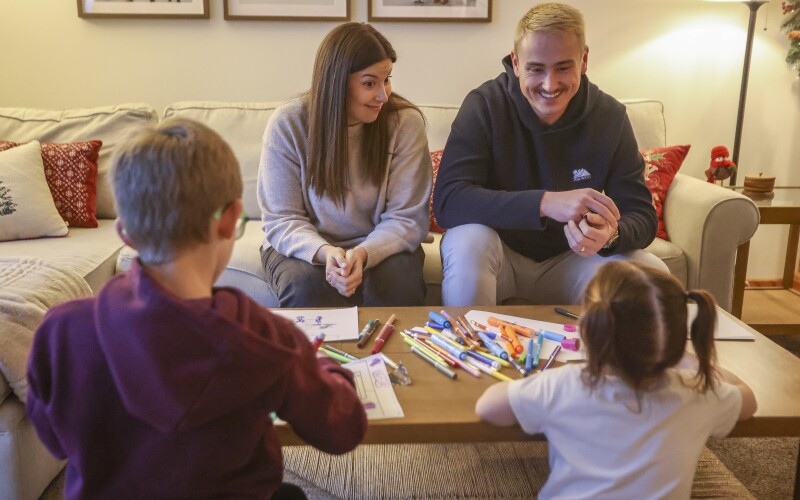
Fargo couple Jon and Julia Asprey have become part of a heartwarming trend in North Dakota, where adoption numbers are reaching record highs. The couple initially began their journey as respite foster parents but transitioned to full-time caregivers. Their story highlights the state’s increased efforts in promoting adoption, particularly through recent policy changes.
The Aspreys took in their adopted son, who was 4 years old at the time, as they welcomed their first biological child. This significant life event occurred on the very day they learned Julia was pregnant. In January 2024, they officially adopted the now 8-year-old boy, who now shares his home with a 3-year-old sister and another sibling expected in May. “It’s an opportunity to give a kid what they deserve,” Jon Asprey stated, emphasizing the importance of providing a safe and loving home.
Privacy concerns led the couple to request that their children’s names remain confidential. They have ensured that their adopted son can maintain contact with his biological siblings, who live with a different family.
The increase in adoption rates in North Dakota has been notable. According to Julie Hoffman, adoption services administrator at the state Health and Human Services Department, public agency adoptions surged by nearly 34% from 2024 to 2025. This growth follows a redesign initiative aimed at streamlining the adoption process, which has reduced paperwork and training requirements. The average assessment time for adoptions has decreased by 23 days as a result.
Collaboration with Native Tribes Drives Adoption Growth
The state has seen even more promising developments among North Dakota Native tribes, where adoptions of children in tribal custody increased by over 53% in the past year. Hoffman attributes this progress to enhanced collaboration and communication between the tribes and a program known as Adults Adopting Special Kids (AASK).
AASK, operated by Catholic Charities North Dakota, is responsible for facilitating foster care adoptions like those of the Aspreys. Tesia Miller, lead AASK adoption specialist, reported that the agency finalized nearly 330 adoptions during the last fiscal year. Most of these adoptions involve identified children who cannot return to their biological families but have potential adoptive options.
Despite this success, Miller acknowledges that there remain between 20 and 30 children in North Dakota who are classified as “waiting kids.” These children have had their parental rights terminated but lack identified adoptive options. Miller explained that sometimes relatives may be unwilling to adopt or may not be appropriate candidates due to safety concerns. “We need to do recruitment efforts to try to find a family to hopefully match with the youth,” she said.
A Family’s Journey Towards Adoption
The Aspreys view their adopted son as their first child, having brought him into their home full-time nine months before their biological daughter was born. Julia reflected on that special time they spent together as a family of three: “I’m very glad it worked out that way, because that time that we got to spend, just the two of us and him, was very special.”
Jon noted that their son, initially the youngest of his biological siblings, has grown into a role model for his younger sister. “It’s been interesting to watch him go from the baby of the family to now needing to be the role model and the leader of the kids,” he said.
Miller expressed a profound desire for every child to find a loving home. “We want every kid to have a home,” she stated. “We want to one day say there are no kids waiting for their forever family.”
As North Dakota continues to implement policies aimed at enhancing the adoption process, the hope is that more families will follow in the footsteps of the Aspreys, ensuring that every child has the opportunity for a stable and loving home.