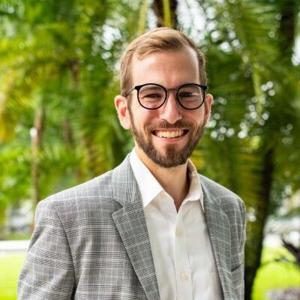
Joshua Harrington, a candidate for Rowan County commissioner, faces scrutiny as several former Marines challenge his claims regarding his military service. Harrington, who has shared accounts of alleged abuse during his boot camp training at Parris Island, South Carolina, has taken to social media to describe traumatic experiences that he asserts have led to his current 100-percent disability rating from the Department of Veterans Affairs.
In a video posted on October 12, 2025, Harrington detailed numerous instances of mistreatment, including severe physical punishments and degrading conditions suffered by him and his platoon during their thirteen weeks of training. He claimed that recruits were made to crawl through bleach, sleep in contaminated uniforms, and endure extreme forms of physical abuse at the hands of drill instructors. Harrington backed these assertions with documentation from the Veterans Affairs facility, which he shared online.
Recently, four former Marines who trained alongside Harrington have come forward with contrasting memories of their boot camp experience. They assert that the allegations made by Harrington do not reflect their time at Parris Island. Kevin Maille, one of the Marines who spoke out, stated, “None of that happened.” He emphasized that recruits were well-fed, with three meals a day provided, and highlighted that he actually gained weight during his training.
Maille further disputed Harrington’s claims about sleeping in camouflage uniforms, insisting that recruits were required to change into PT clothing each night. “Cammies are work clothes. That’s disgusting,” he said. The other Marines echoed his sentiments, with Tyler Tripp noting, “We had three square meals a day… You could have whatever you want.”
In addition to challenging the claims of starvation, the Marines rejected the more extreme allegations of physical abuse. They explained that any injuries would have been documented by medical personnel who inspected recruits daily. “We would stand for his inspection… any injuries would be clearly visible,” Maille added.
The former Marines acknowledged that while injuries do occur, they were not on the scale Harrington described. They stated that while some recruits may have faced disciplinary action, the level of violence and humiliation recounted by Harrington was not consistent with their experiences.
Harrington has attributed his disability rating to post-traumatic stress disorder stemming from his service. The VA documentation he posted confirms this diagnosis, which Harrington claims is a direct result of his experiences in the Marine Corps. While he signed on as a Reservist in the spring of 2012, he served for only three years before receiving a medical discharge in 2015.
The controversy surrounding Harrington’s claims has prompted questions about the integrity of military service records and disability ratings. Tripp expressed frustration over Harrington’s disability rating, stating, “I served four years longer than he did. So where is my back pay?” He indicated that such claims could undermine the reputations of those who genuinely endured hardships during their service.
The discussion around military training practices has also resurfaced, particularly regarding a prior court martial involving a drill instructor at Parris Island. An investigation by the Naval Criminal Investigative Service revealed that an instructor had mishandled bleach during training, leading to injuries for one recruit. However, the instructor faced no significant punishment, raising questions about accountability within military ranks.
As these allegations unfold, Harrington has suggested that there may be a cover-up regarding the incidents he described. He stated that he has documents from the investigation but has not shared them publicly, citing legal restrictions. The Salisbury Post has filed a Freedom of Information Act request for further details regarding the investigation.
In the meantime, the former Marines maintain that their experiences were vastly different from those described by Harrington. Maille, Tripp, and Keithan Inmon all expressed their commitment to upholding the integrity of their service and the reputation of their instructors, who they credit for shaping them into the individuals they are today.
As the story continues to develop, the implications for Harrington’s candidacy and the broader conversation about military training practices remain under scrutiny.