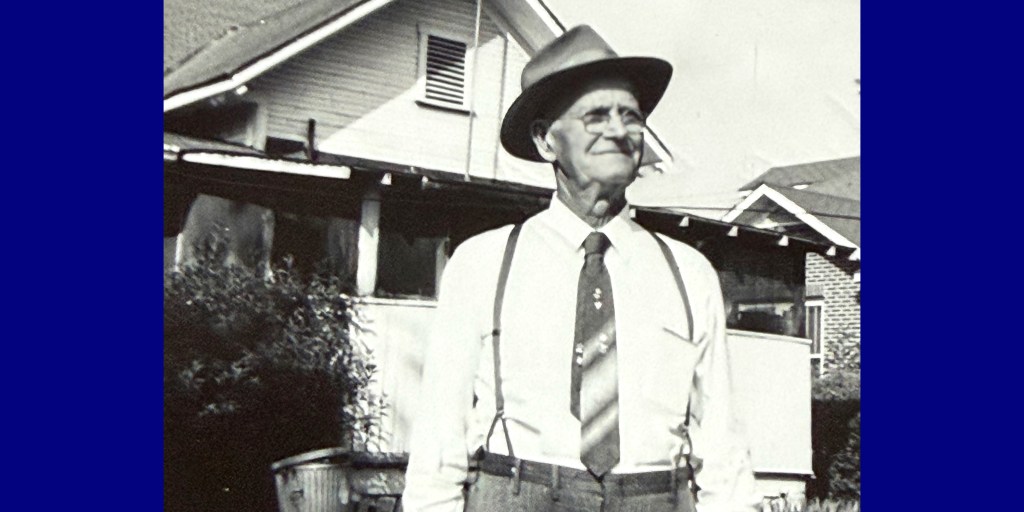
A collection of historical letters has shed light on the early advocacy for Carters Dam in Georgia, revealing the efforts of S.O. Penland Senior, who lobbied for the project as early as 1947. Penland, a former member of the Georgia House of Representatives, corresponded with influential legislators, including the late Dalton attorney and U.S. Representative Erwin Mitchell. These letters highlight Penland’s commitment to securing a levee and reservoir that now forms part of the region’s recreational landscape.
The letters, which were discovered by Penland’s grandson, Sam Penland, in an old safe, chronicle a significant period of local history. Sam Penland revisited these documents after recent media coverage about Carters Dam in the Times-Courier and Dalton Daily Citizen. The dam, completed in 1970, now attracts thousands of visitors to Carters Lake, offering activities such as boating, fishing, camping, and hiking.
According to Sam Penland, his grandfather had cultivated relationships with prominent figures, including U.S. Senator Richard B. Russell and former Georgia Governor Herman Talmadge. He shared apples with them during visits to Atlanta, a gesture that symbolized his dedication to the cause. “I don’t know who initially proposed the idea of a dam with a lake,” he said. “But at one point, there were plans for two lakes, one on Tails Creek.”
In one of the letters, Penland expressed concerns about flooding downstream from the Coosawattee River, a recurring issue he believed warranted attention. “Dick Russell came to Ellijay frequently back then,” noted Sam Penland. “Both Talmadge and Russell were keen on securing the dam for our region.”
Beyond the dam, S.O. Penland also championed infrastructure improvements, notably advocating for Tails Creek Road—now known as Highway 282—to be paved. Sam Penland recalled how the road once ended at the Murray County line, necessitating a rough detour. “We would visit the falls on the Coosawattee, and the road eventually intersected with Old Federal Road, north of where the dam stands today,” he explained.
Reflecting on the dam’s location, Penland remarked, “The Army Corps of Engineers couldn’t have chosen a better spot, where the two mountains converge.” He added that there were discussions about naming the dam after his grandfather, but S.O. Penland’s family preferred a name that reflected the area’s heritage. “Politics played a significant role in getting the dam built,” he recalled. “My father often said we don’t discuss politics or religion in our store.”
Despite the challenges, S.O. Penland’s persistent advocacy bore fruit. His letters reveal a time of camaraderie among legislators, as they navigated the complexities of funding and approvals. The correspondence includes notable exchanges, such as a letter from U.S. Senator Richard B. Russell in November 1947, which acknowledged the community’s desire for Tails Creek Road to be included in the state highway system.
In a March 1954 letter, a Corps of Engineers official informed Russell about the lack of funds for flood control studies in the region. Another letter from U.S. Representative Henderson Lanham expressed skepticism about securing planning funds under the Republican administration of President Eisenhower.
Despite these setbacks, S.O. Penland’s resolve remained strong. A letter from Colonel W.E. Potter of the Corps of Engineers in May 1950 noted the feasibility of developing the Coosawattee River through one or two dams. By September 1960, Russell informed Penland that an appropriation for the dam had been secured, a significant milestone after years of advocacy.
Sam Penland believes his grandfather’s tenacity was key in moving the Carters Dam project forward. “He kept writing letters until the day he died, convinced that someone was listening,” he said with a chuckle. “And let’s not overlook the influence of those delicious apples.”
The legacy of S.O. Penland Senior lives on, not only through the infrastructure he championed but also through the memories and stories shared by his family and the local community. As visitors flock to Carters Lake, they partake in the recreational opportunities made possible by decades of advocacy and dedication.