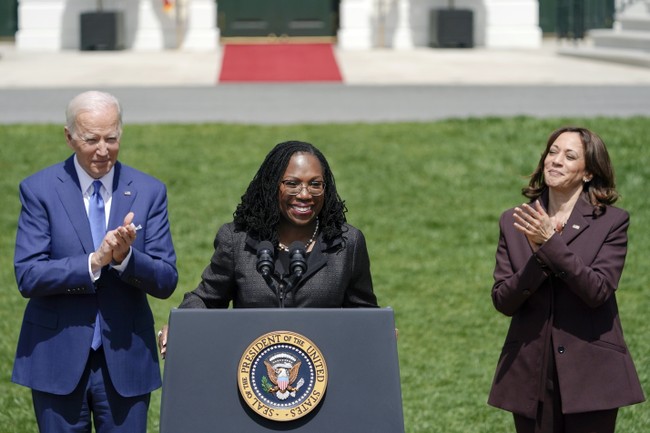
Former Vice President Kamala Harris publicly praised Supreme Court Justice Ketanji Brown Jackson on October 25, 2023, calling her dissenting opinions “brilliant” and urging the public to read them. Harris emphasized the importance of Jackson’s legal reasoning, framing it as essential reading for understanding contemporary judicial challenges. This endorsement highlights the strong connection between Harris and Jackson, especially considering Harris’s role in the selection process of Jackson for the Supreme Court during President Joe Biden‘s administration.
Harris’s remarks came during an event where she spoke passionately about Jackson’s contributions to the judiciary. “I encourage everyone to read her dissents. They are brilliant,” Harris stated. This sentiment reflects her continued support for Jackson, which many see as one of Harris’s notable achievements in office.
The response to Harris’s comments has been mixed, particularly on social media platforms. Critics argue that Jackson’s dissents reveal a misunderstanding of the U.S. judicial system. Some commentators suggested that her opinions reflect an overreach of judicial power, with claims that Jackson’s judicial philosophy prioritizes personal beliefs over established legal precedents.
In recent discussions, critics have drawn attention to a specific oral argument in which Jackson expressed concerns about the influence of executive power, suggesting a preference for decisions being made by experts rather than elected officials. This has led to further debate about the role of the judiciary in American governance.
Supporters of Jackson and Harris contend that dissenting opinions are crucial in a democracy, providing alternative perspectives that can influence future legal interpretations. They argue that dissent is a fundamental aspect of judicial discourse and serves to challenge majority opinions that may not fully consider all facets of a case.
As Harris gears up for a potential run for the presidency, her endorsement of Jackson may resonate with voters who value progressive judicial appointments. Nonetheless, the polarized reception of her comments suggests that Harris will continue to face scrutiny as she navigates her political future.
The ongoing discourse surrounding Jackson’s judicial philosophy and Harris’s support underscores the broader conversation about the role of the Supreme Court in American society. With pivotal cases on the horizon, the implications of Jackson’s dissenting opinions could extend beyond the courtroom, influencing public perception of the judiciary and its relationship with executive power.
As discussions unfold, it remains to be seen how these dynamics will play out in the upcoming electoral landscape and the broader implications for the U.S. legal system.