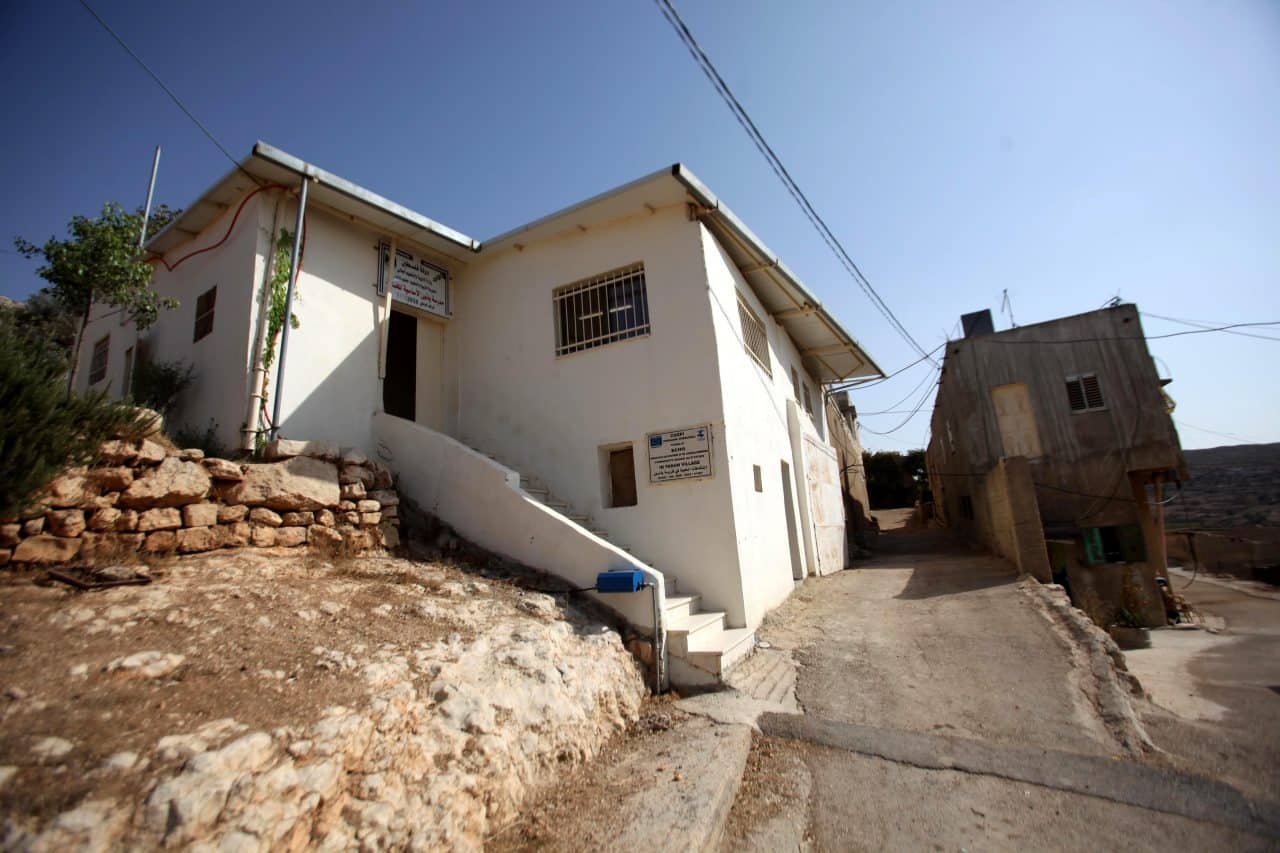
The Palestinian village of Yanoun has been effectively erased from existence following a military order for evacuation on December 28, 2025. Residents, facing relentless pressure from Israeli settlers and military forces, vacated the village, leaving it devoid of inhabitants for the first time in decades. This event marks a tragic chapter in the ongoing struggle of Palestinian communities in the occupied West Bank.
Located southeast of Nablus, Yanoun had been a focal point of tension for years, with its residents enduring systematic harassment aimed at displacing them. Local representative Rashid Murrar reflected on his last visit to the village, warning, “You may not see it next time.” His prediction came true as the hamlet, once bustling with families, fell silent, with Murrar’s family being the last to leave.
The plight of Yanoun began in the late 1990s with the establishment of the Israeli settlement of Itamar, alongside a series of outposts such as Giv’ot Olam and Givat Arnon. These settlements gradually encroached upon Yanoun’s land, restricting access and movement. Over the years, nearly twenty families were displaced due to ongoing settler attacks. Murrar described these incidents as “relentless and calculated,” recounting how settlers used intimidation tactics, including physical violence and threats, to force residents to abandon their homes.
By 2002, the situation escalated to the point where the remaining families fled to the nearby town of Aqraba for nearly a year. They returned in 2005, aided by humanitarian organizations and international support, only to face renewed violence. Recent months saw a surge in settler attacks, with masked groups reportedly entering the village to vandalize properties, attack residents, and disrupt basic services.
According to Hamza Aqrabawi, a local historian, Yanoun was one of the early targets of a rural colonization strategy employed by settlers. The establishment of shepherding outposts, intended to facilitate livestock grazing on Palestinian land, has been a precursor to further aggression against local communities. The outpost near Yanoun, founded by settler Avraham Avri Ran in the mid-1990s, became a hub for organized settler violence.
Statistics reveal a troubling trend. The municipality of Aqraba reported approximately 273 settler attacks over the past two years, compounded by the confiscation of nearly 80% of Yanoun’s land. Currently, only about 3,500 dunams (350 hectares) of land remain accessible to its former residents. Local officials have attempted to provide support by exempting residents from utilities and appealing for international aid, but the overarching issue of security remains unaddressed.
The educational landscape in Yanoun has also suffered significantly. The community had established a small school in 2000 to serve about 20 students. However, by late December 2025, the school effectively closed due to escalating threats and violence from settlers. This closure not only disrupted education but also symbolized the broader social disintegration within the village.
Agriculture formed the backbone of Yanoun’s economy, with fertile lands historically yielding wheat, barley, and lentils, alongside ancient olive trees that have stood for over a century. The local spring, Ain Yanoun, was vital to the community, providing essential water resources. Despite its agricultural significance, Yanoun’s lands have been increasingly targeted by Israeli policies that restrict Palestinian access and cultivation.
The fate of Yanoun reflects a systematic approach to displacement faced by numerous Palestinian villages surrounding Israeli settlements. Community activist Ayham Abu Bakr explained, “Every olive tree that cannot be harvested is another step toward emptying a village of its people.” He highlighted the gradual nature of this process, emphasizing the exhaustion inflicted upon residents until they are compelled to leave.
As the village now stands empty, Murrar’s poignant words resonate: “We were forced to leave once, then we returned. Now I live in an old house that I consider temporary.” The story of Yanoun serves as a stark reminder of the ongoing challenges faced by Palestinian communities in the West Bank, illustrating the complexities and human cost of the region’s prolonged conflict.