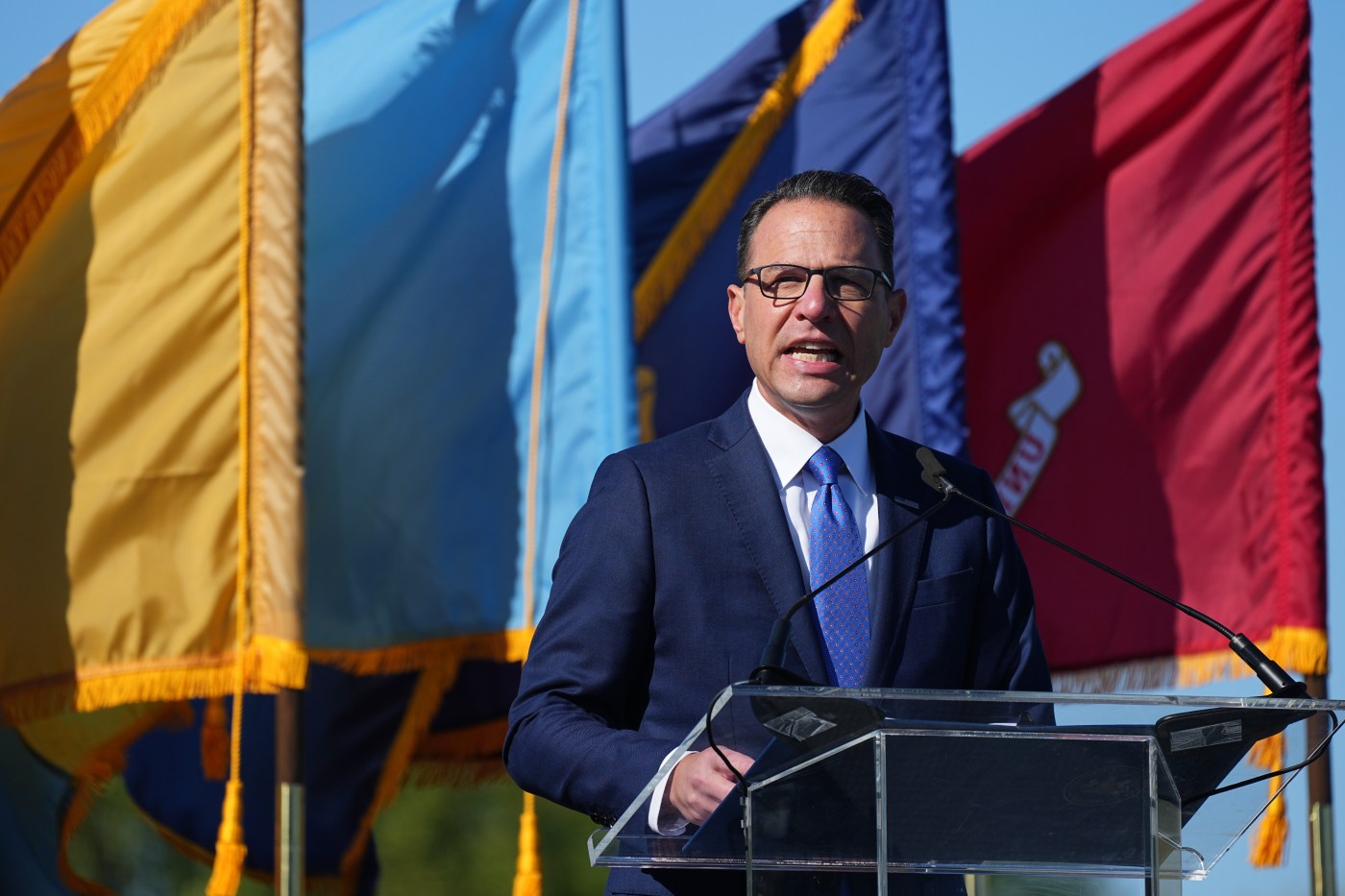
Gavin Newsom, the Governor of California, currently leads the pack for the Democratic presidential nomination in 2028, following a significant win with Proposition 50. Polls indicate he holds a six-point advantage over second-place contender and Vice President Kamala Harris, according to the RealClearPolitics polling aggregator. Yet, another candidate is emerging as a potential challenger: Josh Shapiro, the Governor of Pennsylvania.
Despite lacking the national profile of Newsom, Shapiro has gained attention, particularly during the summer of 2024 when he was considered as a running mate by Harris. Although name recognition can be a hurdle, it is not insurmountable. Former President Barack Obama faced a similar situation in the lead-up to the 2008 election, where he initially trailed significantly in polling.
Shapiro’s centrist approach may pose challenges in an increasingly polarized political climate. His support for Israel, coupled with his Jewish heritage, could alienate a significant faction of the far-left, which holds considerable sway in the Democratic primary electorate. Nevertheless, Shapiro’s strengths, particularly his ability to secure victories in Pennsylvania, make him a candidate worth considering.
The Keystone State is pivotal for any Democratic candidate aiming for the White House. Shapiro has successfully won three statewide elections, including his current governorship. Polling data suggests he would fare well in a hypothetical matchup against potential Republican contenders. A recent Quinnipiac poll indicates Shapiro could defeat Vice President J.D. Vance by ten points, garnering 53% of the vote compared to Vance’s 43%, with a notable lead of 58% to 33% among independent voters.
In 2024, former President Donald Trump narrowly won Pennsylvania by less than half a percentage point. As Democrats strategize for the upcoming election, the necessity to appeal to moderate swing voters is paramount. As political analyst Binyamin Applebaum pointed out, many candidates may succeed in deep blue states, but the real question is how to secure a win in Pennsylvania.
Shapiro’s electoral success is underscored by his performance in past elections. In his run for attorney general in 2020, he attracted more votes than either Biden or Trump, and during his gubernatorial campaign in 2022, he managed to retain all of Biden’s 2020 voters while also appealing to Trump supporters in key suburban areas. Current approval ratings reflect his effectiveness, with 60% of Pennsylvania voters, including 66% of independents, expressing approval of his governance.
Since taking office, Shapiro has secured a substantial $20 billion investment from Amazon, allocated over $1 billion for agricultural support, and invested $500 million in business development. Additionally, he has increased funding for police hiring and education while enacting tax cuts. Notably, he has achieved these milestones while managing a divided government, a challenge that Newsom has not faced in California’s predominantly Democratic legislature.
Republicans are aware of Shapiro’s potential as a formidable candidate. GOP strategist David Urban acknowledged that opposing Shapiro would be a significant challenge. He remarked that any Republican candidate would be “pushing a big rock up the hill” in a contest against him.
Shapiro’s approach to politics emphasizes delivering tangible results for constituents rather than engaging in partisan disputes. The Pittsburgh Post-Gazette noted his reputation for bipartisanship, highlighting his mantra of “Get (expletive) done.” His official motto, “G-S-D,” aligns with this pragmatic philosophy.
While Shapiro’s centrism could benefit him in a general election, it may hinder his prospects in a primary dominated by progressive voters. His relatively subdued approach towards Trump as governor and his decision not to engage aggressively in redistricting efforts may also present challenges in appealing to a primary electorate that prioritizes strong anti-Trump credentials.
Additionally, Shapiro’s Jewish identity and his support for Israel have raised concerns, particularly after an incident last April when someone targeted his residence due to his political stance on Israel. The political ramifications of such incidents may complicate his candidacy.
In summary, should the Democratic Party aim to win the 2028 election, Shapiro represents a candidate capable of appealing to critical swing voters. Yet, to navigate the primary successfully, he must address the significant obstacles posed by his centrist views and support for Israel. As the political landscape evolves, Shapiro’s potential candidacy will require careful consideration from Democratic leaders.