Fred Engle, a rancher from Northern California, became a notable figure in U.S. politics, transforming his early struggles over water rights into a powerful political legacy. His journey began in 1914 when he moved to the Manton area with his family. Engle’s strong opposition to the Northern California Power Company over water rights marked the beginning of a lifelong commitment to advocacy for the “little man.”
The conflict over water rights significantly impacted Engle’s family. After years of legal battles that strained their finances, the family relocated to Gerber. There, Fred Engle took on various jobs, including a position with the Southern Pacific and later at the Red Bluff post office. These experiences not only shaped his character but also influenced his son, Clair Engle, who grew to despise Pacific Gas and Electric (PG&E) for the hardship it caused his family.
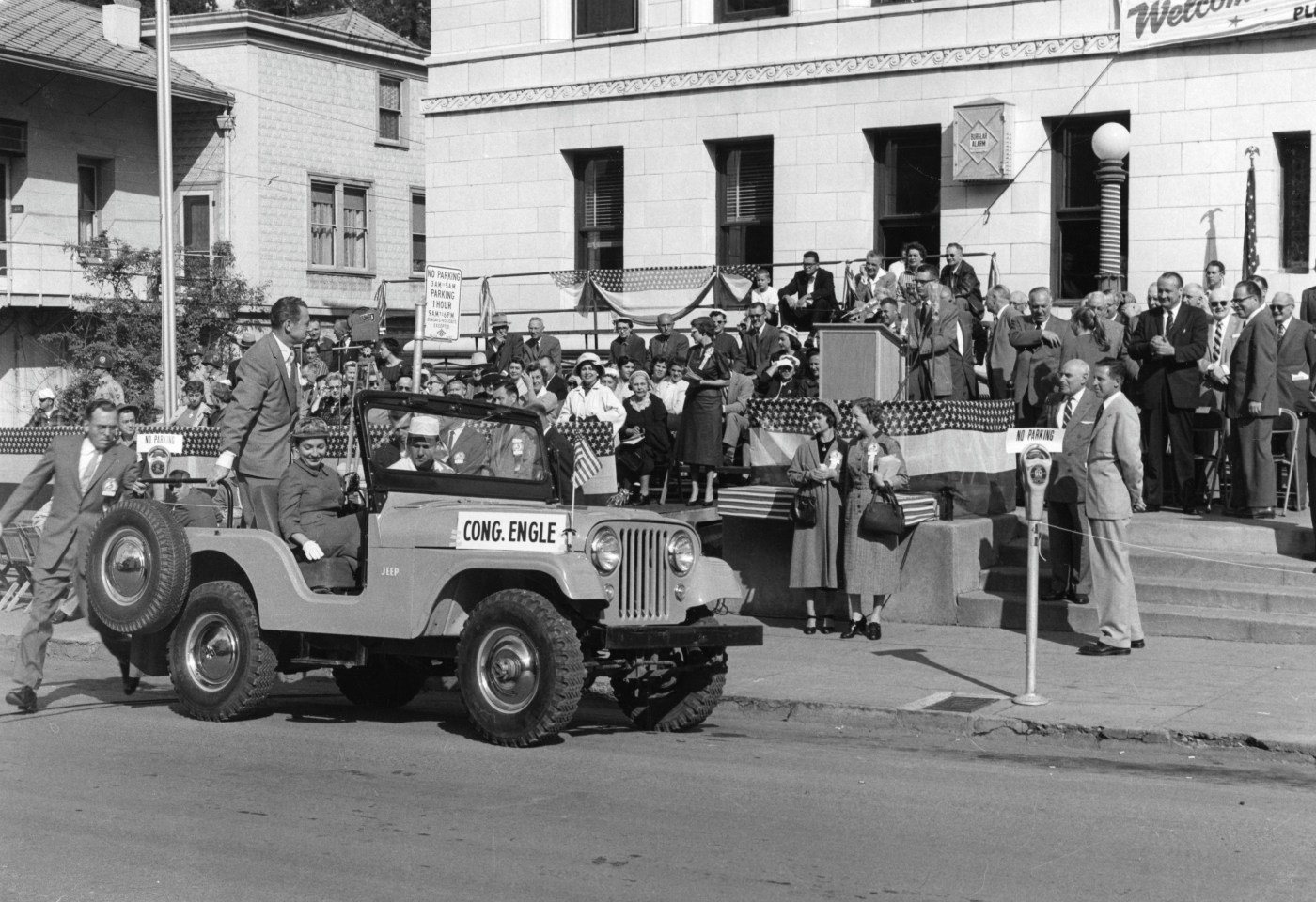
Clair’s political journey began at a young age when he was elected as the student body president at Red Bluff High School. He went on to earn a law degree and established a legal practice in Corning. By 1934, he was serving as Tehama County’s District Attorney, and in 1943, he was elected to Congress, representing a sprawling district of 53,400 square miles that included 18 counties. This district was the largest in the nation, barring Nevada, and required Engle to travel extensively, covering about 5,000 miles by car and 10,000 miles by air to connect with constituents.
His passion for flying became a memorable aspect of his political career. In 1947, while flying from Washington, D.C., to Red Bluff, Engle encountered severe turbulence over Nevada, which resulted in a dramatic incident where he cracked the aircraft’s canopy. Despite the challenges, he managed to land safely and asked a surprised farmer for directions back to Reno, showcasing his unyielding determination.
Engle’s charisma shone during his campaign events. He often engaged voters in informal settings, such as saloons. In Markleeville, Alpine County, he famously announced, “I’m running for Congress, and I’ll buy drinks for the house.” This bold move quickly drew attention and helped him forge a connection with the electorate, demonstrating his appeal as a candidate willing to engage directly with the public.
In 1958, Clair Engle ascended to the role of United States Senator, where he served until his death in 1964. His tenure was marked by significant contributions to California and western legislation. Among his achievements were critical additions to the 1935 Central Valley irrigation-control project, including a $300 million development bill for the American River that facilitated the construction of Folsom Dam, and $100 million allocated for building canals in the Sacramento Valley.
Upon his passing, approximately 3,000 individuals attended his burial at Oak Hill Cemetery. The Red Bluff Daily News remarked on his vibrant personality, writing, “Engle built a reputation as one of the most colorful individuals to stride the halls of Congress.” His memory continues to resonate deeply within the community of Tehama County, reflecting the enduring impact of his life and work.