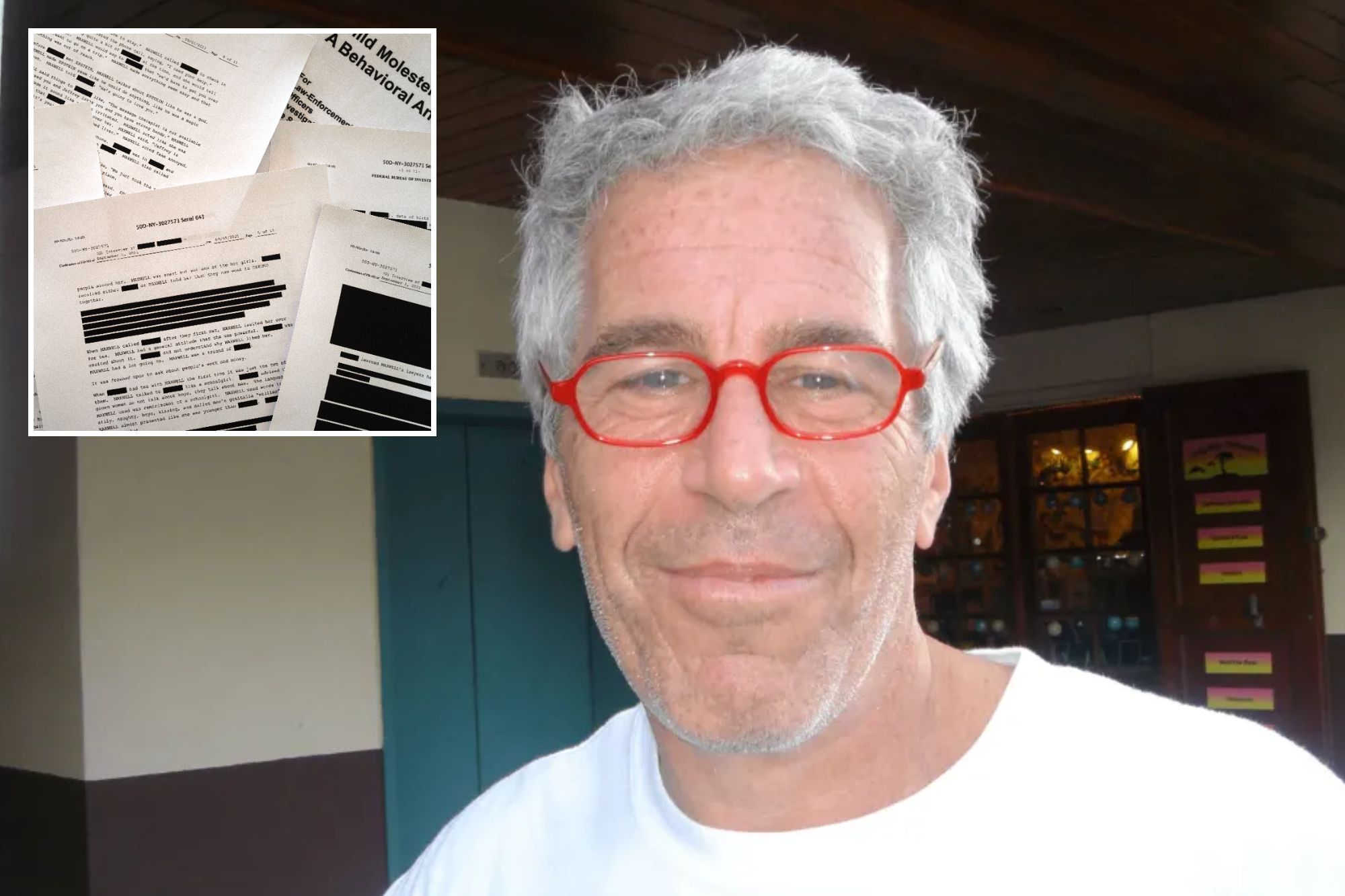
The Department of Justice (DOJ) has submitted a six-page letter to Congress, defending its redactions in the newly released files related to Jeffrey Epstein. The letter, addressed to leaders of the Senate and House Judiciary Committees, includes a list of individuals identified as “government officials and politically exposed persons” whose names appear in the documents. This move has sparked significant criticism from lawmakers who question the lack of context regarding the names included in the list.
The DOJ asserts that the names in the documents arise in a “wide variety of contexts.” This includes individuals who directly communicated with Epstein or his associate, Ghislaine Maxwell, as well as those mentioned in various media reports. However, the absence of specific details about how or why each name appears has led to concerns among some politicians. Critics argue that the list risks conflating individuals with vastly different types of references.
One prominent critic, Representative Marjorie Taylor Greene, highlighted the inclusion of names that she deemed nonsensical. She pointed to the late singer Janis Joplin, who passed away in 1970, as an example of a name that seems out of place in connection to Epstein. Greene took to social media platform X (formerly Twitter) to express her frustration, targeting Attorney General Pam Bondi and Deputy Attorney General Todd Blanche in her remarks.
In her post, Greene expressed concern about being included in a list alongside various politicians, including herself, Thomas Massie, Ro Khanna, and Nancy Mace. She suggested that her mentions in the files stemmed from unrelated news stories rather than any direct connection to Epstein. “My mentions in the files are basically stories unrelated to Epstein like me criticizing Covid mask rules and covid vaccine passports,” Greene stated. She questioned the rationale behind including these topics in the Epstein files, asking, “What kind of files are the FBI and DOJ keeping on us?”
Echoing Greene’s sentiments, Representative Ro Khanna also criticized the DOJ’s approach. He took to X to voice his concerns, arguing that the DOJ is “purposefully muddying the waters” concerning who should be classified as a predator and who is simply mentioned in the emails.
Khanna underscored the absurdity of including Joplin’s name alongside that of Larry Nassar, who was convicted for the sexual abuse of numerous young women and for child pornography. “To have Janis Joplin, who died when Epstein was 17, in the same list as Larry Nassar, with no clarification of how either was mentioned in the files, is absurd,” Khanna remarked on X.
The responses from Representatives Greene and Khanna reflect broader concerns regarding the implications of the DOJ’s list. Lawmakers emphasize the need for clarity and context when it comes to sensitive information, especially related to such high-profile cases.
As the fallout continues, the DOJ’s decision to release these names without further context raises questions about transparency and accountability in handling the Epstein case. The ongoing discourse underscores the complexities involved in navigating public perceptions and the responsibilities of government agencies in managing sensitive information.