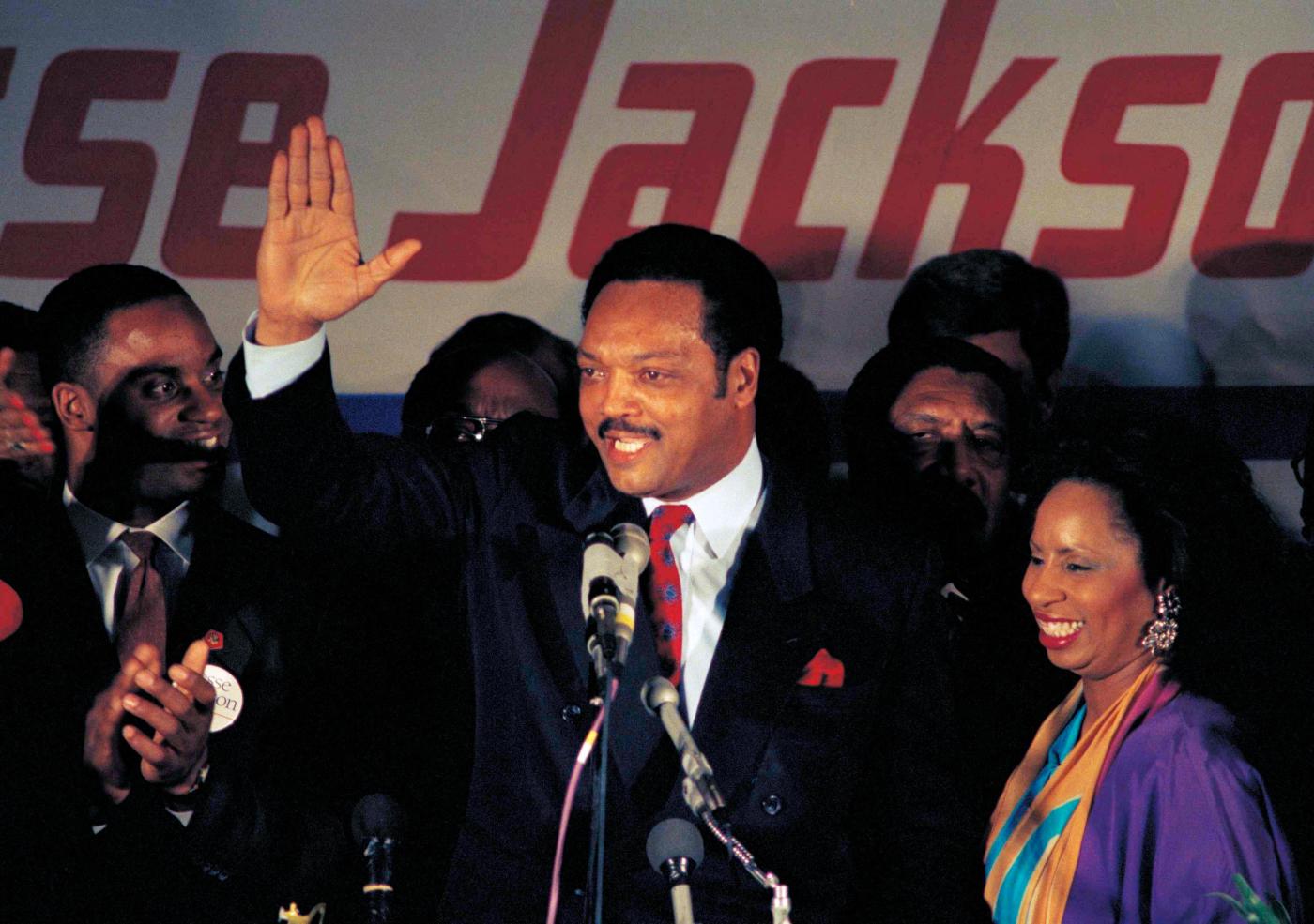
The Rev. Jesse Jackson, a prominent figure in the civil rights movement and a two-time presidential candidate, passed away at the age of 84 on March 24, 2023, in Chicago. His legacy includes a profound impact on social justice and political engagement, shaped significantly by his experiences alongside the Rev. Dr. Martin Luther King Jr.
Jackson’s emergence as a leader in the civil rights movement began in a moment of tragedy. He was present when Dr. King was assassinated in Memphis in 1968. This pivotal event propelled Jackson into a role that would see him become a powerful advocate for equality, echoing King’s vision while carving out his own path. Both men were known for their compelling oratory, with King inspiring nonviolent resistance and Jackson energizing crowds with calls for self-affirmation, famously declaring, “I am somebody!”
Throughout his life, Jackson faced numerous challenges. He was part of the “Greenville Eight,” a group of African American students arrested for protesting segregation in public spaces. By 1965, he was marching alongside King in Selma, Alabama, and in 1967, he took charge of Operation Breadbasket, a program aimed at economic empowerment for Black communities across the United States.
In 1971, following King’s death, Jackson founded Operation PUSH (People United to Serve Humanity) and later established the Rainbow PUSH Coalition. These organizations aimed to promote social justice and political advocacy, playing a crucial role in the election of Chicago’s first Black mayor, Harold Washington, in 1983.
Jackson’s political ambitions culminated in his campaigns for the presidency in 1984 and 1988. He garnered significant support, winning 465 delegates in 1984 and 1,218 in 1988, far surpassing the previous record held by Shirley Chisholm, who received 151 delegates in her 1972 bid. His campaigns resonated with a diverse voter base, as he highlighted issues such as poverty, education, and social justice.
In recognition of his contributions, Jackson was awarded the Presidential Medal of Freedom by President Bill Clinton in 2000. Despite this honor, Jackson’s life was marked by personal struggles, including the revelation of an extramarital affair in 2001 that resulted in a child. His son, Jesse Jackson Jr., faced legal issues, pleading guilty in 2013 to misusing campaign funds.
In recent years, Jackson battled health challenges, including a diagnosis of Parkinson’s disease in 2017, which affected his mobility and speech. Observers noted the stark contrast between his vibrant activism in earlier years and his later struggles, evoking a sense of longing for the dynamic figure he once was.
Jesse Jackson leaves behind a legacy of activism and advocacy captured in the memories of many. His life’s work continues to inspire movements for social change, reminding the world of the importance of equality and justice. As crowds once cheered, “Run, Jesse, Run,” his journey reflects the enduring fight for civil rights and the hope for a better future.