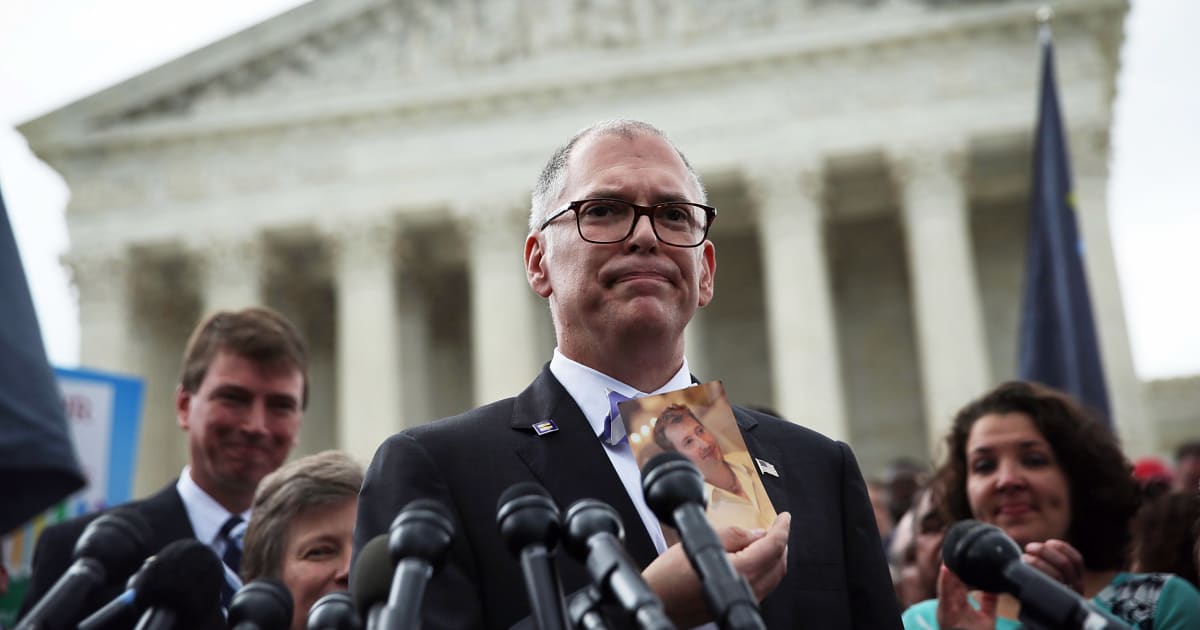
A new lawsuit has been filed in Texas seeking to challenge the legitimacy of same-sex marriage in the United States. Dianne Hensley, a justice of the peace in Waco, Texas, is at the center of this legal action. She has expressed her unwillingness to officiate same-sex marriages due to her Christian beliefs. The complaint was submitted to the federal Western District of Texas on March 15, 2024, and aims to lay the groundwork for overturning the landmark 2015 Supreme Court ruling in Obergefell v. Hodges, which affirmed the right to same-sex marriage.
Hensley is represented by Jonathan Mitchell, a lawyer known for his role in crafting Texas’ strict abortion legislation and for representing former President Donald Trump in legal matters related to the 2024 presidential election. In the lawsuit, Mitchell draws attention to the changes in the Supreme Court’s composition since the Obergefell decision. He notes that Justice Anthony Kennedy, the author of the ruling, has been succeeded by Justice Brett Kavanaugh, and Justice Ruth Bader Ginsburg, a supporter of same-sex marriage, has been replaced by Justice Amy Coney Barrett.
Mitchell argues that the current justices may not uphold the Obergefell ruling, suggesting that the majority of the court appears to have a different stance on such issues. He references the 2022 ruling in Dobbs v. Jackson Women’s Health Organization, which overturned abortion rights, to indicate a shift in how the court approaches fundamental rights.
While a significant portion of the current justices dissented in the original Obergefell case, including Chief Justice John Roberts, Justices Clarence Thomas, and Samuel Alito, the possibility of overturning established precedent remains uncertain. Mitchell’s assertion that the Obergefell ruling was an “invented constitutional right” suggests that today’s court may resonate with this perspective, albeit in different terms.
The recent denial of a petition from Kim Davis, a former county clerk in Kentucky who has long sought to challenge Obergefell, illustrates the complexities surrounding such appeals. Davis’ petition faced procedural issues that did not necessitate a re-evaluation of Obergefell, despite her longstanding opposition. Notably, not one justice dissented from the decision to deny her petition, signaling a lack of interest in revisiting the issue at that time.
Hensley’s case may encounter similar challenges if it reaches the Supreme Court. Nevertheless, it signifies that the fight against Obergefell continues, backed by a legal team with a history of advancing conservative causes. As the legal landscape evolves, the implications of this lawsuit could extend beyond Texas, potentially influencing discussions surrounding marriage equality nationwide.
As debates continue over the rights established in Obergefell, observers will closely monitor how the Supreme Court addresses this latest challenge. This lawsuit highlights the ongoing tensions in American jurisprudence regarding individual rights and the evolving interpretations of the Constitution by its highest court.