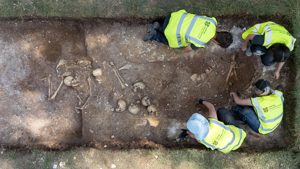
A recent examination of a Viking-era skull has unveiled compelling evidence of ancient medical practices, specifically, the world’s first known brain surgery. Researchers from the University of Cambridge discovered a sizable hole in the skull, suggesting that the individual may have undergone trepanation, a procedure believed to treat conditions such as migraines or seizures.
The skull, believed to be over 1,000 years old, was found in England. Trepanation involves drilling or scraping a hole in the skull to alleviate pressure or treat various health conditions. This procedure, often regarded as a primitive form of surgery, provides insight into the medical knowledge and practices of Viking society.
Insights into Ancient Medical Practices
The findings challenge preconceived notions about the sophistication of medical interventions during the Viking Age. The presence of the hole in the skull indicates that ancient practitioners possessed a level of understanding about the human brain and its ailments. The discovery is significant not only for its historical context but also for what it reveals about the healing methods employed by people of that era.
Dr. Rebecca Wragg Sykes, an expert on ancient medicine, noted that trepanation was practiced across various cultures, often for spiritual or medical reasons. “The fact that this individual survived the procedure suggests that the practice was not only common but also potentially effective for certain conditions,” she said.
The skull’s condition indicates that the individual may have experienced significant health issues that warranted such a drastic intervention. Researchers are now examining similar artifacts to better understand the extent of trepanation in Viking culture and its implications for health care practices at the time.
Broader Implications for Historical Medicine
This discovery opens avenues for further research into the medical practices of the past. It highlights the importance of archaeological findings in shaping our understanding of historical health care. The implications of such surgeries can offer insights into the evolution of medical practices and how ancient civilizations approached health and wellness.
As researchers continue to analyze findings from this period, they hope to uncover more about the lives and medical knowledge of the Vikings. The combination of archaeology and modern science allows for a deeper understanding of humanity’s past, revealing the ingenuity and resilience of ancient people in the face of health challenges.
The skull’s examination adds a crucial piece to the puzzle of ancient medical practices, demonstrating that the quest for healing has always been a fundamental aspect of human life. The insights gained from this Viking skull not only illuminate the past but also provide a foundation for understanding the development of medical knowledge through the ages.