Bob Siemer, a 70-year-old heart disease survivor, has undergone a revolutionary procedure that has transformed his health after being told by multiple doctors that further surgery was impossible. This groundbreaking approach has restored his heart function, allowing him to defy medical odds.
Siemer’s journey with heart disease began at the age of 49, leading him to his first open-heart surgery. Over the next fifteen years, he faced two more surgeries due to complications, including a worn-out valve and a severe heart infection known as endocarditis. “I was lucky to be alive after that. I lost my leg and lost toes on the other foot,” Siemer reflected on his difficult path.
The last of Siemer’s surgeries left him with significant complications, including a lack of blood flow to one side of his heart. Jarrod Frizzell, the director of Complex Corner Therapeutics at Christ Hospital, noted the severity of Siemer’s condition. “When he came to me, this bypass graft was gone. Now he had only very indirect blood flow,” he explained. The situation was critical, with a major artery being 99% blocked.
Frizzell, known for his expertise in complex cases, devised a novel method to restore blood flow without the need for another chest opening. “I took a wire and went down this graft, opened it back up, and into this stump,” Frizzell said. His innovative use of a stent procedure involved cutting through scar tissue and employing a technique called electrocautery to create new arteries. This allowed normal blood flow to return to Siemer’s heart.
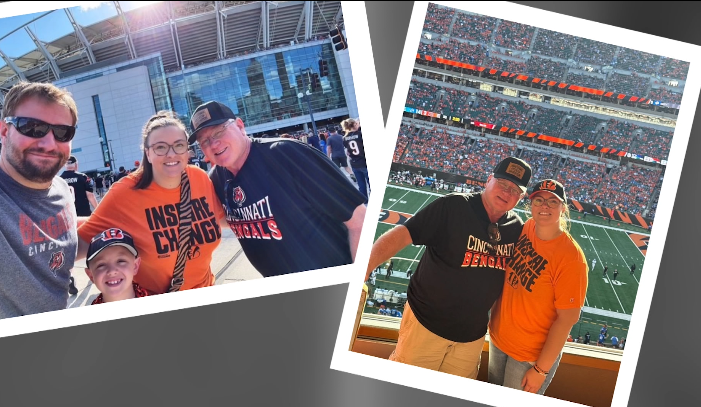
“For people that have been told there’s no options, we’ve got ways around that,” Frizzell emphasized, highlighting the procedure’s potential for others with similar conditions. Remarkably, Siemer experienced significant improvement shortly after the procedure, managing to go hiking just one week later.
This case has garnered attention in the medical community and was subsequently published in the Journal of the American College of Cardiology, showcasing the potential of innovative techniques in treating complex heart conditions. Siemer’s story stands as a testament to resilience and the evolving capabilities of modern medicine.